Please ensure Javascript is enabled for purposes of website accessibility

Ask a Naturalist

Understand the world around you We've got answers

Ever wondered who left that footprint? What kind of berries are those? Or why is that White-tailed Deer white all over? Look no further than your local naturalists, the people at your Geauga Park District whose job it is to help you understand the natural world around you.


Use the form below to submit your question – ideally with a photo (if available), description of sighting (including size) and location of sighting (somewhere in Northeast Ohio) – and you’ll receive an email when a naturalist responds.

Please note that while this form does collect your name and contact information, those items will not be posted with your question, only used in case we need to contact you for additional details.

What have other people been asking lately? Scroll below the form and enjoy some other naturalist Q&As on us!
Ask a Naturalist

Step 1 of 2 - Sighting Details

  • Drop files here or
    Accepted file types: jpg, png, gif, Max. file size: 2 MB, Max. files: 5.
    • Best park to enjoy pine and evergreen trees?

      Question

      Which is the best park to enjoy pine or evergreen trees?

      Naturalist's Response

      Eldon Russell Park has a small, beautiful pine forest along the Duane Ferris Trail, and Headwaters Park has a substantial amount evergreens in the campground area as well as the north end of the lake. -Naturalist John Kolar

      Orchard Hills Park also has some big pines, and then there is the Boreal Trail with hemlock at Big Creek Park. Enjoy! -Naturalist Denise Wolfe

    • Where to see fall foliage?

      Question

      What is the best park and hiking trail to see fall foliage?

      Naturalist's Response

      Honestly, anywhere with an open field or meadow where you can see the treeline would be good. I’m thinking Burton Wetlands Reservation, Observatory Park or Frohring Meadows off the cuff. An especially popular new location for fall foliage is also Veterans Legacy Woods — not only does the park itself catch fire with colors, but you can see miles of fall colors into the distance from the entrance!

      -Naturalist Trevor Wearstler

    • Where to see a Great Blue Heron?

      Question

      Which park would have water likely to have a blue heron walking arround?

      Naturalist's Response

      That is a great question, although you could potentially see a Great Blue Heron flying over any park. Your best bets, in no particular order, would be the following parks: Headwaters Park, Bass Lake Preserve, Walter C. Best Wildlife Preserve, Claridon Woodlands, The Rookery and Burton Wetlands Preserve. Other options might be Eldon Russell Park and Beartown Lakes Reservation. As long as there’s open water, you’ll have a good change of seeing them wading along the edge, but these birds will head south for easier food sources once the water starts freezing up.

      Good luck!

      -Naturalist Trevor Wearstler

    • A mysterious casing — a bug inside?

      Question

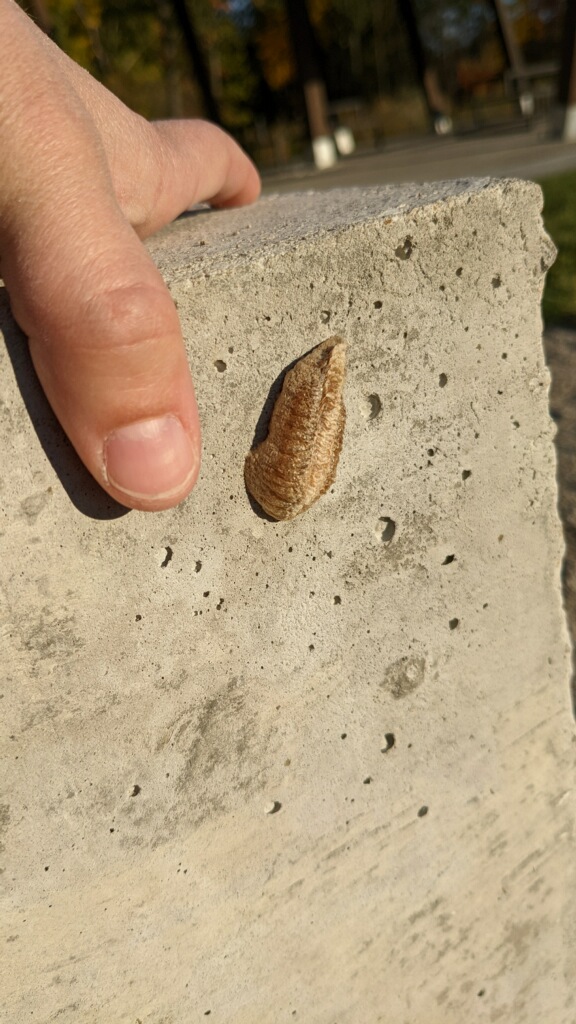
      I was wondering if there is a bug hiding in here for the winter this year. If you touch this casing, it has a little give to it but is definitely a strong exterior. We found it on the side of the fire pit at welton's gorge.

      Naturalist's Response

      Wow, nice find!

      That looks like the egg case from a mantis. (There’s a terrific word for a mantis egg case: ootheca. Try that out next time you’re playing Scrabble!) It likely contains dozens (or hundreds) of mantis eggs, which will spend the winter inside and emerge in the spring.

      Mantis egg cases do a superb job of insulating the eggs inside. I’ve always thought they bear a remarkable resemblance to the expanding-foam insulation that humans are so fond of!

      Mantis laying eggs on a grass stalk

      [Chinese mantis laying eggs at Observatory Park]

      The ootheca in your photo might be from a European mantis; they and the native Carolina mantis both make egg cases with a flat, linear shape. The other locally-common mantis, the Chinese mantis, makes a more globe-shaped egg case.

      This webpage from Pennsylvania’s Brandywine Conservancy offers a great comparison of the egg cases of some of the same mantis species that we find locally.

      Let’s see what emerges in the spring!

      -Naturalist Chris Mentrek

    • Advice for hanging a bat box?

      Question

      I'd like to hang up a bat box, wondering if you can offer some advice. Seems they're typically constructed of pine or cedar, while some are natural and others are stained. Some even have vent holes cut into the side. Is one or two chambers more bat friendly? And is it even necessary? I've consistently seen bats flying around the yard at dusk for years. Would there even be any benefit to putting one up?

      Naturalist's Response

      Thanks for your question!

      I’m glad to hear that you’ve spotted bats in your yard. They’re probably sheltering and roosting in natural spaces (such as underneath loose tree bark), or possibly unnoticed in human-made spaces (like this Big Brown Bat that snuggled into an overhang at The West Woods).

      Big Brown Bat in overhang

      [Big Brown Bat at The West Woods Nature Center]

      If you’d like to put up a bat house to give your local bats more space for shelter and breeding, great! They’ll probably love to expand into any additional shelter you offer.

      Bat colony at Union Chapel

      [Bat colony at Union Chapel in Newbury]

      Even if you don’t have the space to install something the size of the “bat condo” at Union Chapel, a smaller bat house can still be perfect shelter for solitary bats.

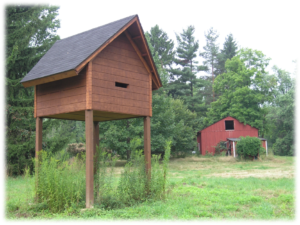
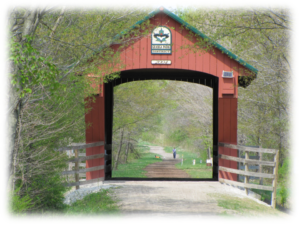
      Bat box on covered bridge

      [Bat box on Tare Creek covered bridge]

      Local Bat House Tips:

      • Material: Any kind of wood is just fine. Pine, cedar, plywood, hardwood — our bats aren’t picky! The only material to avoid is the plastic or fabric lining included in some manufactured bat houses; it can lead to tangles and sanitation problems.
      • Size: The larger the better! The folks at the Ohio Bat Working Group have found that bat houses that are at least 17 inches by 20 inches led to larger bat house populations.
      • Chambers: Similarly, the more chambers you can provide your bats, the happier they’ll be. Larger houses and more chambers give bats the chance to move to wherever within the house the temperature is to their liking. A cozy bat chamber should be about 3/4 inch to give the bats room, but not invite other animals.
      • Vents: Vents in the side aren’t necessary in Ohio bat houses; here, the focus is much more on keeping the interior of the bat house warm and draft-free. (Most bat chambers feature a slot in the front to help bats detect the empty cavity within. This can be a simple gap between boards, or, in the case of these student-built bat houses at Ohio University, something fancier!)
      • Color: Our chilly climate means that bats prefer a dark-colored house placed in plenty of sunshine.

      If you’re looking for more bat-house tips, this handy video from the Ohio Bat Working Group summarizes the tips, tricks and best-practices hit upon for Ohio bat boxes.

      Best of luck to you with your bat house! Let us know if any bats move in!

      (Oh, and hey: here’s to a happy Ohio Bat Week later this month!)

      -Naturalist Chris Mentrek


    • Eggs on my screen

      Question

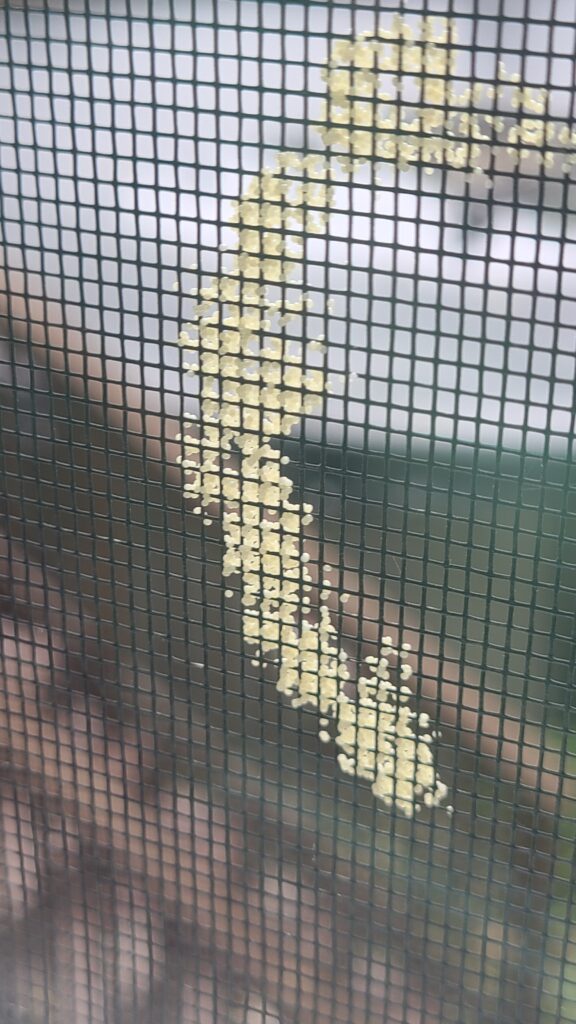
      Just the other day (September 28th-ish) I noticed this c-shaped cluster of eggs on the window screen at my house in Novelty. Were these laid by a moth or some other kind of flying insect? Could whatever hatches from them do any harm to my house or native plants or insects to where I should get rid of them? Or should I just leave them be?

      Naturalist's Response

      Thanks for forwarding a picture of the eggs attached to your screen door. From what I can see, they appear to be moth eggs based on their shape and the way they are clustered on the screen.  I have no idea what species they are, nor do I know if they are even fertile. Keep an eye on them to see if any caterpillars emerge.

      -Naturalist Linda Gilbert

    • What can you tell me about this snake?

      Question

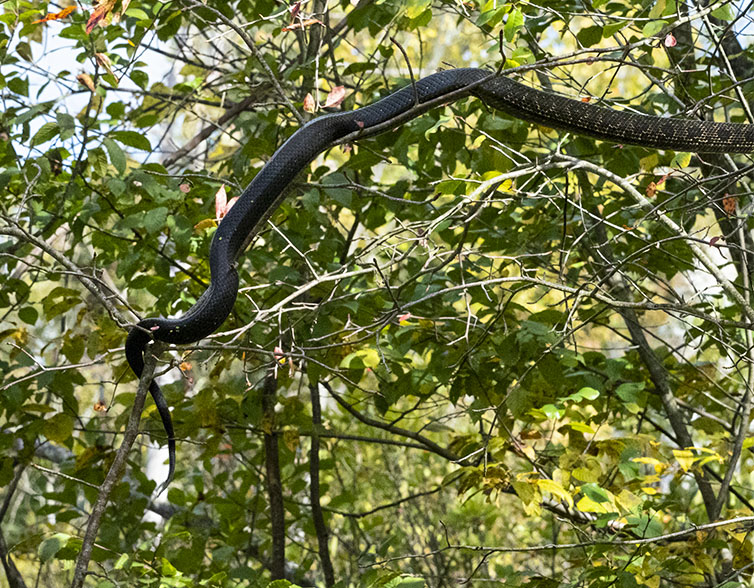
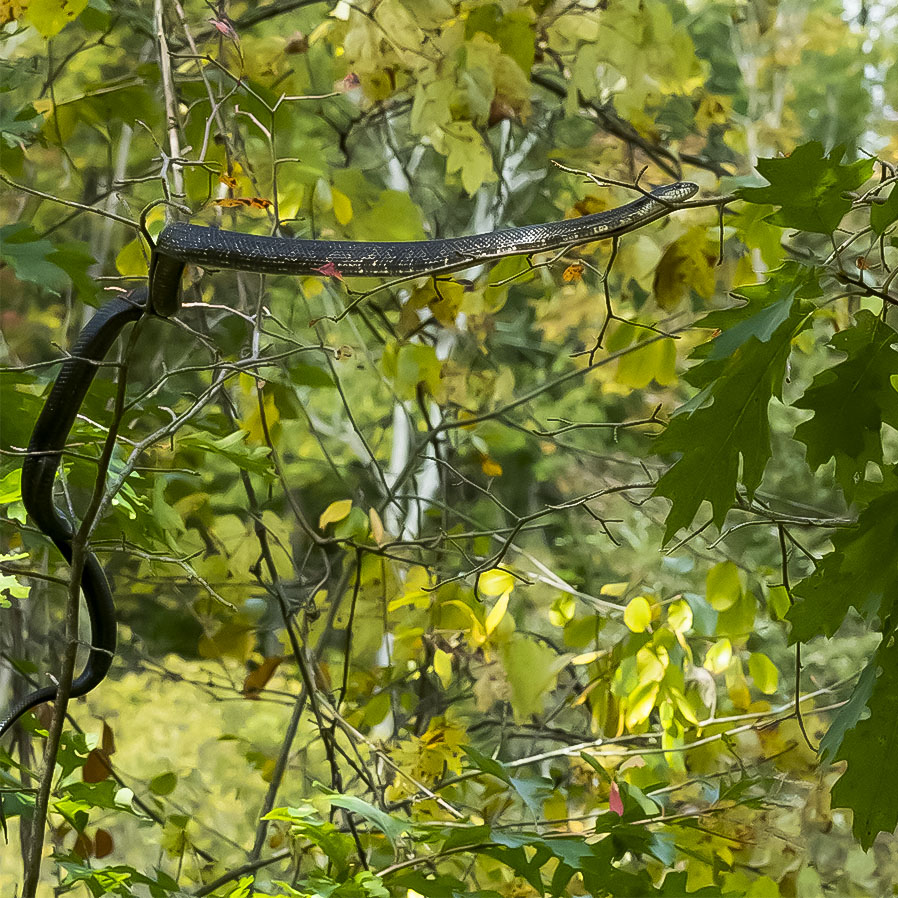
      I frequently walk at The Rookery on Cedar Road, west of Rockhaven. Twice in the past week I have seen the snake in the attached photos. I have heard conflicting opinions from friends who I have shown the pictures to. Can you clarify what kind it is, whether it is poisonous or not, or any other information? Thanks!

      Naturalist's Response

      A snake of many names! This snake is most commonly known as a Black Rat Snake, but some sources call them Gray or Midland Rat Snakes. If we go back a few generations, they were known as Pilot Snakes because people thought they led, or “piloted,” rattlesnakes to places to hibernate. This is also one of the many snake species that get lumped into the generic term “black snake.”

      Regardless of what you call it, this is a very interesting snake. Black or Gray Rat Snakes are the largest snakes in Ohio, with many obtaining a length or 6 to 7 feet, and the largest ever exceeded 8 feet! This species is a constrictor, therefore nonvenomous, and preys on mice, chipmunks, squirrels and birds.  Since it is also highly arboreal, it is not uncommon to see them basking way up in the trees.

      About your snake in particular: in the fall, snakes need be in the area they are going to hibernate. On cold days, they will stay underground, but they will pop out on warm days to bask in the sun. The snake you found is likely going to hibernate somewhere nearby but will often use the same tree to bask on warm days, which is why you have seen it a few times. You will likely be able to find the same snake in the same tree as temperatures start warming up again next spring!

      Great observation!

      -Naturalist Andy Avram

    • Where can I drop off milkweed seeds in Geauga County?

      Question

      Dear Linda,
      I was given your name by a West Woods employee.
      I read an article in The Plain Dealer several days ago regarding milk weed pods with seeds.
      They mentioned a drop-off location on the west side of Cleveland.
      Is there a drop-off location within the Geauga Park District?

      Naturalist's Response

      I don’t know of any milkweed drop-off locations for Geauga County. We do take milkweed seed donations at Geauga Park District, though, for use in giveaways at the fair and at the nature center. If you do want to donate seeds to the park, please de-seed the pods (open the pods, grab the silk at the tip, and scrape the seeds off with your other hand), place the removed seeds in a paper lunch bag, and bring them to The West Woods. We will store them in our freezer over the winter and then use them next year for giveaways. I just created this YouTube video demo on how to collect the seeds in case it is helpful.

      Thanks for asking!

      -Naturalist Linda Gilbert

    • Should I “screen in” larger Monarch caterpillars?

      Question

      I have at least five 1 1/2 to 2 inch long monarch caterpillars on my swamp milkweed and am wondering if it would be best to leave them alone or to put them in a screened environment inside my screened in porch to protect them?

      Naturalist's Response

      Monarch caterpillars that are 1.5 to 2 inches long are probably in their last instar, ready to stop eating and move away from the milkweed to pupate (become a chrysalis). Leaving them alone is the best option. Many of the hazards to the caterpillar survival are earlier in their growth. Outdoor environments like a screened porch are a good choice for raising caterpillars instead of indoors. Good to hear so many people are helping the Monarchs by growing milkweed in their gardens!

      -Naturalist Dottie Drockton

    • Can I deter a raccoon from leaving scat near our house?

      Question

      I left the earlier question with the photos on the raccoon scat. I don't have a food source outside our home, but our neighbor does. I can't ask my neighbor to avoid feeding the birds (which she loves to do on her own property, though interestingly the feeders are not near my home). How do I deter the raccoon from pooping in my yard? Is there some sort of repellent, like vinegar, bleach, or dog or cat poop, that I can pour on the spots, or create a barrier around my home? I have a dog and a cat (both primarily indoors). Thank you.

      Naturalist's Response

      Raccoons are intelligent mammals that have adapted well to the environment humans have modified. They are also omnivores, so the ability to use a variety of food sources both natural and manmade contributes to their success. And where they find food, water and shelter, they will continue to live, reproduce and leave scat.

      Since raccoons “can transmit rabies, canine distemper and parvovirus to domestic animals and humans,” it is desirable to keep your pets and people from encountering the animals or their scat. But unfortunately, information provided by the ODNR Division of Wildlife does not mention a repellent, and I do not personally know of a non-toxic one that works. Nuisance trapping may remove select raccoon,  but has minimal impact on the population if there is food, water and shelter to attract them.

      You’re in a tough spot. I wish I had a better solution!

      -Naturalist Dottie Drockton