Please ensure Javascript is enabled for purposes of website accessibility

Ask a Naturalist

Understand the world around you We've got answers

Ever wondered who left that footprint? What kind of berries are those? Or why is that White-tailed Deer white all over? Look no further than your local naturalists, the people at your Geauga Park District whose job it is to help you understand the natural world around you.


Use the form below to submit your question – ideally with a photo (if available), description of sighting (including size) and location of sighting (somewhere in Northeast Ohio) – and you’ll receive an email when a naturalist responds.

Please note that while this form does collect your name and contact information, those items will not be posted with your question, only used in case we need to contact you for additional details.

What have other people been asking lately? Scroll below the form and enjoy some other naturalist Q&As on us!
Ask a Naturalist

Step 1 of 2 - Sighting Details

  • Drop files here or
    Accepted file types: jpg, png, gif, Max. file size: 2 MB, Max. files: 5.
    • Beartown larva ID?

      Question

      I got some video and a photo of some tiny larva at Beartown Lakes (now posted to https://youtu.be/InMQyL6wscA). Just wondering if someone could tell me what they are. Also noticed a very tiny snail in my video. Thanks in advance.

      Naturalist's Response

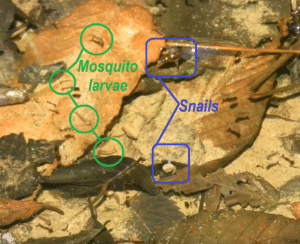
      Photo of invertebrates in a pool of water.

      Invertebrates in a leaf-lined pool.

      Great catch!  Your video clip shows a pool teeming with invertebrate life.

      The small creatures thrashing about are some well-grown mosquito larvae. They have to hang out near the water’s surface in order to breathe, but whenever they sense danger, they’ll wriggle their bodies into an S-shape and swim for cover. Based on their size, those larvae are probably ready to turn into adult mosquitos soon! (We’ve also been surprised at how well-developed the mosquito larvae have been this early in the season; their parents have really taken advantage of the warmer days!)

      You’re right that there are also some cool snails in there. The fast-moving snail with the bullet-shaped shell (towards the top of the image) might be one of the ‘bladder snails’ in the genus Physella, but it’s hard to see. (If you REALLY want to dive down the rabbit hole of snail identification, the Ohio Division of Wildlife has a terrific online guidebook.)

      All of those swimmers in the pool are important food sources for animals further up the food chain. That’s part of the reason they were in such a hurry to get away from you, a potential predator!

      Thanks for sharing!

      -Naturalist Chris Mentrek

    • Native plantings to help with drainage?

      Question

      Hello, I reside in Geauga County. We are looking to plant some shrubs, plants and trees in our backyard to help with drainage but also have to manage a septic tank. Are there varieties you recommend that would non-invasive and native to the area? Bonus points for pollinator friendly varieties.

      Naturalist's Response

      Say, did you know that April is Ohio Native Plant Month?

      Well, Happy Ohio Native Plant Month to you!

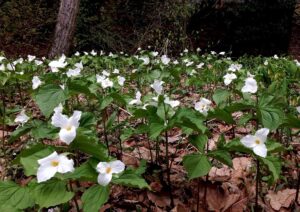
      White trillium flowers

      White trillium in bloom.

      The website above has a wealth of information on plants that are native to Ohio, from trees to shrubs to smaller “forb” flowers. They also maintain a great list of vendors who specialize in native plants.

      Here are three great guides for each of the three groups you asked about:

      Since you specifically mentioned that you’re considering new plantings for a septic field, here’s a list of plants that are well-suited to that setting; it’s from OPN Seed, one of northeast Ohio’s native-plant nurseries.

      (Speaking of being septic-smart, our neighbors at the Geauga Soil & Water Conservation District have some exemplary resources for landowners who want to garden with native plants and keep their septic systems in tip-top shape.)

      For the next step in making plant choices for your site, you’ll need to evaluate your yard’s specific characteristics to find well matched plants. Is your site sunny or shady? Wet or dry? Flat or hilly? There are great native plants to match all of those settings…say, why not drop by one of our upcoming native gardening programs to find out more?

      Thanks, and have fun with your garden!

      -Naturalist Chris Mentrek

    • Concerns for visiting deer

      Question

      For decades we have seen dear families at least twice a day on our property (Hemlock Pt Rd, Russell Twshp, Geauga County near Chagrin Falls & Madroo Farm). Now I see none. I heard gunshots the other night (that is a too frequent occurrence) & am concerned they may have been (illegally?) killed. Have you noticed a change in their patterns? Do you know anything? I miss them.

      Naturalist's Response

      I haven’t heard anything about problems with the deer in our area.
      Deer have what are referred to as home ranges, so although they can have routines and routes that they normally follow, they sometimes can change those places depending on available food and shelter. You can think of it as similar to having a territory. And it is unlikely that deer will abandon a home range, because there are always other deer to take their place.
      From what I know, the deer population is doing very well, so I’m sure that you will see deer again in your yard. They may just be favoring another place right now.
      If you have concerns about shooting in your area, however, that would definitely be something to take up with your local officials. Thanks for your question!
      -Naturalist Denise Wolfe
    • A Mallard Duck is nesting on our porch!

      Question

      Naturalist's Response

      Wow! You certainly have a front row to the life of the Mallard Duck.
      Yes, I would definitely block off the area with caution tape so that no one comes to that porch. It is illegal to disturb waterfowl nests.
      If you can observe how many eggs she has laid, that will help you determine when the young will hatch.
      After all the eggs have been laid, that is when the female will begin incubation. You will know when this process begins because she will be sitting on the nest all the time. She only leaves for very short periods of time to eat. The male does not bring her food.
      It will take about 30 days for the young to hatch, and they will all hatch within 24 hours of each other. After that, the entire group will move to the water. Hopefully there is a pond or lake close by. Once they are gone, you can clean up your porch and have access to it again.
      Hope you enjoy this unique opportunity, even though it is a little inconvenient for you!
      -Naturalist Denise Wolfe
    • Could they have been eagles?

      Question

      While out for a walk yesterday, We saw what we think was a group of bald eagles. We saw one, and are certain it was one, followed by about 6 in a group circling, as in a kettle. Not all of them were mature in that group. They were making a strange chirping noises, which seems to be their call, after listening to their call online. Then, after passing over, they were followed by one last mature one. I tried to get my phone out for photos, but by the time I did, they were too far away, so pics not good. I have done lots of programs with you the past few years…except this last 6 months or so, due to catching up on some health issues. Please don’t tell me I am seeing things…my husband also saw them! Is this something they do? Looking forward to your reply.

      Naturalist's Response

      We believe this was most likely a group of Turkey Vultures that you were seeing.

      -Naturalist Denise Wolfe

    • Insect nest ID?

      Question

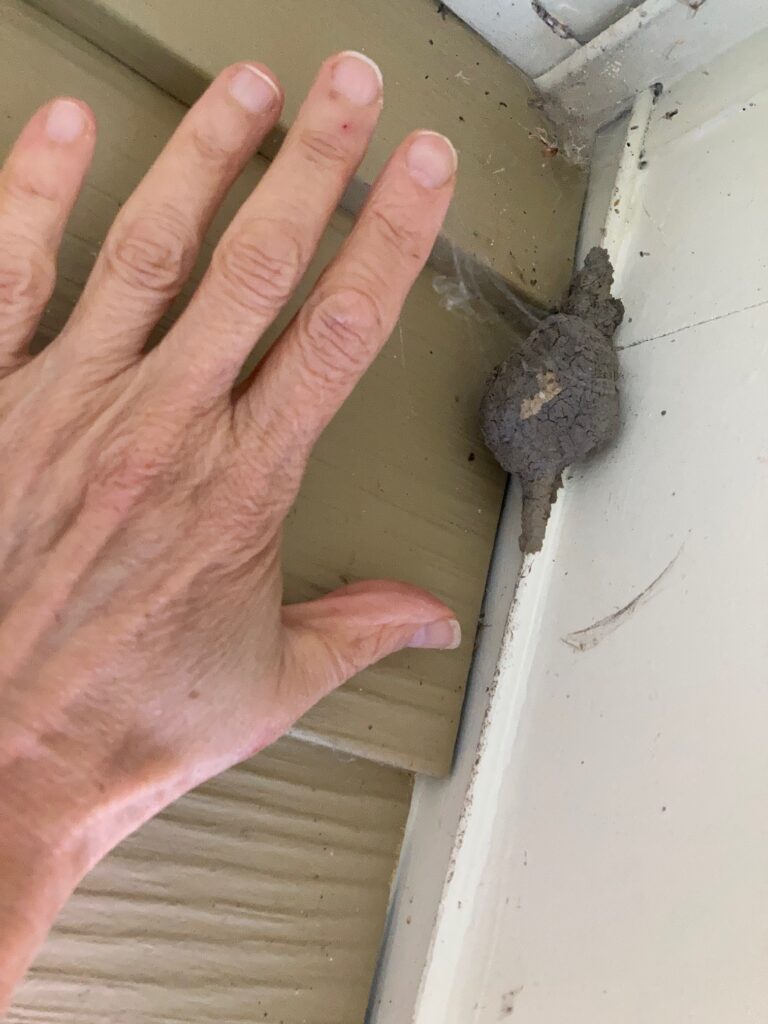
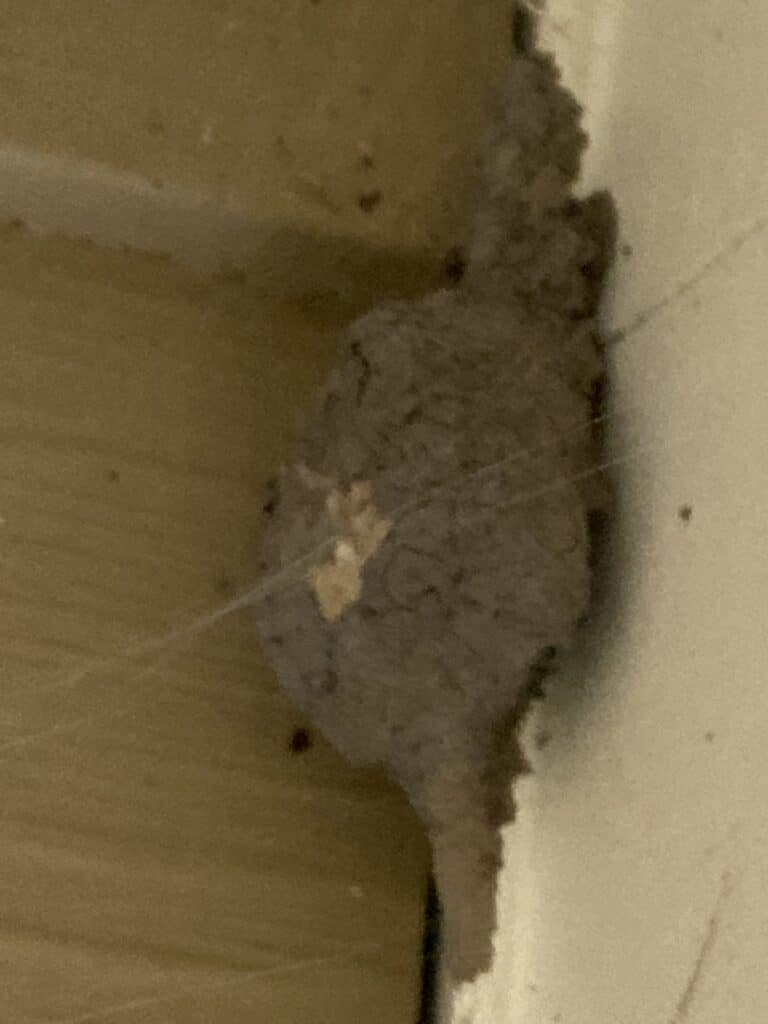
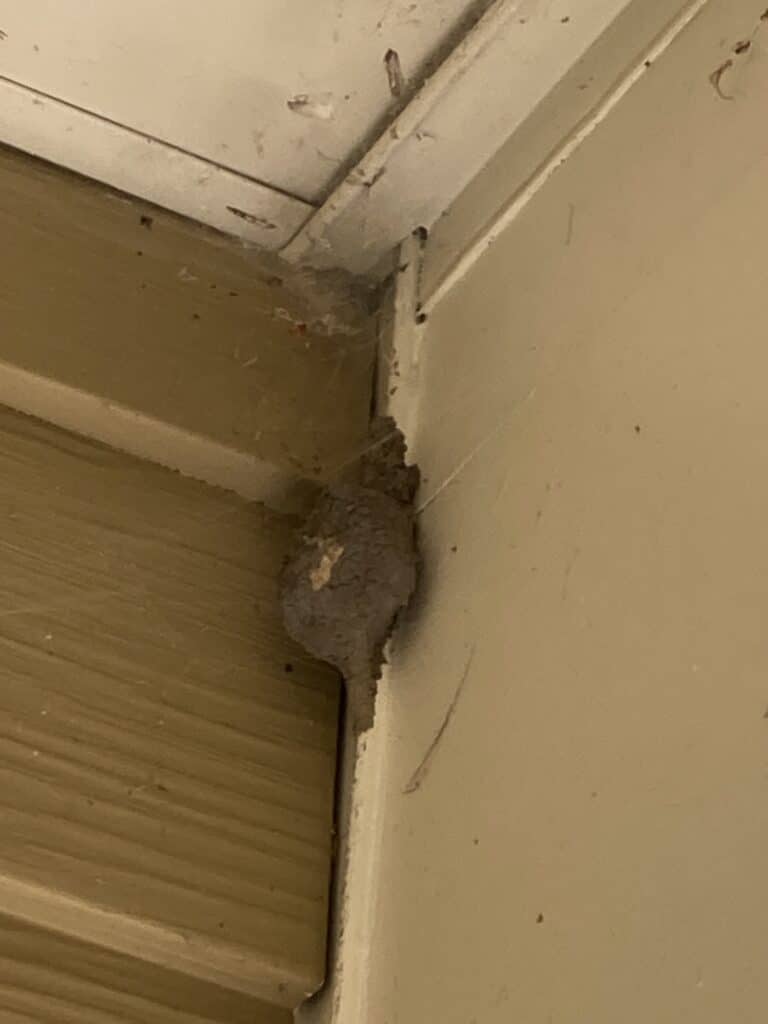
      What is this? Is it a nest, a cocoon, a mud dauber, something else? There has been no activity around it; for example, no wasps going in and out or a bird perched atop it. What might be inside it if anything? Should it be removed or left as is for something to emerge? Thank you.

      Naturalist's Response

      After discussion with the other naturalists, this could be a mud dauber nest, but it doesn’t look quite right for that.

      Thank you for your question as we try to do more research about this picture, and please follow up with us if you see the nest being used again.

      -Naturalist Denise Wolfe

    • What damaged our feeder?

      Question

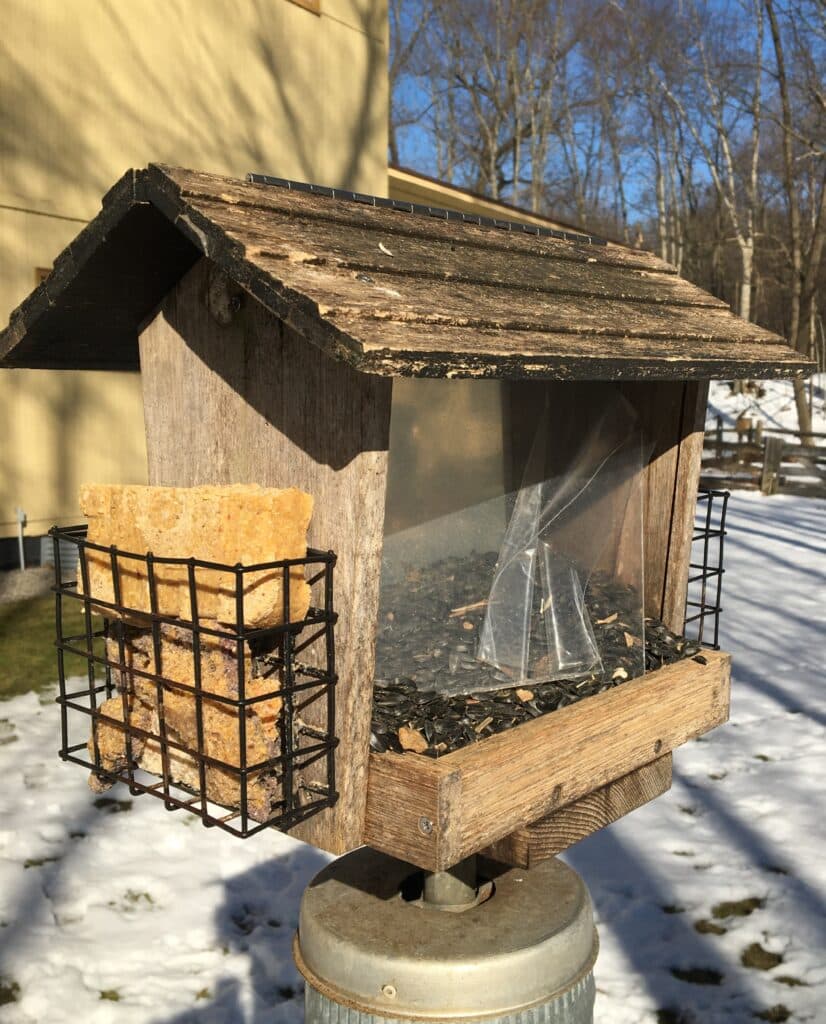
      What animal likely did this damage to our bird feeder?

      Naturalist's Response

      Ouch! It looks like somebody pulled off a seed heist!

      It’s hard to give a definitive answer, but there are a few clues in this whodunnit:

      • Only the plastic “window” portion of the feeder has been cracked; there’s no visible damage to the wooden parts.
      • Nobody has pilfered the suet-cake portion of the feeder.

      A raccoon or bear would likely have snatched the cakes during a raid, so we can probably rule them out as suspects.

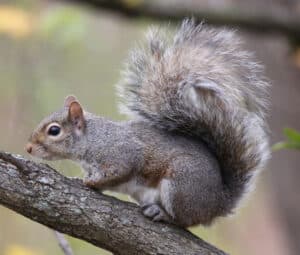
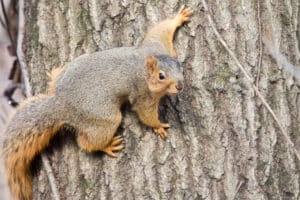
      Based on that, my top suspect would be some kind of squirrel. (Here at The West Woods, we’ve had hungry squirrels inflict similar levels of damage when trying to pry those plastic windows open!) Both Gray Squirrels and Fox Squirrels would be hefty enough to have perpetrated this crime:

      Eastern gray squirrel

      Eastern Gray Squirrel, a.k.a. “Sticky Fingers”

      Eastern fox squirrel

      Eastern Fox Squirrel, a.k.a. “The Window Wrangler”

      Luckily, that should be easy to repair: another pane of plastic or glass should slide into the grooves that held the original. The next phase of the investigation is figuring out how the squirrels might be gaining access to your bird feeder. Good luck!

      -Naturalist Chris Mentrek

    • Bald Eagles laying eggs now?

      Question

      Are the eagles in Bass Lake preserve active and laying eggs now?

      Naturalist's Response

      Hello! While we do not actively monitor the nest at Bass Lake Preserve, I am happy to report that the Bass Lake eagles appear to be incubating; I observed one of them today (2/26/26) sitting low on the nest, which indicates incubation. This is about right on time for when eggs are laid, so this is awesome news!

      -Chief Naturalist John Kolar

    • Depth of Beartown Lakes?

      Question

      Hi, I was wondering the depths of the lakes at Beartown Lakes Reservation? Also, will there be Bass and Bluegill stocking this year? I catch and release. Thanks.

      Naturalist's Response

      Beartown Lakes Reservation’s Lower Bear Lake (the largest lake) has a maximum depth of 14 feet toward the dam center, but the average depth is probably 4-6 feet. The park’s other lakes are much more shallow.
      And yes, we plan to stock Beartown with Rainbow Trout this early spring, then bass/bluegill in the late spring/early summer this year. If you’re on Facebook, you can follow along on our Fishing in Geauga Park District group, or else just watch for updates posted to our Facebook, X and Instagram.
      Thanks for your questions.
      -Park Biologist Paul Pira
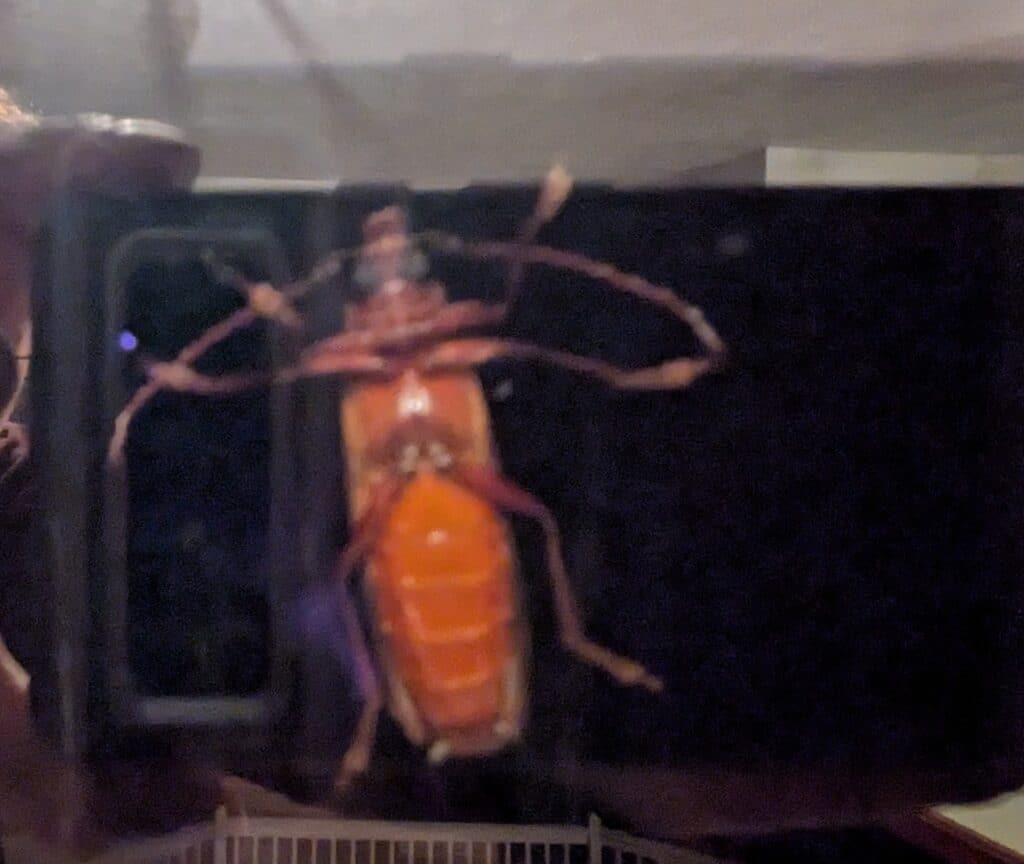
    • Is the Longhorn Beetle a threat to trees?

      Question

      Hi! Is this a longhorn beetle that is detrimental to trees? It was on the exterior of our kitchen window this evening. We're in Chardon Township. Thank you!

      Naturalist's Response

      As far as I can see from my research, this species poses no danger to trees. Rather, the larva eat dead wood, not living trees, making them beneficial decomposers in that regard.

      -Naturalist Linda Gilbert