Please ensure Javascript is enabled for purposes of website accessibility

Ask a Naturalist

Understand the world around you We've got answers

Ever wondered who left that footprint? What kind of berries are those? Or why is that White-tailed Deer white all over? Look no further than your local naturalists, the people at your Geauga Park District whose job it is to help you understand the natural world around you.


Use the form below to submit your question – ideally with a photo (if available), description of sighting (including size) and location of sighting (somewhere in Northeast Ohio) – and you’ll receive an email when a naturalist responds.

Please note that while this form does collect your name and contact information, those items will not be posted with your question, only used in case we need to contact you for additional details.

What have other people been asking lately? Scroll below the form and enjoy some other naturalist Q&As on us!
Ask a Naturalist

Step 1 of 2 - Sighting Details

  • Drop files here or
    Accepted file types: jpg, png, gif, Max. file size: 2 MB, Max. files: 5.
    • Where to bring my telescope?

      Question

      What park or area is best to bring my telescope?

      Naturalist's Response

      Observatory Park is the best location to bring your telescope for night sky viewing.

      The park has been designed to limit light pollution, which interferes with our ability to view the constellations, planets and other celestial objects in the night sky.

      Because of these design features and also the limited amount of light spilling from areas around the park, Observatory Park is designated as a dark sky park by the International Dark-Sky Association. Click here for the IDA’s website, where you can learn all about dark skies and their importance to people and the environment, and thanks for your interest!

      -Naturalist Denise Wolfe

    • Snake ID?

      Question

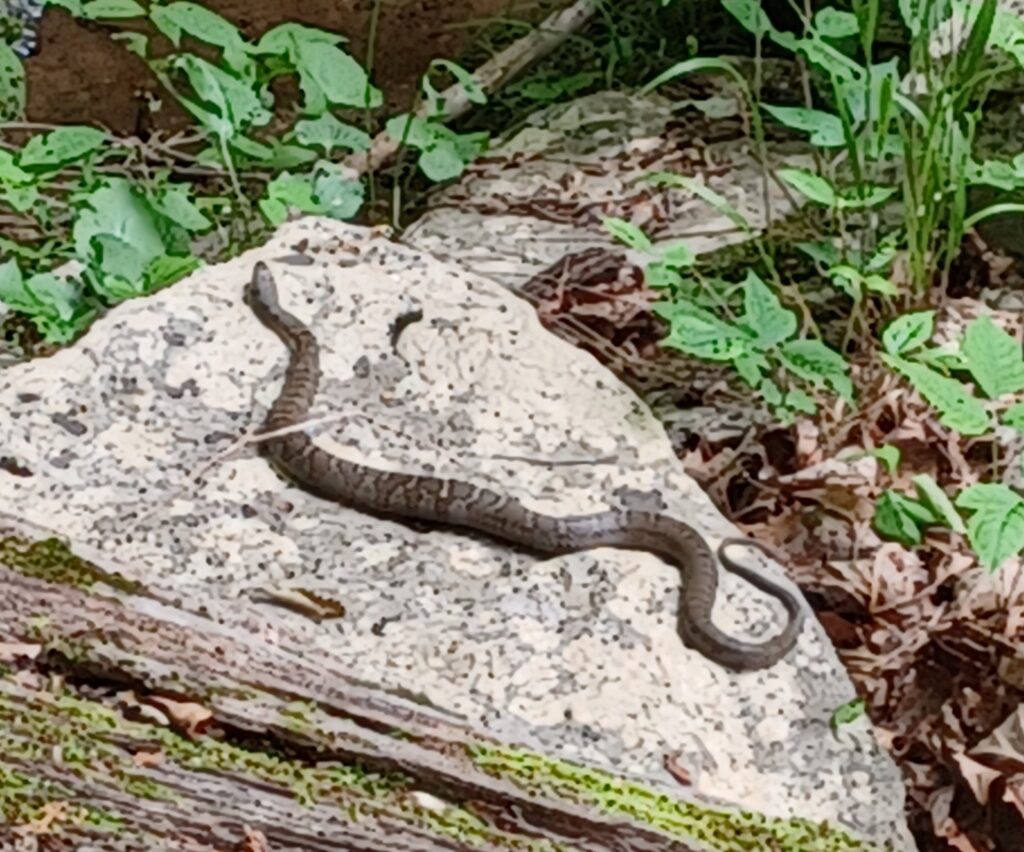
      Hello, I saw this snake at Natural Bridges, Va.

      Naturalist's Response

      Nice. You spotted a Northern Water Snake.

      -Naturalist Andy Avram

    • Regarding Yellow Perch in Wild Goose Pond

      Question

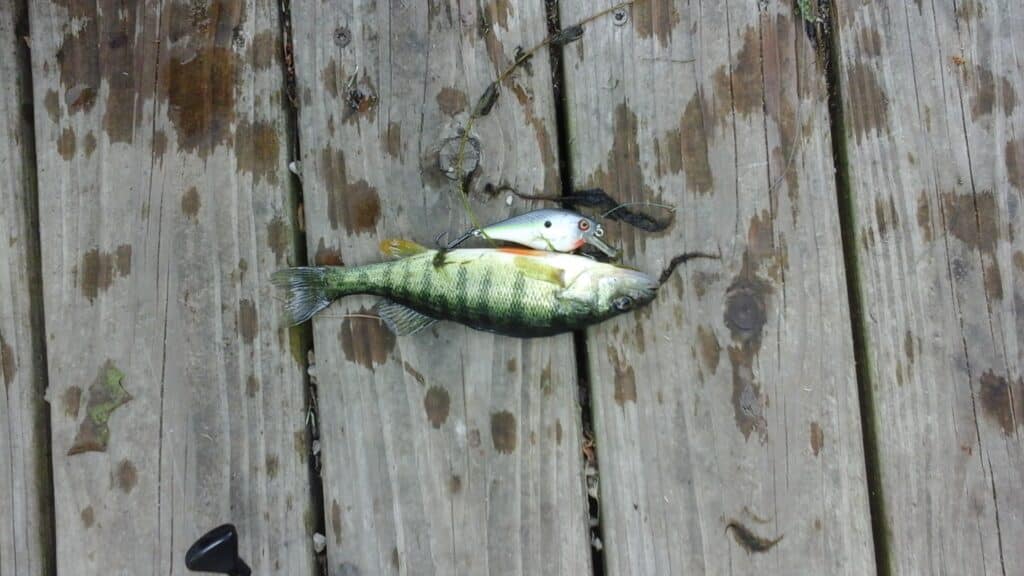
      I was fishing for bass this afternoon (June 17) with a crank bait in Wild Goose Pond at Big Creek Park and caught a perch. (See attached photo.) The perch could not fit the lure in its mouth but rather hooked itself in the gill plate while attacking the lure. The perch was returned to the pond alive and well.

      My questions are:

      1. How is it possible that there are perch in Wild Goose Pond? (Perch usually require deep cold water. I know there are perch in Best Lake, but Best is much larger and deep.)

      2. How deep is Wild Goose Pond?

      3. Did the park district know there are perch in Wild Goose Pond? (If not, now you do.)

      Thank you for your time.

      Naturalist's Response

      1. This is a hard question to answer. Sometimes we never know where, when and how fishes come to be found in our ponds. Remember, though, that yellow perch are found naturally in many lakes and ponds throughout Ohio. We have them in a few natural lakes here at Geauga Park District that we never stock. Perch do just fine in shallow bodies of water with vegetation. So, to answer your question: Yellow Perch may have arrived by any one, or multiple, of these routes: a) naturally (the help of waterbirds, another upstream flow, etc.), b) a park patron donated a few to our pond, or c) a fish accidentally came in with our annual bass/bluegill stocking.
      2. Probably around 8-10 feet deep.
      3. Yes, Yellow Perch are common in many of our lakes and ponds. Thanks for the information, and good luck fishing!

      -Park Biologist Paul Pira

    • Owl species at Headwaters Park?

      Question

      What kind of owls are seen at Headwaters? I saw 5 owls in 1 day.

      Naturalist's Response

      The owls most commonly seen are Barred Owls. They are more active during the day than the other owls, so this contributes to more sightings of this amazing bird.

      Headwaters Park is also home to Great Horned Owls, which are noticeably larger than the Barred Owls, and also home to Screech Owls, which are a very small owl by comparison.

      I always recommend the website All About Birds for comprehensive bird information.

      -Naturalist Denise Wolfe

    • Little black and orange bug ID?

      Question

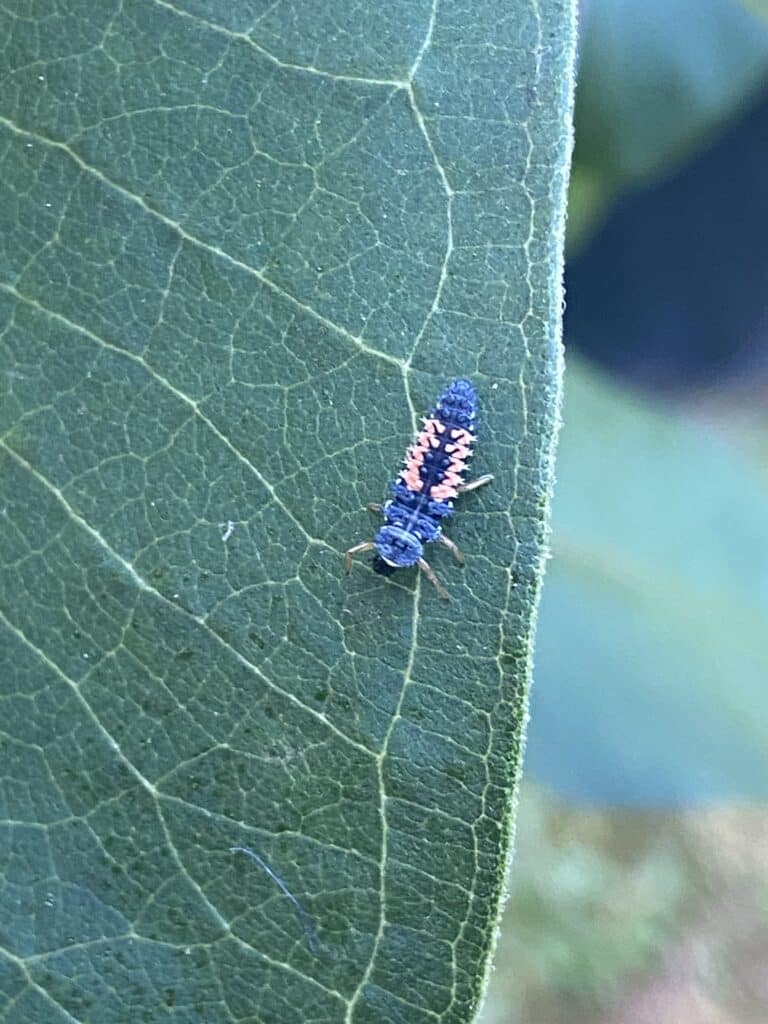
      I saw colorful this little bug on my Milk Weed.
      What is it?

      Naturalist's Response

      This is the larva of the lady beetle, which some people call ladybug.

      -Naturalist Linda Gilbert


    • Status of the Monarch this summer?

      Question

      Hi! I'm aware of the monarch population decreasing. Which is beyond sad to those who raise these beautiful creatures. I've had not a single monarch in my yard this summer. Is there still hope, or no?

      Naturalist's Response

      Thanks for inquiring about the Monarch butterfly population status. I have not seen many Monarchs in our area either. The best source of information on the population status is the MonarchWatch Blog at this link.

      According to the blog, the news may not be as dire as we think — even though we are not seeing many here — yet. Keep the faith! Things in Nature are much more hardy and able to adapt than we think.

      -Naturalist Linda

    • Where to take an injured bird?

      Question

      Where to take a injured bird

      Naturalist's Response

      Here are three resources for injured birds:

      Penitentiary Glen, 440-256-1404 x2131

      Birds in Flight Sanctuary (Canfield, OH), 330-652-3381

      Lake Erie Nature & Science Center, 440-871-2900

      -Naturalist Denise Wolfe

    • Fish in Lake Kelso?

      Question

      I have some questions about Lake Kelso. Are there any native fish species in this lake? If so, what are they? Have any other species been introduced? Is fishing there legal? What is the trailer of canoes used for? Thank you very much.

      Naturalist's Response

      Yes, there are plenty of native fishes in Lake Kelso (I’ve conducted numerous aquatic surveys in the lake over the years). Lake Kelso supports a typical Ohio warmwater fish community (Largemouth Bass, various sunfishes like bluegill, pumpkinseed, warmouth, etc.). There are also some really neat and very uncommon species like Lake Chubsuckers that take refuge in the lake.

      No, we do not introduce (stock) any fishes into Lake Kelso or allow any fishing because it is a designated State Nature Preserve. The canoes are for guided Geauga Park District programs.

      Thanks for your interest in the parks. Let me know if you have any other questions.

      -Park Biologist Paul Pira

    • Blooming lotus flowers in the parks?

      Question

      Which parks can I visit to see lotus flowers blooming in a pond?

      Naturalist's Response

      The following Geauga Park District locations all have plants blooming on the water’s surface.

      • Bass Lake Preserve (everyone’s #1 answer for your question about blooming lotus)
      • Burton Wetlands Nature Preserve
      • The Rookery (although spadderdock, not lotus)
      • Walter C. Best Wildlife Preserve

      Enjoy!

      -Geauga Park District’s Naturalist Department

    • Canada Lily at Beartown Lakes Reservation?

      Question

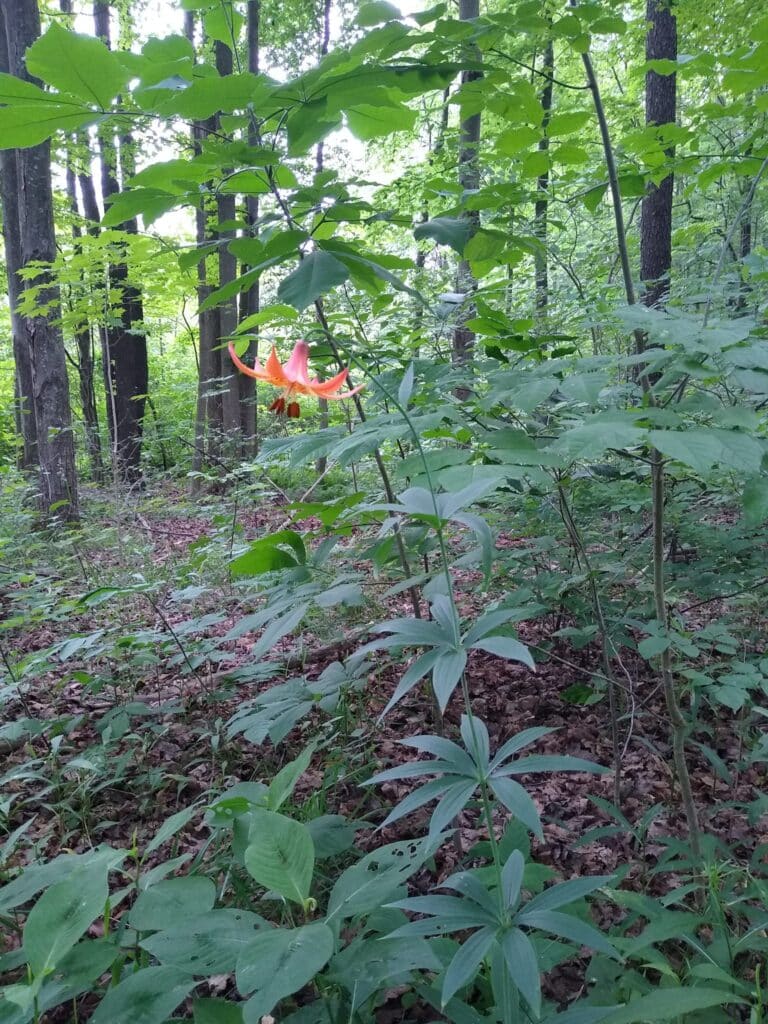
      I saw this lily while walking at Beartown Lakes. It's the first time I've seen one - looks like a Canada Lily but has only a single bloom on a long stem. About 2 ft high. (and someone told me Canada lilies only grow in the wild where there has been a forest fire?) Just wondering how common it is in this area and what it is? Thank you!

      Naturalist's Response

      Thank you for your question. This is a Canada Lily. They are often found on forest edges, especially in floodplains in some of our river and stream valleys around here. They do not need fire, but grow best where there is disturbance of the forest canopy which then allows sunlight to reach the lilies. You mention that it only has one bloom and is about two feet tall. Your suspicion that they can get bigger and with more blooms is correct. It takes around five years for a plant to bloom, and younger plants will be smaller with fewer blooms on them. Older, mature plants may have over 20 blooms and reach heights of six feet or more! 

      These plants are not as common in Ohio as they once were due to people picking the blooms or digging them up, and they are also eaten by deer.

      Great find and thank you for sharing!

      -Naturalist Andy Avram