Please ensure Javascript is enabled for purposes of website accessibility

Ask a Naturalist

Understand the world around you We've got answers

Ever wondered who left that footprint? What kind of berries are those? Or why is that White-tailed Deer white all over? Look no further than your local naturalists, the people at your Geauga Park District whose job it is to help you understand the natural world around you.


Use the form below to submit your question – ideally with a photo (if available), description of sighting (including size) and location of sighting (somewhere in Northeast Ohio) – and you’ll receive an email when a naturalist responds.

Please note that while this form does collect your name and contact information, those items will not be posted with your question, only used in case we need to contact you for additional details.

What have other people been asking lately? Scroll below the form and enjoy some other naturalist Q&As on us!
Ask a Naturalist

Step 1 of 2 - Sighting Details

  • Drop files here or
    Accepted file types: jpg, png, gif, Max. file size: 2 MB, Max. files: 5.
    • Where do water birds build their nests?

      Question

      Do water birds, like a heron, build their nests near the or in the water?

      Naturalist's Response

      The Great Blue Heron nests in colonies (groups) high up in trees near the water. There is a very visible heron rookery (nesting area) you can visit in the Cuyahoga Valley National Park on Bath Road.

      Many other birds nest very close to the water, such as geese and ducks.

      Curiously, wood ducks nest in holes in trees near the water. It is indeed a strange sight to see a duck sitting in a tree!

      For more information about birds, one of the best websites that I refer to often is All About Birds from Cornell Lab of Ornithology.

      -Naturalist Denise Wolfe

    • Three lilac blooms in one year?

      Question

      In your experience have you ever heard tell or witness and lilac tree/bush send forth scented flowers that covered the branches, 3 times in the same calendar year?

      Naturalist's Response

      What you have is most likely the dwarf Korean lilac, which is noted for its reblooming.

      -Naturalist Denise Wolfe

    • Feather ID?

      Question

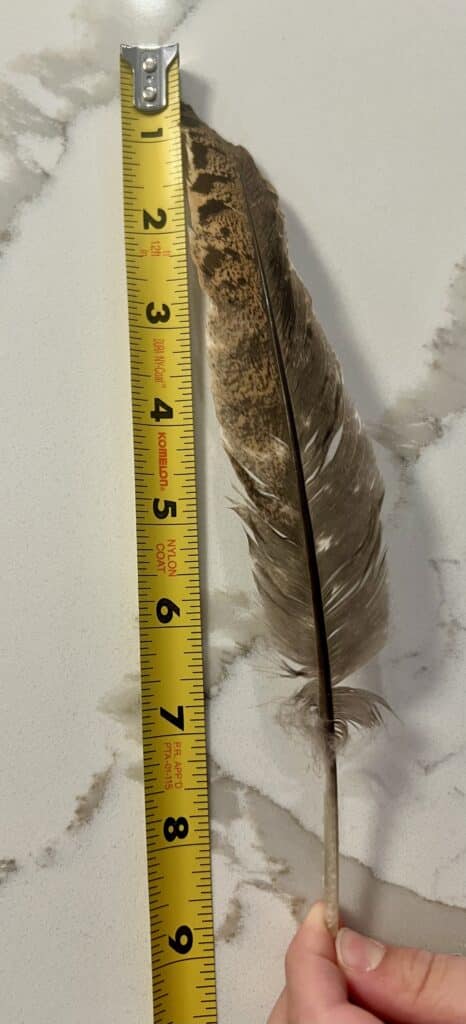
      Hi! I am Sawyer! I am 6 years old. I found this feather in our yard. Can you tell me if it belongs to a turkey or hawk?

      Naturalist's Response

      This feather likely belonged to a Great Horned Owl. I can tell because of the barring (pattern of alternating light and dark stripes) toward the tip.

      Good question, Sawyer, keep that curiosity about Nature going!

      -Naturalist Linda Gilbert

    • License to participate in the turkey hunt?

      Question

      I'm trying to fill out the form for your spring turkey hunt. My question for you is do I need to purchase a turkey license or just your basic hunting license to fill in the hunting license 8-10 digit cid# on the form? Thanks.

      Naturalist's Response

      Thanks for your question. Hunters must have a small game license to enter the drawing, and if they are drawn for the hunt, they will then need to purchase a turkey tag to participate.

      – Chief Ranger Dennis Sloan

    • Why so many robins?

      Question

      There seems to be a ton of robins this winter. Is there a reason for their presence the past few months? I’ve heard most robins stay but my husband & I have never seen one robin, much less a a yard full of them! Seems unusual so hoping there’s a good explanation. Thank you!

      Naturalist's Response

      So, depending on available food, “our” Robins (that is, ones that nest here in the spring and summer) may stay the entire winter, but most head south. However, for the Robins north of us, Ohio is “south” for them.  That’s why we may see them in numbers here during the winter.

      As spring approaches, those Robins will head back north and be replaced by the ones that normally breed in our area. Naturalist Andy just sent this helpful link that explains the phenomenon and has a really cool animated map.

      I don’t think this year is anything out of the ordinary, but it seems to me that all kinds of berries and crab apples were in abundance this year, so the Robins (and other species) really took advantage of that. 

      -Naturalist Linda

    • Concerns about coyotes denning

      Question

      I would like to reserve Katydid Lodge for several upcoming Mondays and Tuesdays. A gathering with mothers and children. However I remember there have been previous years of coyote denning at the park and I am apprehensive to pay for the reservation if there might be part closures due to coyotes. Wondering if coyotes are expected to be denning this year in the area?

      Naturalist's Response

      We did close a section of trail at Frohring Meadows back in 2012 for a few weeks as a result of a very rare human/coyote conflict, but we do not generally close Geauga Park District parks for denning coyotes, as they are very common throughout Northeast Ohio and not a cause for concern.

      A word of advice, though, if you or any park guests have dogs: obey park leash laws and you will avoid any potential problems with wildlife.

      -Park Biologist Paul Pira

    • Bird ID?

      Question

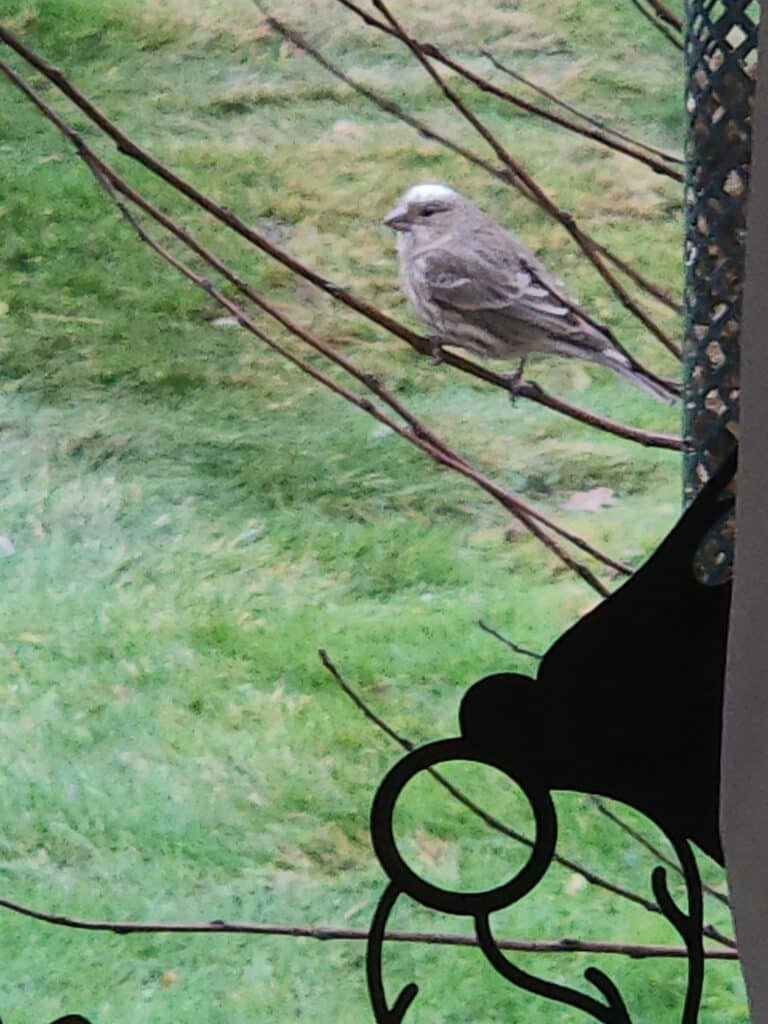
      Bird ID? At my feeders today.

      Naturalist's Response

      This is a female House Finch.

      -Naturalist Denise Wolfe

    • ID on tree holding onto its leaves for Thanksgiving?

      Question

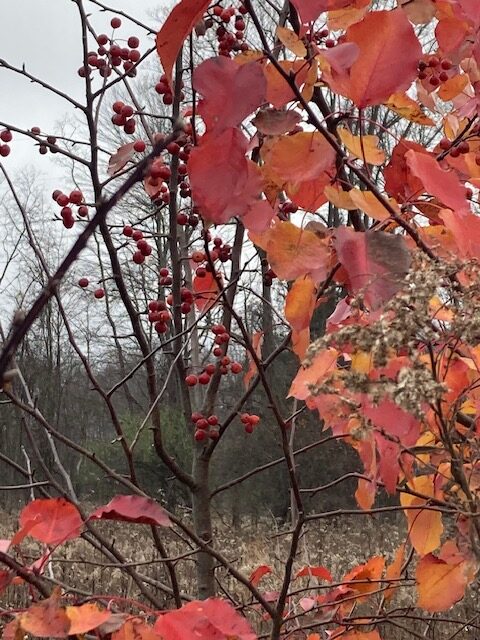
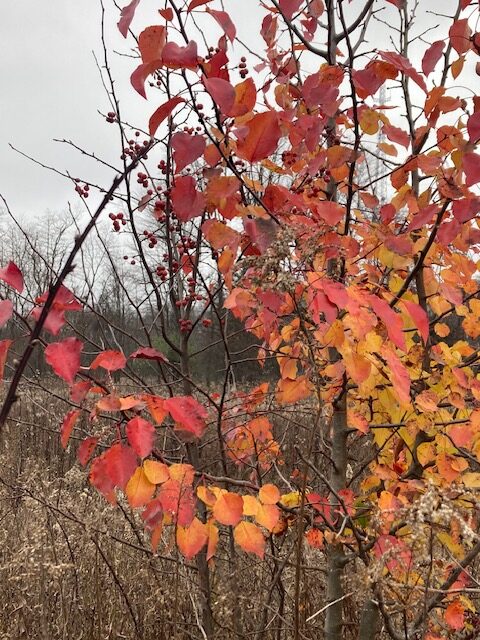
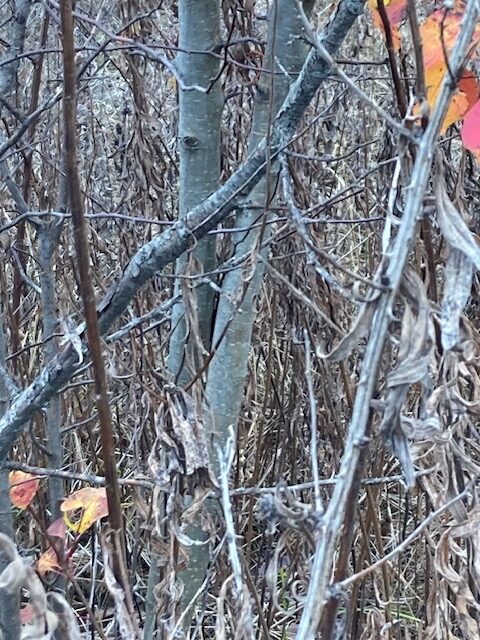
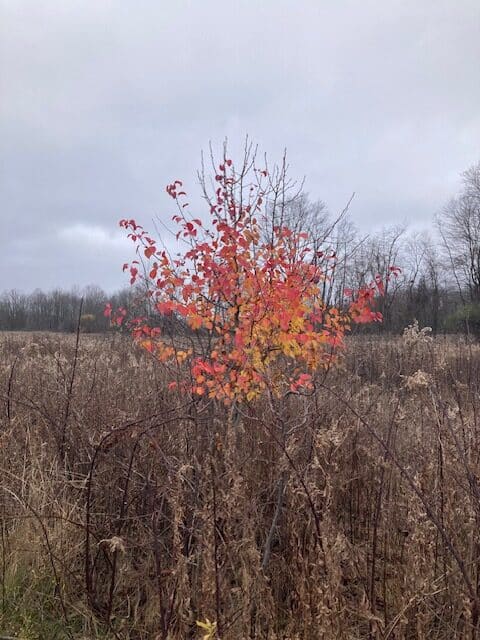
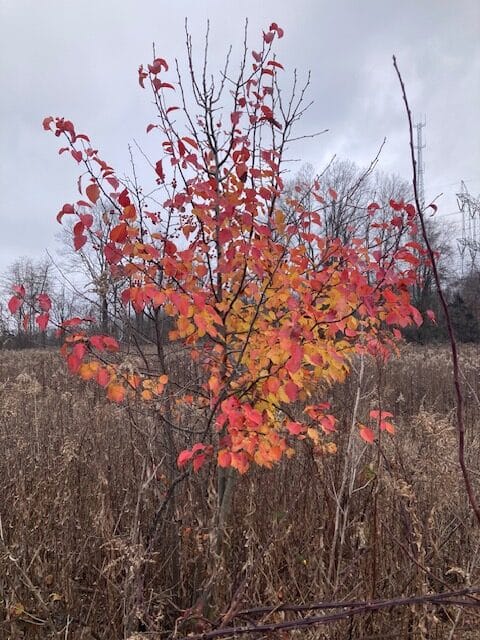
      This tree is on the western side of the pond at Frohring Meadows. It’s certainly holding on to its leaves, as of Thanksgiving Week. What is the name of this tree? Are the branches with the red berries part of the same tree or off a different tree that has grown into it? Thank you.

      Naturalist's Response

      This appears to us to be some sort of ornamental crabapple (Malus species), a common pioneering tree found in meadows that provides good food for winter birds. In fact it was not likely planted by the Park District, but more likely planted by a flying bird who ate some crabapple fruit, then dispersed the seeds after they traveled through the birds digestive system.

      Good question!

      -Chief Naturalist John & Park Biologist Paul Pira

    • Can I see Tsuchinshan-ATLAS at Observatory Park?

      Question

      Can you see comet Tsuchinshan-Atlas from Observatory Park? And if so, would it be visible from anywhere on the ground, or only from the observatory or astronomical station?

      Naturalist's Response

      For all but the sharpest eyes, Comet 2023 Tsuchinshan-ATLAS (or just “the comet”) has been invisible at Observatory Park.
      As with comet Neowise in autumn 2020, this faint comet shows up best when seen using either binoculars or a smartphone camera.
      Still interested? It should still remain viewable in this way throughout October, appearing low in the western sky just after sunset. For a handy landmark, the bright planet Venus will be in the same part of the sky; the comet will appear slightly up-and-to-the-right from Venus.
      Every day, it will appear a bit higher in the sky, and a bit fainter. And for as long as it remains visible, we’ll continue to share telescope-based views of the comet during Observatory Park programs (view the schedule toward the bottom of https://geaugaparkdistrict.org/park/observatory-park).
      Of course you’re also welcome to drop by ANY night to try for a glimpse on your own. Head on out and have a look!
      -Astronomy Naturalist “Astro-Nat” Chris Mentrek
    • Domestic cat or wild cat?

      Question

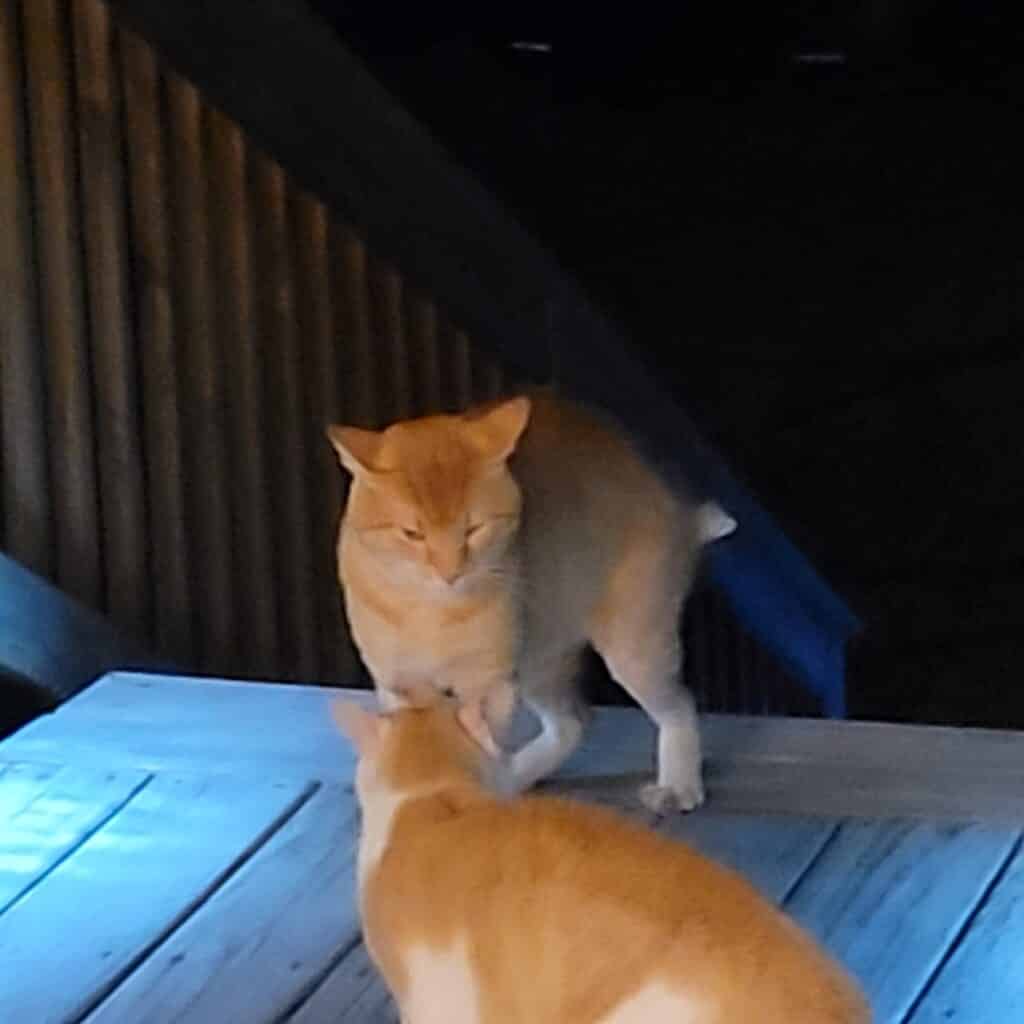
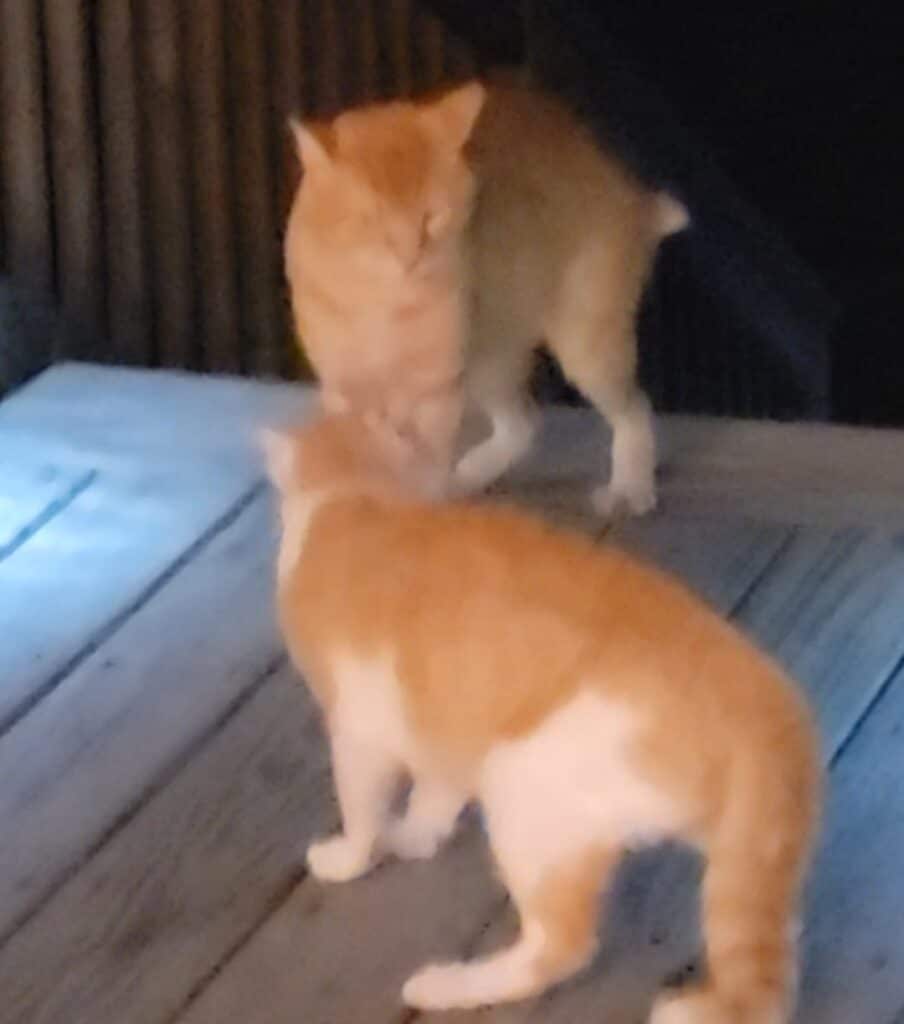
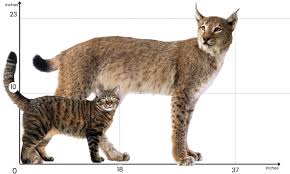
      Trying to figure out if this is a large domestic cat or wild? Looks Bobcatish, but not sure. For perspective, our cat in the foreground is about 9lbs. This was taken on July 24, about 10:15 pm at my house.

      Naturalist's Response

      You can absolutely tell a bobcat from a house cat by its appearance, even with the similarities.

      Bobcats are much larger than domestic cats. They have red-brown to grayish fur with black spots, tufts on the tops of their ears and tufts on their cheeks that resemble mutton chops. They also have a very short stubby tail with a black tip.

      -Naturalist Denise Wolfe