Please ensure Javascript is enabled for purposes of website accessibility

Ask a Naturalist

Understand the world around you We've got answers

Ever wondered who left that footprint? What kind of berries are those? Or why is that White-tailed Deer white all over? Look no further than your local naturalists, the people at your Geauga Park District whose job it is to help you understand the natural world around you.


Use the form below to submit your question – ideally with a photo (if available), description of sighting (including size) and location of sighting (somewhere in Northeast Ohio) – and you’ll receive an email when a naturalist responds.

Please note that while this form does collect your name and contact information, those items will not be posted with your question, only used in case we need to contact you for additional details.

What have other people been asking lately? Scroll below the form and enjoy some other naturalist Q&As on us!
Ask a Naturalist

Step 1 of 2 - Sighting Details

  • Drop files here or
    Accepted file types: jpg, png, gif, Max. file size: 2 MB, Max. files: 5.
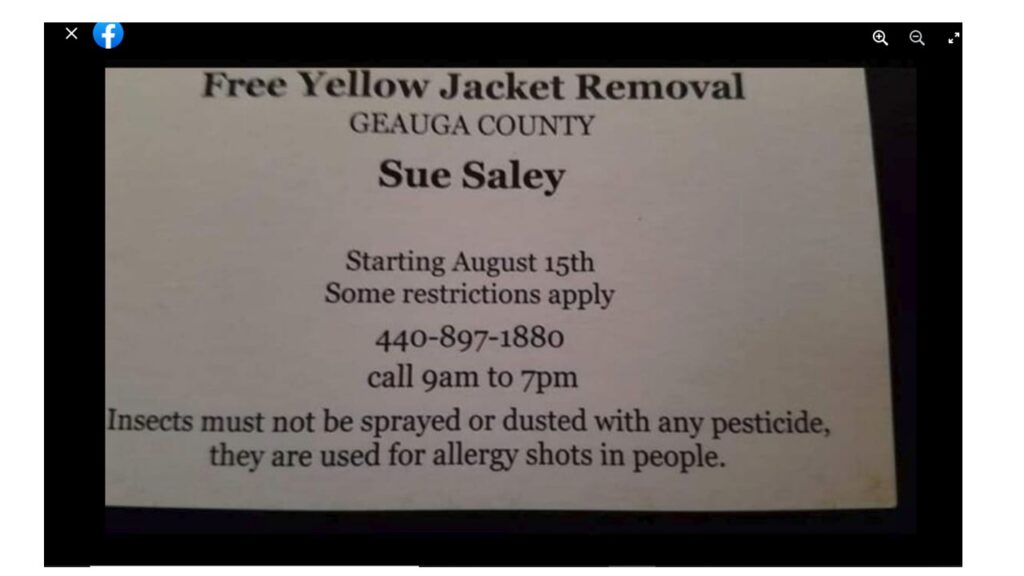
    • Yellow jacket venom removal?

      Question

      We have recently had a person stung by a yellow jacket living in a nest in the ground near our home and have been told that there is a second nest nearby. I have heard that these nests can be vacuumed out by people who collect the venom instead of applying poison. Is this true? Do you know of such a service locally?

      Naturalist's Response

      Yellow jackets seem to be more of a problem this year. I recalled seeing something about the removal of these insects in the Geauga County Wildlife Facebook group, so after sorting through old posts, I was able to come up with this:

      Hope it helps. Good luck.

      -Naturalist Linda Gilbert

    • Fungus ID?

      Question

      I saw this fungus on a tree along The West Woods' Bridle Trail loop. Can you tell us what it is? Clockwise from the Nature Center, this tree was about 1/3 the way around and on the righthand side (the inside of the loop). Thanks for looking at this.

      Naturalist's Response

      You have found one of my favorite types of fungus, and believe it or not, I know the exact tree that you are referring to because it seems to grow there every year!

      It’s called Lion’s Mane, but is also know by other common names such as Bear’s Head Tooth Fungus, Icicle Mushroom and Goat’s Beard, just to name a few.

      This fungus grows as a parasite on dying and dead deciduous trees, and is relatively common in our beach maple forests of Northeast Ohio.

      We are fortunate to have a tremendous variety of fungus in the forested areas of our parks! A great field guide to mushrooms that I would highly recommend is Mushrooms of the Northeast by Teresa Marrone and Walt Sturgeon. I believe that we should have a few copies in our nature store at The West Woods if you are interested in purchasing one!

      Enjoy your fall, and I hope you find many more cool fungus out there in the parks!

      -Chief Naturalist John Kolar

    • Odd critter ID

      Question

      My son found the unusual critter in this photo and video (https://bit.ly/3BvxAWt) on his driveway in Chesterland. What is it?

      Naturalist's Response

      Your photo was identified by iNaturalist as an immature mouse bot fly. Bot fly larvae of various species, also known as warbles, grow in wild mammals but can also parasitize domestic animals and occasionally humans. A full-size larva, like the one in the photo, burrows into the soil and pupates, emerging in one to 11 months as an adult fly.

      Adults do not feed, but the fly lays eggs, often in animal burrows, that hatch into tiny larvae that are picked up by mammal fur, then enter a host through the nose, mouth or anus. Once inside the host, the larva migrates through the body to a place below the skin, appearing as a small lump with a breathing hole for the larva. The larva continues to feed and grow until it leaves the host, like the one photographed, to find its way underground until conditions, like temperature, are right for it to emerge as an adult fly.

      These links will provide more information:
      Rodent Bot Fly Larvae | Mountain Lake Biological Station, U.Va. (virginia.edu)
      Mouse bot fly (Cuterebra fontinella) – Seashore to Forest Floor

      -Naturalist Dottie Drockton

    • Where can I purchase milkweed plants?

      Question

      Where can I purchase native milkweed plants?

      Naturalist's Response

      Here is a partial list of places to purchase native plants:

      Perennials Preferred in Chesterland

      Avalon Gardens in Chardon

      Gilson Gardens in Perry

      Bluestone Perennials in Madison

      Ohio Prairie Nursery in Hiram

      -Naturalist Denise Wolfe


    • Flower ID?

      Question

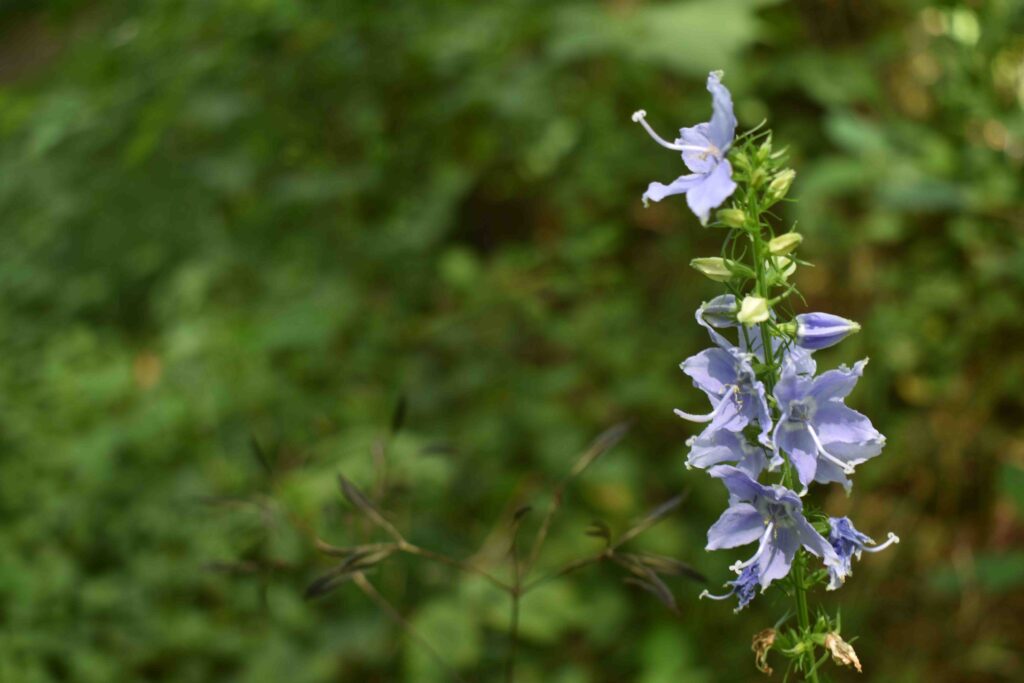
      What is the name of this flower? Found in Cuyahoga Valley 7/29.

      Naturalist's Response

      This plant is an American bellflower. Growing along stream and forest edges, their flower stalks can reach six feet in height with numerous blue flowers. They are in the same family of plants as cardinal flower and great blue lobelia and often grow side by side with those species.

      -Naturalist Andy Avram

    • What’s leaving scat near our house?

      Question

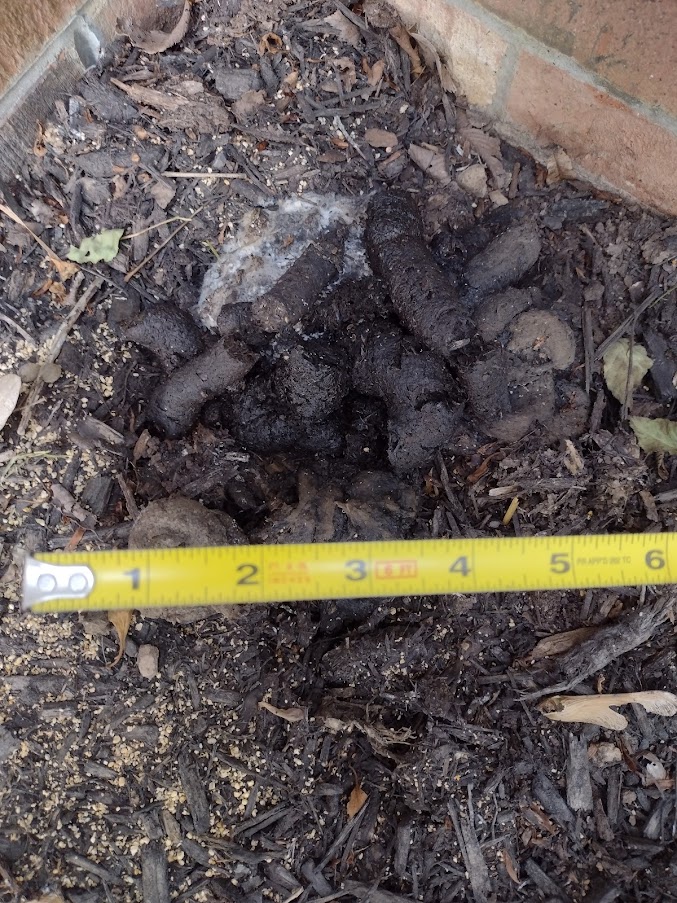
      Hi! We have a problem with a nighttime visitor who is leaving scat within a few inches of our house. The larger pile is in the front of our home, in a cubby where the garage meets the house (90 degree angle), and is recurring. The other place is in the window well of our basement glass block window, where one pile was left several days ago. The scat ranges from about 1/2" in diameter to 1" (at least). It looks like a child or adult could have left it! I've attached photos.
      . The larger "garage" pile was built up a bit, so the measuring tape is not accurately reflecting size (I had to hold it about 3" off the pile, closer to me). Please help with any ideas on how to deter this visitor from claiming our home as his own. I have not seen raccoons in the area (but my next door neighbor has). We do have coyote sightings. Could it be one of these? I'm at 100 Waverly Lane in South Russell. Thank you!

      Naturalist's Response

      The culprit leaving the mystery scat behind is most definitely a raccoon. They frequently leave their scat behind in the same place, thus the piles you are seeing. If this were coyote, it would most likely have fur in it and it would be pointy on one end. If you want to deter this visitor from claiming your home as his own, I would remove all available food sources such as bird seed, pet food bowls, outdoor garbage cans, etc. If you remove any potential food source, the raccoon will likely not stick around.

      Best of luck!

      -Chief Naturalist John Kolar


    • What’s growing on my trees?

      Question

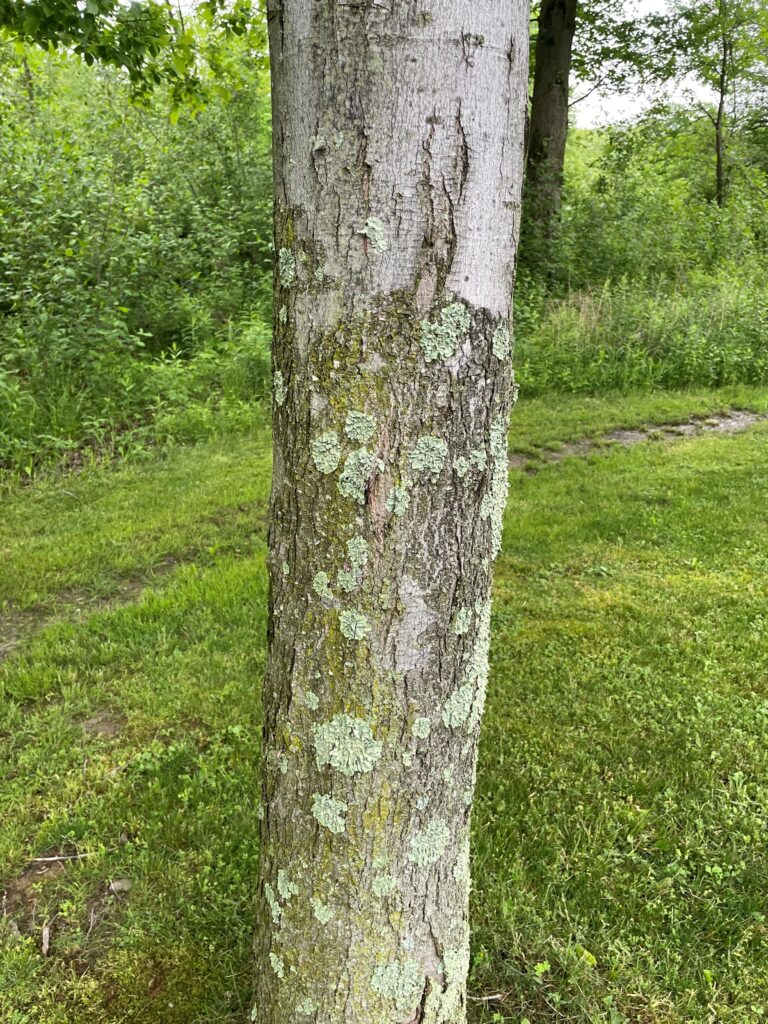
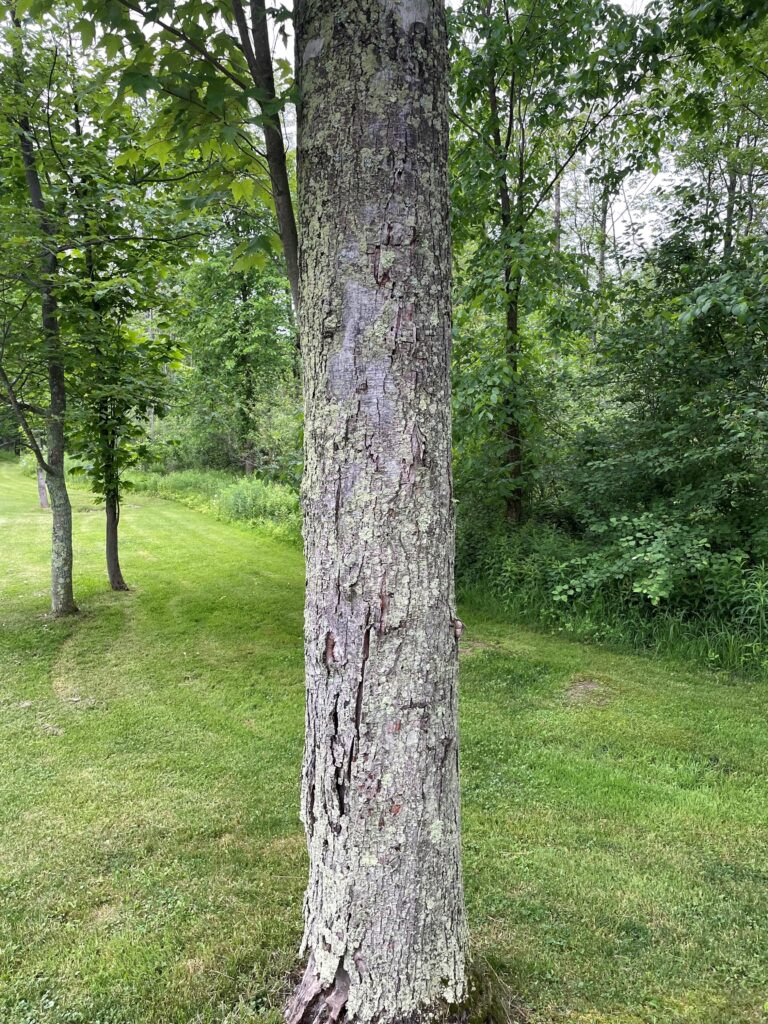
      I have some trees on my property that have what looks like green moss on them. My wife and I are concerned that we may have some type of disease occurring. Is it possible to get someone out to our home to check them?

      I reached out to a local tree company but they don't perform this type of service and recommended I reach out to the park district for help.

      Naturalist's Response

      Most of what is on your trees are lichens. These are naturally occurring organisms that are a combination of an algae and a fungus living together. Rather than a problem, they are actually completely harmless and are indicators of good environmental conditions.

      Click here for a link to the Ohio Department of Natural Resources’ lichen guide. This will give you lots of information about these amazing organisms.

      Some moss is also on your trees, which again is harmless.

      Let us know if you have any other questions. Thanks for asking!

      -Naturalist Denise Wolfe

    • How to protect snapper eggs?

      Question

      We found a momma snapping turtle laying her eggs on our property what should we do to protect them until they hatch?

      Naturalist's Response

      How awesome! I myself have seen females laying eggs every spring, but it never gets old. What a spectacular Nature sighting!

      Thank you for wanting to do what you can to help the success of the hatchlings. I would definitely advise you to use a wire-type mesh to cover the top of the soil of the area where the eggs were laid. Secure it with large either rocks or deep stakes to prevent predators like raccoons from digging up the nest and having an egg meal. The sooner you do this the better, as the scent from the mother is still on the nest area. Then you can remove the mesh probably in a month or two. Hatching generally takes about 80-90 days, but can vary depending on temperature and environmental conditions. The hatchlings usually emerge in August through October.

      Thanks so much for sharing!

      -Naturalist Nora Sindelar

    • Raccoon family in our garage

      Question

      It appears we have baby raccoon(s) living in our garage in Geauga County. Do you know who we can call to safely remove them?

      Naturalist's Response

      My first call would be to the Ohio Division of Wildlife at 330-644-2293. You can ask them to suggest a solution.

      If you want, I have a list of some wildlife removal businesses that I found from our receptionist info book. I don’t have any knowledge of these businesses, though, so that’s why I suggest you contact the Division of Wildlife first.

      -Naturalist Denise Wolfe

    • Snake ID?

      Question

      What kind of snake is this? Unfortunately it was hit, but it had an orange belly. Saw on Riverdale Road in Ashtabula County. Was curious of the kind, never saw one like this before. Thank you!

      Naturalist's Response

      This is an Eastern Garter Snake. Often people think of garter snakes having three stripes running down their body, however these snakes may have three bold stripes, or the stripes may be nearly absent (as this snake is demonstrating). These stripes may be yellow, orange, gray, tan, bluish, or greenish. The body color ranges from olive brown to black, and may have a checkerboard pattern (as seen on the front part of this snake) or be solid colored.

      In short, the Eastern Garter Snake is not only our most common snake, but also our most variable snake – which equates to it being our most misidentified snake!

      -Naturalist Andy Avram