Please ensure Javascript is enabled for purposes of website accessibility

Ask a Naturalist

Understand the world around you We've got answers

Ever wondered who left that footprint? What kind of berries are those? Or why is that White-tailed Deer white all over? Look no further than your local naturalists, the people at your Geauga Park District whose job it is to help you understand the natural world around you.


Use the form below to submit your question – ideally with a photo (if available), description of sighting (including size) and location of sighting (somewhere in Northeast Ohio) – and you’ll receive an email when a naturalist responds.

Please note that while this form does collect your name and contact information, those items will not be posted with your question, only used in case we need to contact you for additional details.

What have other people been asking lately? Scroll below the form and enjoy some other naturalist Q&As on us!

Ask a Naturalist

Step 1 of 2 - Sighting Details

  • Drop files here or
    Accepted file types: jpg, png, gif, Max. file size: 2 MB, Max. files: 5.
    • “Single” Goose After Road Incident?

      Question

      There’s a geese who recently lost its regular partner to a road incident. It has been exhibiting different behaviors and sleeping in places where it could possibly be hit. I feel like it’s depressed and could use a better location or some friends. Is it possible to relocate. This geese is now alone.

      Naturalist's Response

      A Canada goose swimming at Walter C Best preserve, photo by Tom Elesh

      A Canada goose swimming at Walter C. Best Wildlife Preserve; photo by Tom Elesh.

      Canada Geese are typically monogamous; they’ll stay with the same mate (and even the same nesting site) for years. However, if a partner is lost, the surviving mate will usually find a new partner by the next nesting season.

      Wild geese are generally hardy souls. Over the centuries, they’ve learned to contend with predators, disease, injuries, and even vehicle collisions. The loss of a mate is typically only a temporary setback. Your goose should be able to swim, waddle, or fly its way back into the company of other geese as soon as it’s ready.

      -Naturalist Chris Mentrek

    • Oldest trees at The West Woods?

      Question

      How old are the oldest trees in the West Woods Park?

      Naturalist's Response

      Since most of the land that makes up The West Woods was used for farming up until the early 20th century, many of the trees you’ll encounter there are less than a century old.

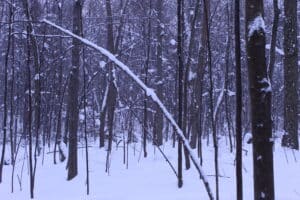
      Snow on a stand of young trees at the West Woods.

      Snow on a stand of young trees at The West Woods.

      However, there are a few ancient trees that have survived for much longer than that; some were alive long before Ohio became a state in 1803!

      Many of these large, old trees are found along the course of Silver Creek, on land that was either too steep or too soggy to be cleared for other uses.

      1930's aerial photo of the West Woods area showing farmland with forest along Silver Creek.

      1930s aerial photo of The West Woods area shows mostly farmland, with forest preserved along Silver Creek.

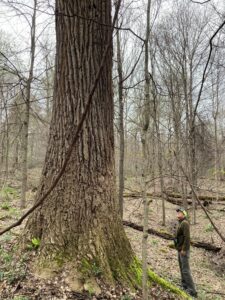
      These giants include red oak, sycamore, and a tulip tree that is one of the largest recorded tulip trees in the state!

      Naturalist John Kolar is dwarfed by a large tulip tree at the West Woods.

      Naturalist John Kolar is dwarfed by a large tulip tree at The West Woods.

      It’s difficult to determine the exact age of these trees without cutting them, but based on their size, we can estimate their ages at between 250 and 300 years old. Those are some notable trees!

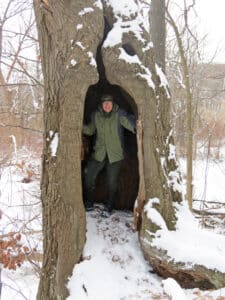
      Naturalist Linda Gilbert stands within a hole in a large oak tree at the West Woods.

      Naturalist Linda Gilbert stands within a hole in a large oak tree at The West Woods.


      -Naturalist Chris Mentrek

    • Squirrel nesting box near a hawk nest?

      Question

      I have a red-shouldered hawk nest on my property and I would like to put up a squirrel nesting box. How far should I put the squirrel box from the hawk's nest?

      Naturalist's Response

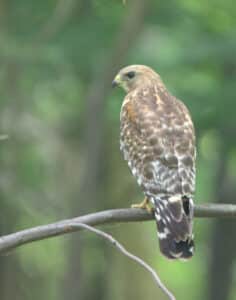
      Red-shouldered hawk perched in a tree.

      Red-shouldered hawk [Photo by Bruce Bennett]

      That’s a new one — you’ve got our naturalists stumped!

      Red-shouldered Hawks will eat a huge variety of prey, from songbirds to frogs to rodents. Though they typically prey on smaller mammals (think of voles and chipmunks), they will also prey on squirrels.

      Nesting pairs of these hawks have large “home ranges” where they hunt; one study from the University of Georgia found that nesting pairs had a typical hunting range of half a square mile. It’s unlikely that any squirrel-nesting box that you place will be outside of their hunting range.

      However, we don’t know of anyone who’s attempted your experiment. Will squirrels choose to nest in a site that’s so close to a Red-shouldered Hawk’s nest, or will they keep their distance from the hawks? Can the squirrels and hawks coexist in the same patch of woods, or will you get to witness some hawk-vs-squirrel predation? We won’t know unless you put up your nest box and see what happens.

      Keep us posted!

      -Naturalist Chris Mentrek

    • What happened to this Cooper’s Hawk egg?

      Question

      Today April 15 I found a coopers hawk egg in my front yard under a nest that the hawks have used the past 2 or 3 years. It had a pecked hole in it and a reeky odor. When do these eggs typically hatch or was it predated? I ID'ed the egg from an internet picture which looked exactly like the egg I found. Thanks in advance for info you can give me about the egg.

      Naturalist's Response

      It’s hard to know what happened with the Cooper’s Hawk egg. Hatch dates depend on when the last egg was laid and how long the incubation period is. For Cooper’s Hawks, here the nesting information from Cornell’s All About Birds site:

      NESTING FACTS

      Clutch Size: 2-6 eggs
      Number of Broods: 1 brood
      Egg Length: 1.7-2.0 in (4.4-5.1 cm)
      Egg Width: 1.4-1.6 in (3.5-4 cm)
      Incubation Period: 30-36 days
      Nestling Period: 27-34 days
      Egg Description: Pale blue to bluish white.
      Condition at Hatching: Covered in white down and weighing just 28 grams or 1 ounce, but able to crawl around nest.
      So, it depends on when the female starts incubating. If the adults are actively feeding young in the nest right now, then maybe that egg did not hatch —or started to hatch and the nestling could not get out. Some birds remove eggs that don’t hatch from the nest. Or perhaps something pecked the egg after it fell out. I’m sorry not to have a better answer.
       
      -Naturalist Linda Gilbert
    • Best time for fireflies in the woods?

      Question

      When is the best time to see the fire flies [lightening bugs] in the observatory park woods?

      Naturalist's Response

      The best time to see fireflies, sometimes called lightning bugs, is mid-June to mid-July. You can see them in yards and meadows beginning at sunset. Enjoy the show!

      -Naturalist Denise Wolfe

    • Best time to stargaze in April?

      Question

      I was hoping to come and stargaze in April, is 11pm late enough?

      Naturalist's Response

      April should be a great month for stargazing!

      Sunset will be around 8 PM at the start of the month, but will come at almost 8:30 by the end of April, and in general the later past sunset you stay awake, the more stars you’ll see!

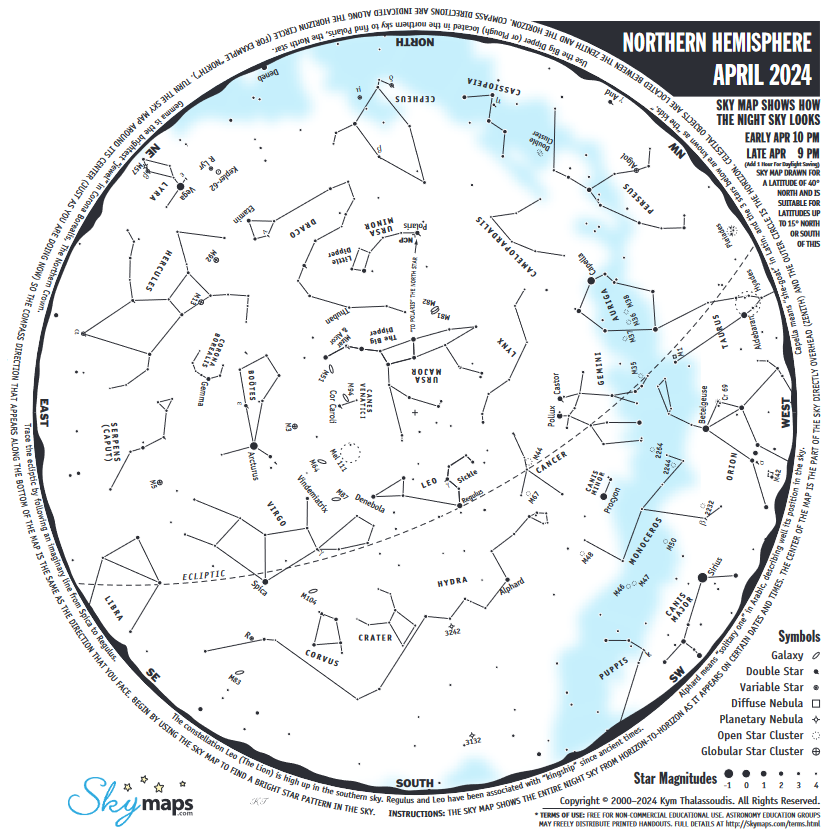
      Here’s a link to a terrific map of the April sky at around 10 PM, courtesy of SkyMaps:

      April 2024 star chart from SkyMaps

      However, there are a few highlights in the sky that are worth seeing before 11 PM.

      Jupiter is a great sight to check for early in the evening: it will appear low in the west at sunset. (By the end of April, it will be setting by 9:20 PM, so catch it early!)

      One last tip: don’t forget to take the moon into account!

      • New Moon: Monday, April 8, 2024 (during the solar eclipse!)
      • First-Quarter Moon: Monday, April 15 (visible in the early evening)
      • Full Moon: Tuesday, April 23 (rises at sunset, visible all night)
      • Third-Quarter Moon:  Wednesday, May 1 (rises long after sunset)


      Best of luck, and happy stargazing!

      -Naturalist “Astro-Nat” Chris Mentrek


    • A doe with four fawns?

      Question

      Is it possible for a doe to have 4 fawns? I wish I had my phone on me to take a picture. We were quite shocked. I thought for sure another doe would appear, I never heard of quadruplets. but no other doe in sight. This doe was traveling with 4 frolicking fawns through our back yard. They all look the same size. They were here all this week. Middlefield Village

      Naturalist's Response

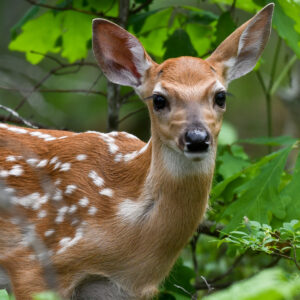
      White tailed deer fawn.

      Wow, that’s a full house!

      While it’s common for White-tailed Deer mothers to have a single fawn their first year, they often birth two or more fawns in later years.

      One study from the University of Illinois found that the average litter size for a Midwestern doe was two, but that litter sizes as large as five were possible.  (That’s a lot of fawns!)

      It’s possible that your doe is tending a large litter, or that she’s part of a group that has “herded up.” Keep an eye on them and see what they do as spring continues!

      Thanks for sharing!

      -Naturalist Chris Mentrek

    • “White curly thing”

      Question

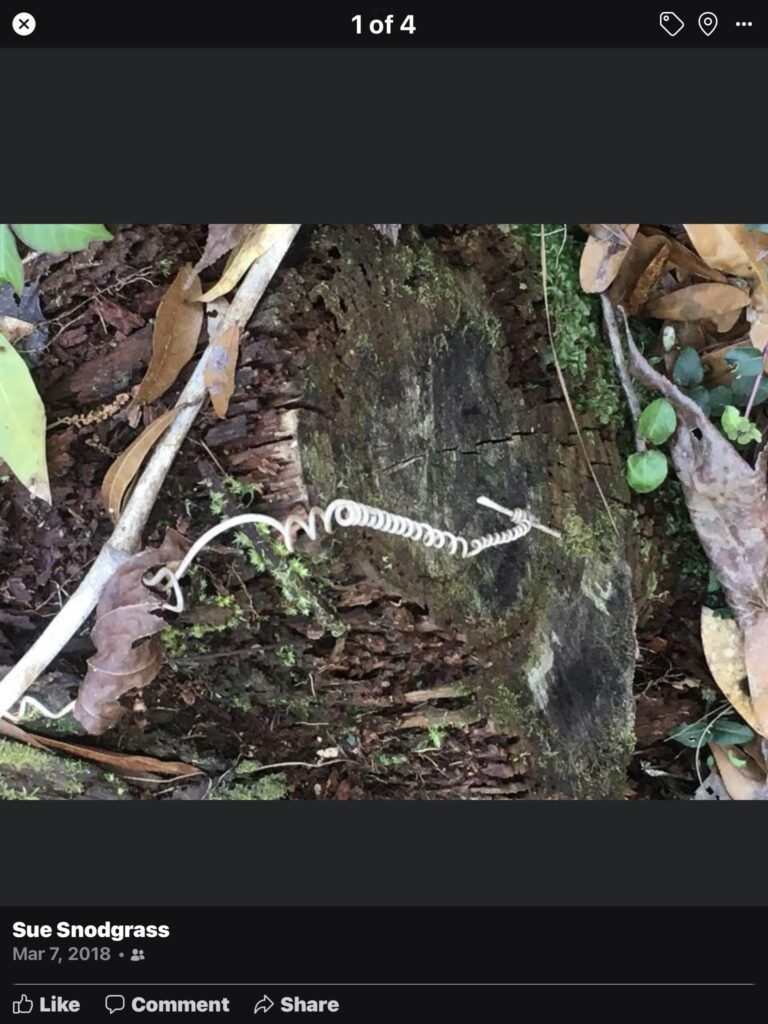
      What is the white curly thing in my photo?

      Naturalist's Response

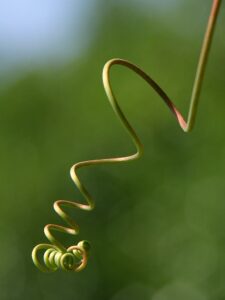
      A winding, spiral tendril from a plant vine.

      Impressive tendril!

      The pale, spiral object in your photo looks like a dried-up tendril from a plant vine. Plants that produce vines (such as wild grapes) will typically send out thin structures called tendrils; they grow opposite the leaves, and extend outwards to help support the plant as it climbs.

      The tendrils grow in a whip-like, spiraling motion that helps them grab onto any nearby supports (like a lasso). Once they encounter something strong (such as the twig that your spiral seems to have wrapped around), their spiral growth helps them to hold on tight and reinforce the growing vine.

      Once the growing season is over, the tendrils dry out and harden into part of the vine’s support structure. (Some crafty people will even collect the dried tendrils for wreaths and arrangement; some people even sell them on crafting sites such as Etsy!)

      If you’d like to read more, here’s a great summary of wild grapevine growth from Michigan State University.  This guide from Massachusetts offers another photo-rich summary of vine structure.

      The tendril in your photo might be a record-setting spiral, though!

      -Naturalist Chris Mentrek

    • Best time to move a woodpile?

      Question

      I recently moved to Chesterland; and have a woodpile on my concrete driveway I"d like to relocate. It hs been there for some time; and there is a habitat for snakes, toads, etc.. that I want to impact minimally as I move the wood. My question is - when (summer, fall)/ and how should I move it to cause the inhabitants the least amount of trouble? Thanks.

      Naturalist's Response

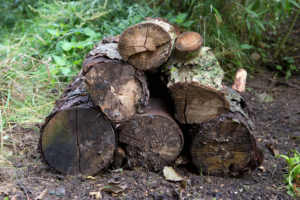
      Stacked logs in a woodpile.

      Congratulations on creating some cozy habitat space for backyard wildlife!

      If you’d like to move your wood pile off of the driveway while minimizing the effects on any critters sheltering within, your best bet is to wait for a warm day in May or June. By then, most animals should be done with their winter dormancy, and they’ll be ready to be up and active. If “moving day” is warm enough, any animals sheltering in your wood pile will have plenty of energy to crawl off in search of new shelter.

      (Since your wood pile is on concrete, you don’t need to worry about disturbing any burrows underneath.)

      For folks who haven’t yet created some backyard shelter for wildlife, here’s a handy guide to setting aside a corner of your yard for animal shelter (from the National Wildlife Federation).

      Thanks for sharing, and have a happy moving day!

      -Naturalist Chris Mentrek

    • Do I remove my Chimney Swift nests?

      Question

      I am a huge Chimney Swift fan, and I actually donated an intact nest a few years ago with an egg that you guys put in a case (Since the Swift educational program was only using a sketch of a nest at that time).

      Anyway- so my Q pertains to the nests that they make each year in my chimney.

      I thought I read that it is important to remove their old nests so that they don't reuse them as they could be unstable. Is that true? Or do they build a fresh nest each year?

      IF it is a worry that they would reuse and it potentially would fail them, then I will have it the old one removed.

      If you could advise. ALSO is there anyone who would come out to remove the old nests if that should be done? I had been hiring a chimney sweep company but it gets expensive. I haven't needed full cleanings as I don't burn often.

      Naturalist's Response

      Thanks for being attentive to the chimney swifts that have found a nesting site in your chimney.

      I wasn’t sure about their nesting situation, so I went to my friend and naturalist-extraodinaire Judy Semroc. She has maintained a chimney swift tower on her property for eight years or more. Upon examination of her tower, she discovered four nests over that time period.

      To answer your question, Judy said that the swifts will decide if a nest can be re-used. If so, they will add new material and new “glue” (ie. their sticky saliva) to them to make them more sturdy. So, yes, they may re-use an old nest. However, other years, they may choose to build a new nest.

      Judy does not recommend removing the old nests just because they are old, and she doesn’t know of anyone outside of a chimney sweep that would do nest removal. Judy also recommends that you keep your damper closed during nesting time. The damper will become the “bottom” of the chimney and will catch any nestlings that may fall out of the nest; then, parents will still be able to feed and care for them even if they fall out.

      Chimney Swifts come back to the same chimney each year, so you can look forward to the return of “your” birds.  The males usually arrive first and then the females to their nest sites. If you have more questions, click here for Judy’s website.

      -Naturalist Linda Gilbert