Please ensure Javascript is enabled for purposes of website accessibility

Ask a Naturalist

Understand the world around you We've got answers

Ever wondered who left that footprint? What kind of berries are those? Or why is that White-tailed Deer white all over? Look no further than your local naturalists, the people at your Geauga Park District whose job it is to help you understand the natural world around you.


Use the form below to submit your question – ideally with a photo (if available), description of sighting (including size) and location of sighting (somewhere in Northeast Ohio) – and you’ll receive an email when a naturalist responds.

Please note that while this form does collect your name and contact information, those items will not be posted with your question, only used in case we need to contact you for additional details.

What have other people been asking lately? Scroll below the form and enjoy some other naturalist Q&As on us!
Ask a Naturalist

Step 1 of 2 - Sighting Details

  • Drop files here or
    Accepted file types: jpg, png, gif, Max. file size: 2 MB, Max. files: 5.
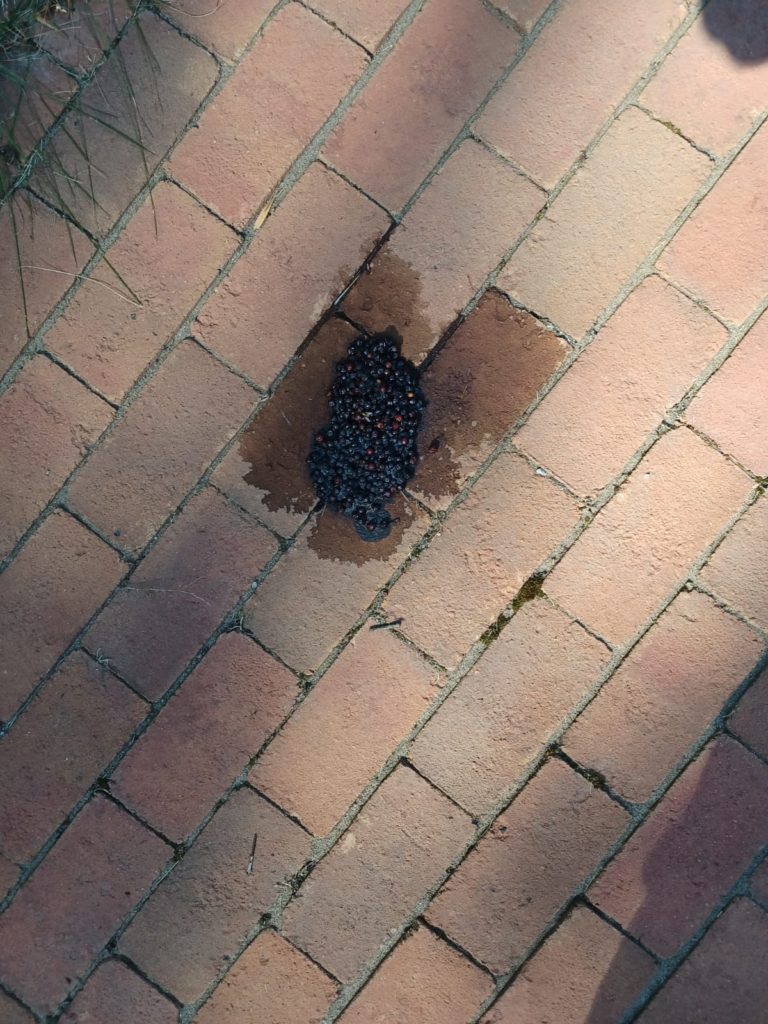
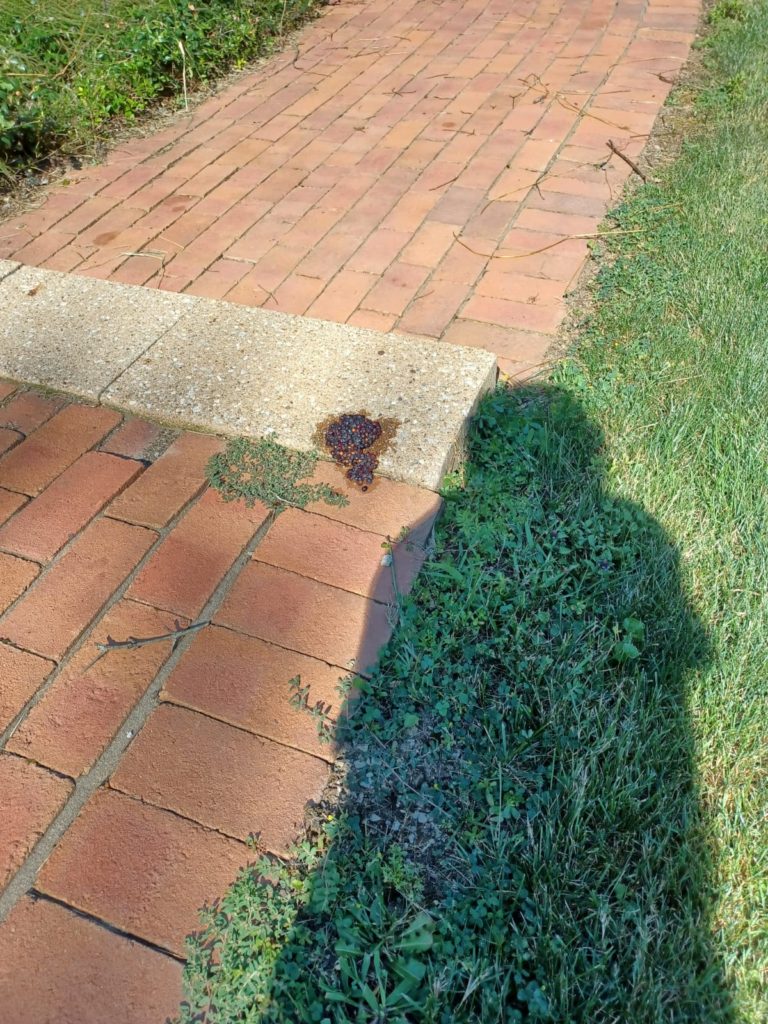
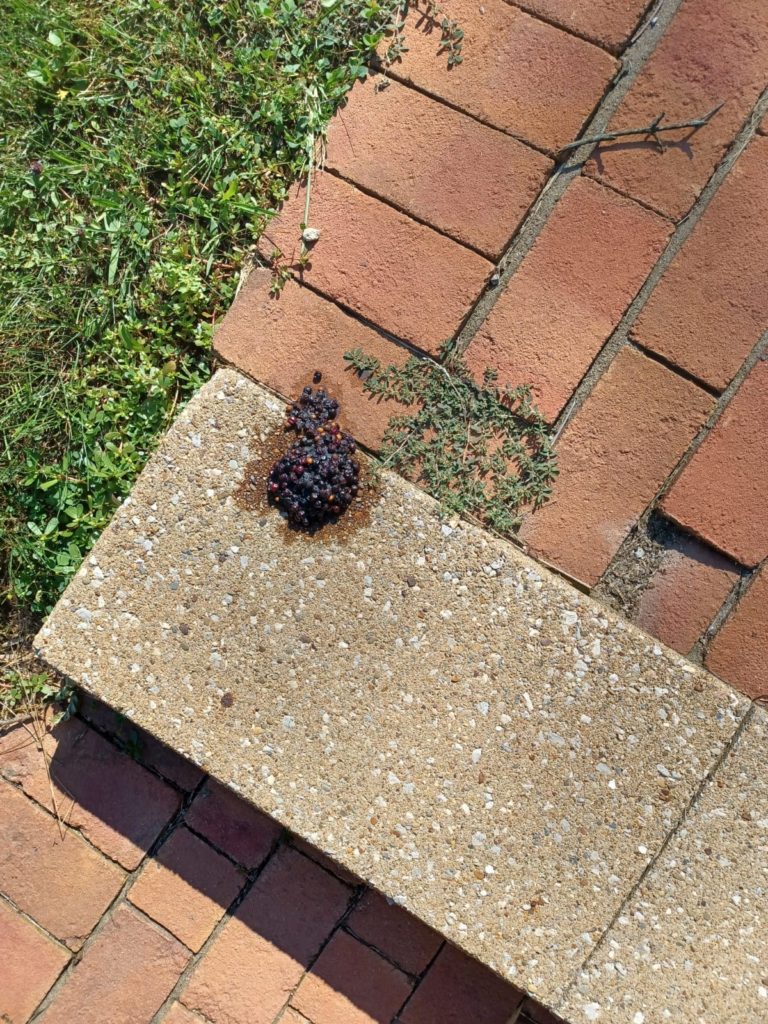
    • What kind of scat was that?

      Question

      My mother found some kind of scat on my aunt's patio and we aren't sure what kind. I was leaning toward bear but was not sure. I know it's hard to tell from a photo, but can you take a look and possibly advise?

      Naturalist's Response

      Sorry for the delayed response! Based on your photos, it is hard to say for sure what scat it is. It looks to be the right size for bear, however they are very rare in Ohio (state endangered species). If you are able to send these photos directly to me at jkolar@geaugaparkdistrict.org, I can examine them more closely and get back to you.

      -Chief Naturalist John Kolar


    • An endangered type of owl in Burton Village?

      Question

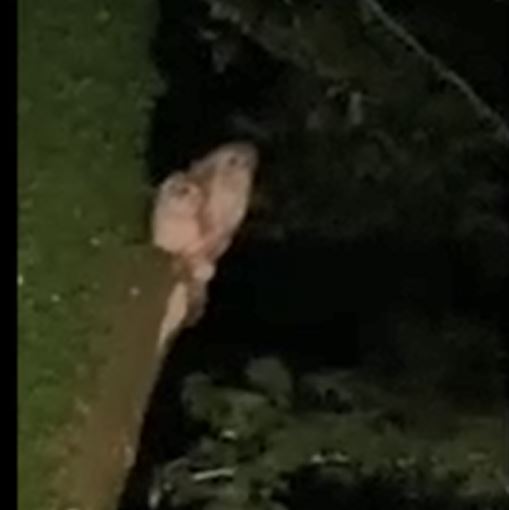
      Hi - reaching out to John Kolar. My sister-in-law suggested that we reach out to you to provide the attached video of our Owl friends. We live in Burton Village - border of the TWP on Colony Lane. For the past couple of years we have had these owls and love listening to them at night. She mentioned that this type of Owl might be endangered and that you would be interested in knowing we have them. Please reach out if you would like more information. Thanks.

      Naturalist's Response

      I left you a voicemail. So sorry for the delay in response. These are Barred Owls, and I’m happy to say that they are not endangered! Believe it or not, they are quite common in Northeast Ohio, and like you, I love to listen to them calling at night.

      Thanks for sharing.

      -Chief Naturalist John Kolar

    • What spelled the end for our toads?

      Question

      Yesterday I was pulling weeds and noticed several dead toads in the basement window wells. There have always been toads there since we moved to this Munson Township house in 2012. No pesticides or even salt on pathways have been used since we moved in. Is it a virus? Something else? I thought I should at least report it in case Geauga Parks keeps track of this sort of thing happening in the county. Should I dispose of the toads in the trash or is there any agency that would want to examine them to detect disease, etc.?

      Naturalist's Response

      This sounds like a job for a toad ladder!

      Frog And Toad illustration

      [From “Frog And Toad Together,” by Arnold Lobel]

      The toads in your photos look pretty desiccated, but otherwise show no obvious signs of injury.  This could be due to some illness, but the likeliest culprit seems to be entrapment.

      Window wells, drains and similar structures have a tendency to become “toad traps.”  The toads hop along on a damp night, tumble into the pit, and then struggle to climb back up the smooth walls.

      Toad in post hole

      (Unlike most frogs, toads aren’t very good at hopping much further than their body length; it’s easy for them to fall into holes from which they can’t escape.)

      Luckily, plenty of other people have confronted this problem before: you just need a toad ladder!

      Toad ladder

      [Photo by Tracey Alfonsi]

      A toad escape can be as simple as a branch or wooden plank stuck in the window well (as in this article from Laidback Gardener).

      However, if you do a web search for “toad ramp” or “frog ladder,” you will see some really, really cute things.

      Be sure to show us what you make! (And, if you feel like taking the scientific approach, you could add ladders to some of your window wells and leave some without, then check both for trapped toads after a rainy night and see what you find!)

      -Naturalist Chris Mentrek

    • What is this tiny chomping critter?

      Question

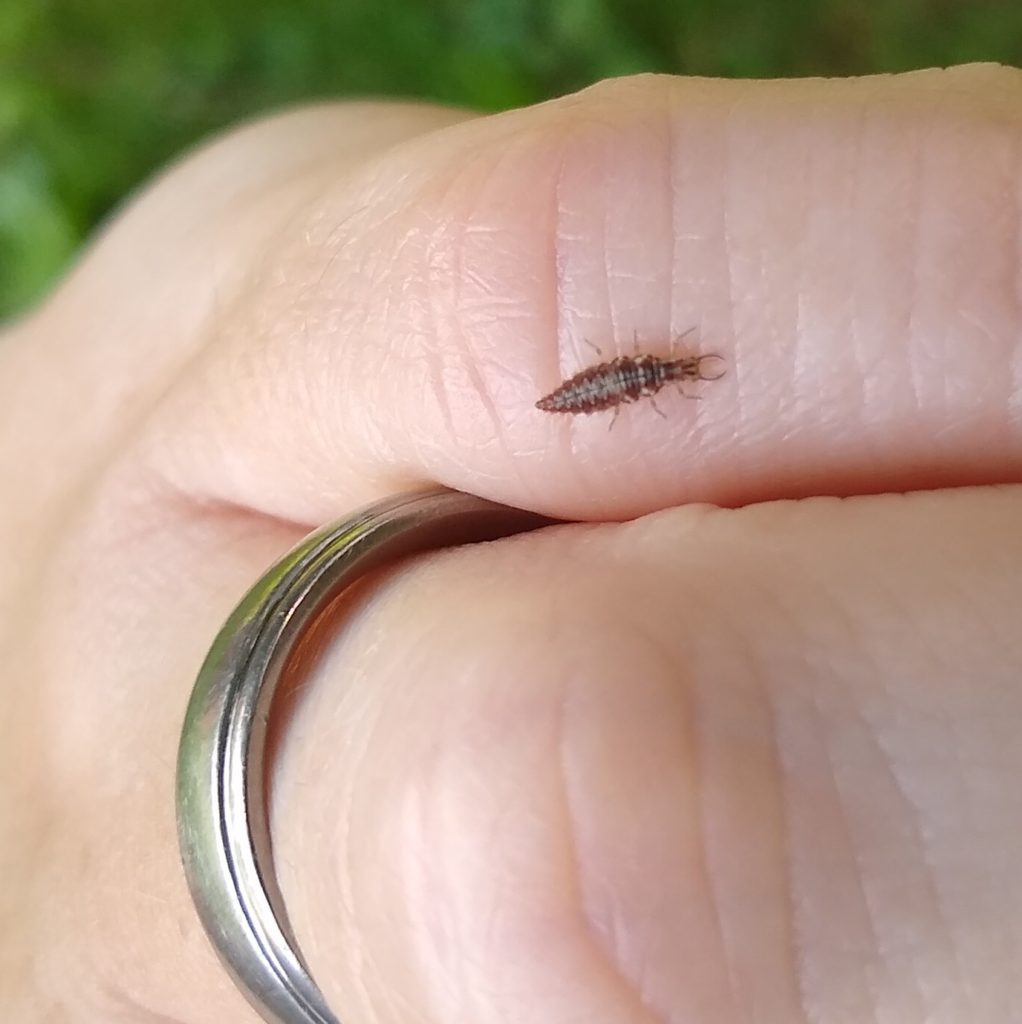
      This lil thing decided to announce it's presence by chomping down on my leg... What the heck is it? It's on my pinky finger and that's my wedding ring adjacent to it, to provide some size reference.

      Naturalist's Response

      That’s a lacewing larva on your hand. They are beneficial predators. One time at Frohring Meadows, I saw one that was chowing down on an aphid that was on a milkweed plant. I don’t know why the one in your picture chomped down on you. Maybe it was seeing if you were something edible? Anyway, thanks for sharing the picture. You can find more info on lacewings at this link.

      -Naturalist Linda Gilbert

    • When can I put my feeders back up?

      Question

      Per the news, I stopped feeding the birds in our backyard a couple weeks ago. I am cleaning the feeders with a 10 to 1 clorox solution. When can I start feeding again?

      Naturalist's Response

      Thank you for your question!

      As of July 14, 2021, we have taken down our bird feeders at The West Woods Nature Center and Big Creek Park. This was done per the recommendation of our colleagues at the Ohio Division of Wildlife.

      Click here for the poster we’ve put up at our feeding stations while the feeders are down.

      For the latest information or to report diseased wildlife in your neighborhood, you can visit https://ohiodnr.gov/wps/portal/gov/odnr/home/additional-resources/division-of-wildlife/bird-disease-reporting.

      -Chief Naturalist John Kolar

    • Should I take down my feeders?

      Question

      Hi, I have been reading a lot about taking feeders down because of some I identified bird disease. Are of the opinion that we should?

      Naturalist's Response

      Thank you for your question!

      As of July 14, 2021, we have taken down our bird feeders at The West Woods Nature Center and Big Creek Park. This was done per the recommendation of our colleagues at the Ohio Division of Wildlife.

      Click here for the poster we’ve put up at our feeding stations while the feeders are down.

      Then, for the latest information or to report diseased wildlife in your neighborhood, you can visit https://ohiodnr.gov/wps/portal/gov/odnr/home/additional-resources/division-of-wildlife/bird-disease-reporting.

      -Chief Naturalist John Kolar

    • Tips for hanging my insect house?

      Question

      Sending a photo of a gift I received. The tag says Benefical Insect House. Can you send me any more information regarding the house! Best place to hang....all year around? I am allergic to bees, wasps, etc. so I have to be careful where I out it, I think! Also have a dog. I have over an acre of land in Bainbridge Township. Anything or any site you can send me to will be appreciated. Thank you! I cant send as pdf....so it is a Natures Way Better Gardens Beneficial Insect House. THX!

      Naturalist's Response

      The Beneficial Insect House you received is designed to provide nesting cavities for beneficial, docile, solitary bees especially active in spring and early summer pollinating apples, blueberries and other early flowers while gathering food to stash with eggs in the tubular cavities you provide or natural cavities like dry stems or woodpecker holes. These tiny, native bees do not have a hive and are “power pollinators.” The insect house also provides spaces for insects like ladybugs and lacewings that prey on garden pests. Install the house about five feet off the ground in a sheltered, east- or south-facing location near flowers rich in pollen. It can be left there through winter. Be patient and you should see some of the cavities will fill and be sealed with mud or pieces of leaves. You and your dog have no worries since these mason and leafcutter bees rarely sting! More information can be found at this link…enjoy!

      -Naturalist Dottie Drockton

    • The mystery of the evergreen tips

      Question

      Hey, Trevor...took a winter hike with you the other day....had evergreen tips in my yard, too! Why?

      Naturalist's Response

      Oh yeah, I totally remember this mystery we encountered on our Buckeye Trail hike! So it turns out that my thoughts were correct about the furry culprit. Our tiny Red Squirrels are know to feed on spruce buds chewing on spruce tip, but they don’t always chew through the whole branch tip, leaving them hanging by a thread. Then, after some big winds blow through, a mysterious pile of spruce tips can be found on the ground.

      To see this info from another source, visit MSUE News at this link and, in the upper right-hand corner, search squirrels, spruce.

      -Naturalist Trevor Wearstler

    • What snake did I see at Frohring Meadows?

      Question

      I was running on the inner loop at Frohring Meadows this afternoon (4:00 or so) and spotted a Massasauga rattlesnake attempting to cross the paved path in the northwest corner of the loop. I am so disappointed that I didn’t have a camera with me but studied it’s pattern for a few minutes so I could later identify. I would estimate it to have been roughly 24” long and 3/4”-1” in diameter at the thickest/middle. It was the highlight of my month so far! I’ll keep my eyes open (& phone handy) next time I’m there.

      Naturalist's Response

      Thank you for exploring our parks! It’s especially great when you have a fun wildlife sighting! Snakes are commonly seen basking on the paved trails for warmth. As far as species, there are a couple that are common to the Frohring Meadows area. The Massasauga Rattlesnake is actually very rare to much of Ohio. It is listed as endangered in Ohio and threatened in the United States. But it does look similar to a common snake that is likely the one you saw at Frohring Meadows. The Northern Water Snake has been seen along the wetland areas near that inner loop where you were running, so I’m guessing that is the reptile you observed.

      A resource I highly recommend for information on the reptiles of the state is from the Ohio Division of Wildlife, viewable online when you click here. It is also available via hard copy by calling the Ohio Division of Wildlife at 1-800-Wildlife.  They have many different field guides available on topics ranging from trees and butterflies to reptiles and more.

      Thank you for enjoying our parks and for inquiring about what you saw. We look forward to hearing more of your sightings.

      -Naturalist Nora Sindelar

    • Bluebird fatality – what happened?

      Question

      I wrote earlier that I thought I had two female bluebirds sitting on one nest in my bluebird house. It turns out that it was a male and female. The female somehow killed the male bluebird inside the house. I have removed the dead male and the female is sitting back on the eggs. Have you ever seen anything like this? (I have a camera inside my house.)

      Naturalist's Response

      Do you have House Sparrows?

      They are notorious for killing bluebirds inside the nest box.

      I don’t believe a female bluebird would kill her mate.

      -Naturalist Denise Wolfe