Please ensure Javascript is enabled for purposes of website accessibility

Ask a Naturalist

Understand the world around you We've got answers

Ever wondered who left that footprint? What kind of berries are those? Or why is that White-tailed Deer white all over? Look no further than your local naturalists, the people at your Geauga Park District whose job it is to help you understand the natural world around you.


Use the form below to submit your question – ideally with a photo (if available), description of sighting (including size) and location of sighting (somewhere in Northeast Ohio) – and you’ll receive an email when a naturalist responds.

Please note that while this form does collect your name and contact information, those items will not be posted with your question, only used in case we need to contact you for additional details.

What have other people been asking lately? Scroll below the form and enjoy some other naturalist Q&As on us!

Ask a Naturalist

Step 1 of 2 - Sighting Details

  • Drop files here or
    Accepted file types: jpg, png, gif, Max. file size: 2 MB, Max. files: 5.
    • Monarch caterpillar questions

      Question

      I have a couple of milkweed which I got from the Geauga Parks Earth day last year! I now have 3 monarch caterpillars on them. Will they form their cocoons directly on the milkweed? Will only having 2 milkweeds sustain them? What can I do to protect them from predators?

      Naturalist's Response

      Thanks for inquiring about Monarchs and milkweed. It’s great that you’ve got Monarch caterpillars on your plants.

      The caterpillars generally do not form the chrysalis on the milkweed plant. They usually crawl off the plant and attach it somewhere else nearby — sometimes it could be on a fence post or on the side of a house or on the underside of a kayak (as Naturalist Trevor found out the other day).

      I don’t know if your two plants will sustain them. That depends on how big the caterpillars are. If they are close to two inches long, then they are probably close to being done with the eating stage of their life.

      As far as protection from predators, you might want to put them in a critter container and rear them. You would just need to supply milkweed leaves and keep the containers clean until they make the chrysalis. If you choose to do that, keep the rearing containers outside so they are exposed to day/night/warm/cold, which will ensure that they migrate. Scientists think rearing them indoors messes up the migration instinct — and we don’t want that!

      -Naturalist Linda Gilbert

    • Bug in my pool?

      Question

      Found this in my pool this evening. Is it a common bug in this area?

      Naturalist's Response

      What a cool find! Although this creature looks like something that would be found in a faraway exotic place, it is actually native to the United States and common in this area. Its name is not one that is hard to remember, as it perfectly fits its description: a Giant Water Bug (Lethocerus americanus). This bug’s large forelegs are used to grab prey, which can consist of fish, tadpoles and insects. It consumes all sizes of prey by grasping them and injecting its venomous saliva into them to digest their internal liquid. My favorite fun fact is that the females lay their eggs on the back of the males, which the males then carry until the young safely hatch. Click here for a great website to learn more about these interesting critters, and thanks for sharing!

      -Naturalist Nora Sindelar

    • Turtles in our water?

      Question

      I know these pictures aren't the greatest but can you tell me what kind of turtle's they are? We know there are at least 3. One has a smooth face and the other looks like it has zits on it. They have a long tail. They never want to show me their whole body. They come up to ear and go straight back down. Thanks.

      Naturalist's Response

      All the turtles in these pictures are Snapping Turtles. These are likely the most common turtle in the state because they will inhabit all types of water. While they do hold a fearsome reputation, they will only bite in defense, especially when they are encountered on land looking for nesting locations. “Snappers” provide a valuable service, though, keeping our water healthy by feeding primarily on sick, injured and dead animals. Enjoy being able to see them as often as you do!

      -Naturalist Andy Avram

    • How can we use a telescope at Observatory Park?

      Question

      Is observatory park telescope always open if it is a clear night? Are people usually there and setup with their equipment? I was hoping to bring my son out but we don’t have a telescope.

      Naturalist's Response

      Observatory Park is always open for “self-serve” astronomy.  Even on nights when we don’t have an official park program scheduled (see current list here), you’re likely to meet other astronomy enthusiasts who’ve brought their own equipment (as long as it’s a clear night)!  Most amateur astronomers are happy, even eager, to share the view through their telescopes, or to share photographs they’ve taken.

      No telescope? No problem! Don’t forget that we’ve partnered with every library in Geauga County to offer telescope-lending services. You can check out a telescope from any Geauga County Public Library branch, and from the Burton Public Library. Other nearby libraries also telescope-lending services (the Mentor Public Library is one), so be sure to check with your library!

      Thanks again, and enjoy the summer sky!

      -Naturalist “Astro-Nat” Chris Mentrek

    • Snake ID?

      Question

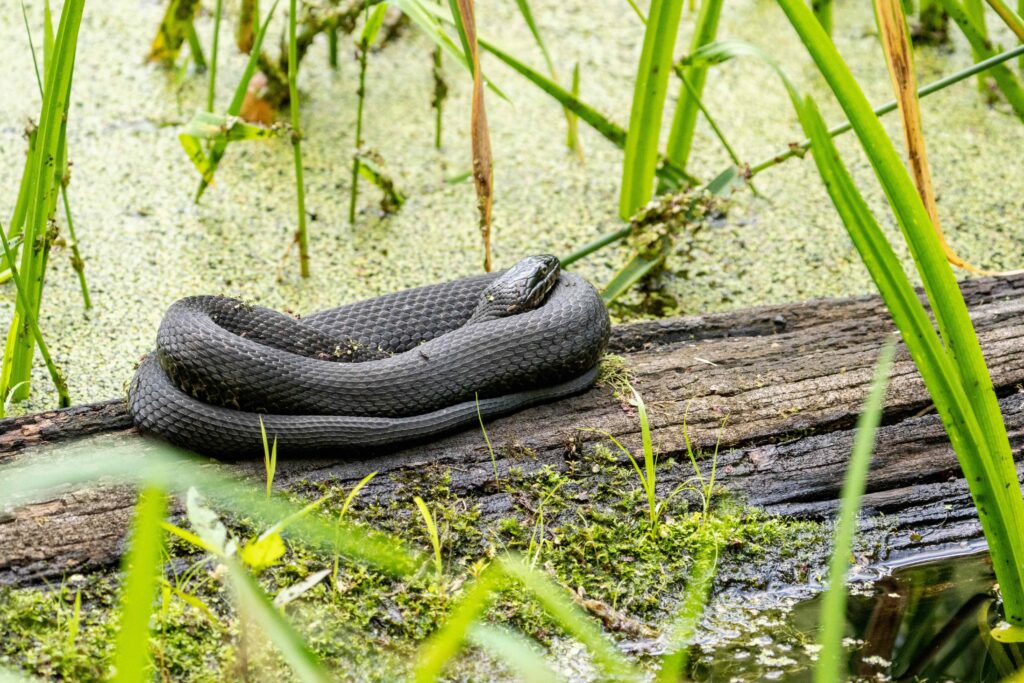
      Would you be able to help identify this snake? I believe it may be a Lake Erie Water Snake? We found it in the West Woods on July 2nd, 2023. Thank you!

      Naturalist's Response

      You found a nice example of a Northern Water Snake! These are one of our most common species of snakes in Geauga County, and they are the most frequently seen snake at The West Woods.

      Lake Erie Water Snakes are ONLY found on the Lake Erie Islands; any snake found on the mainland will be a Northern Water Snake.

      Great sighting!

      -Naturalist Andy Avram

    • What type of lily is this?

      Question

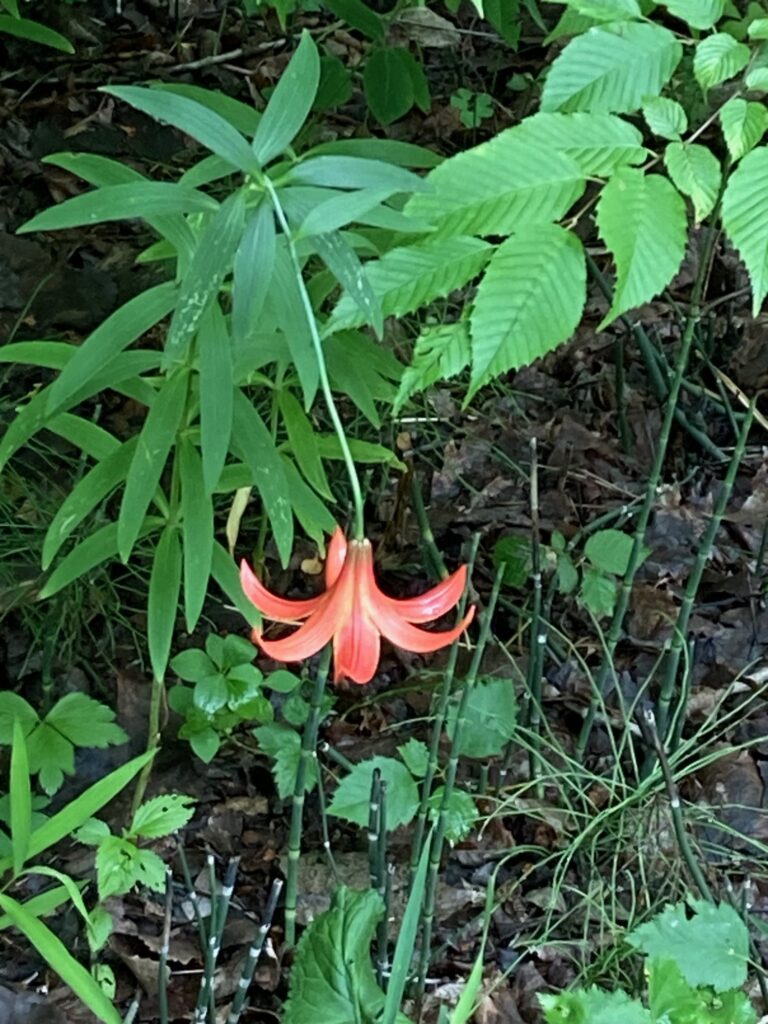
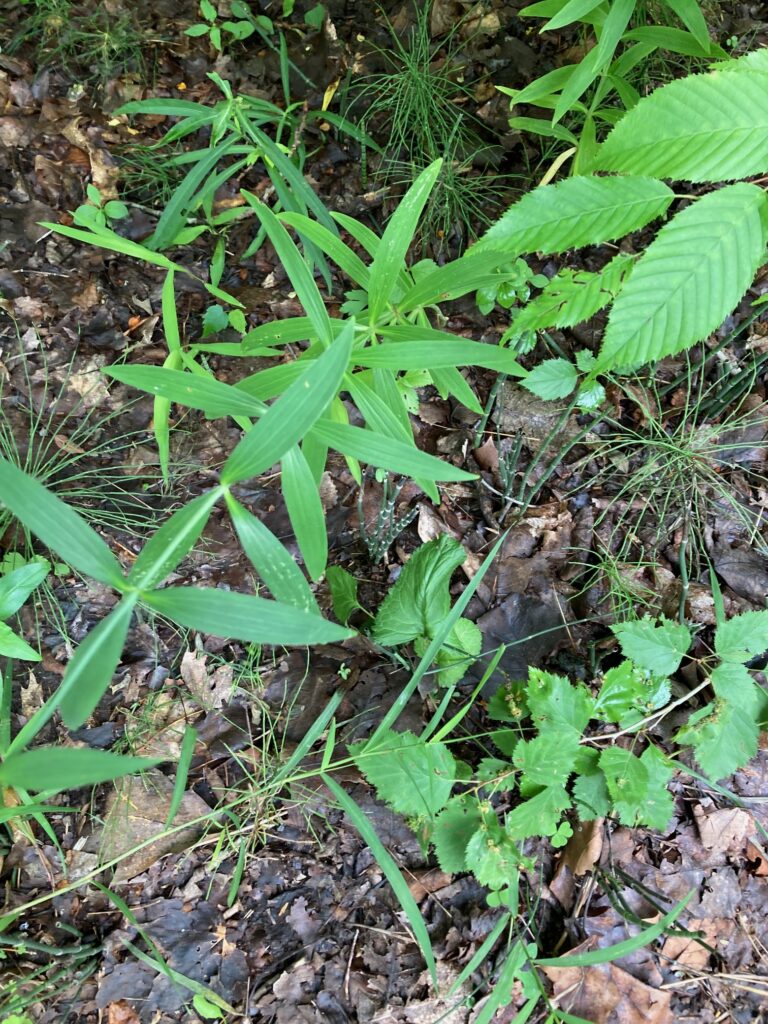
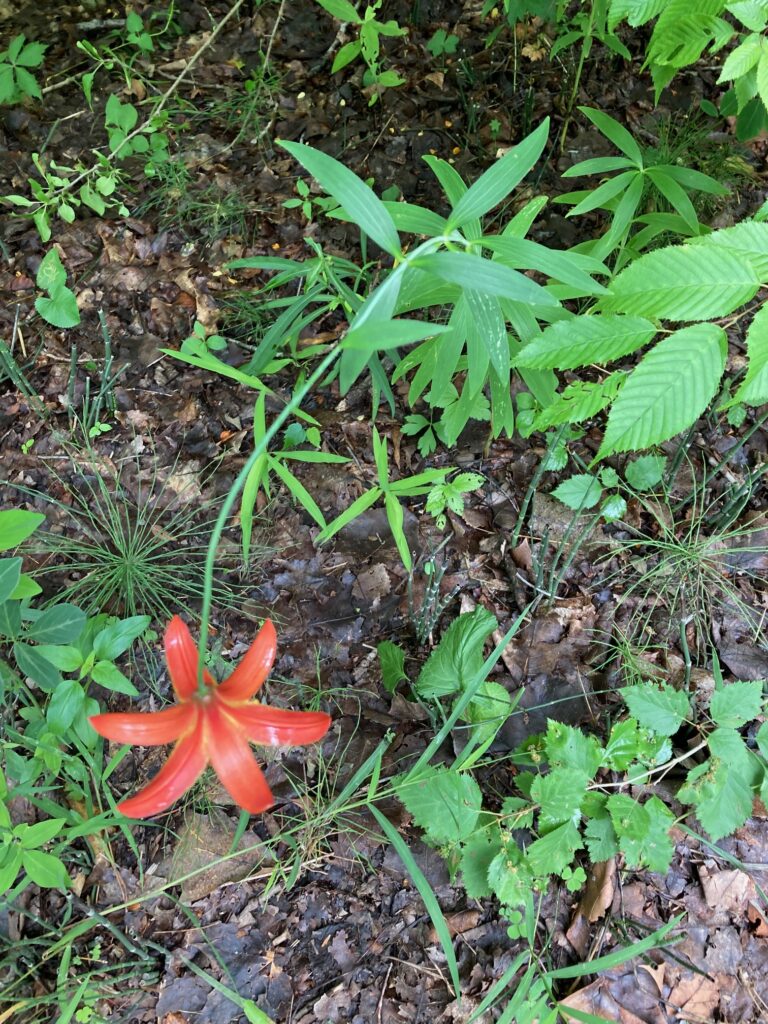
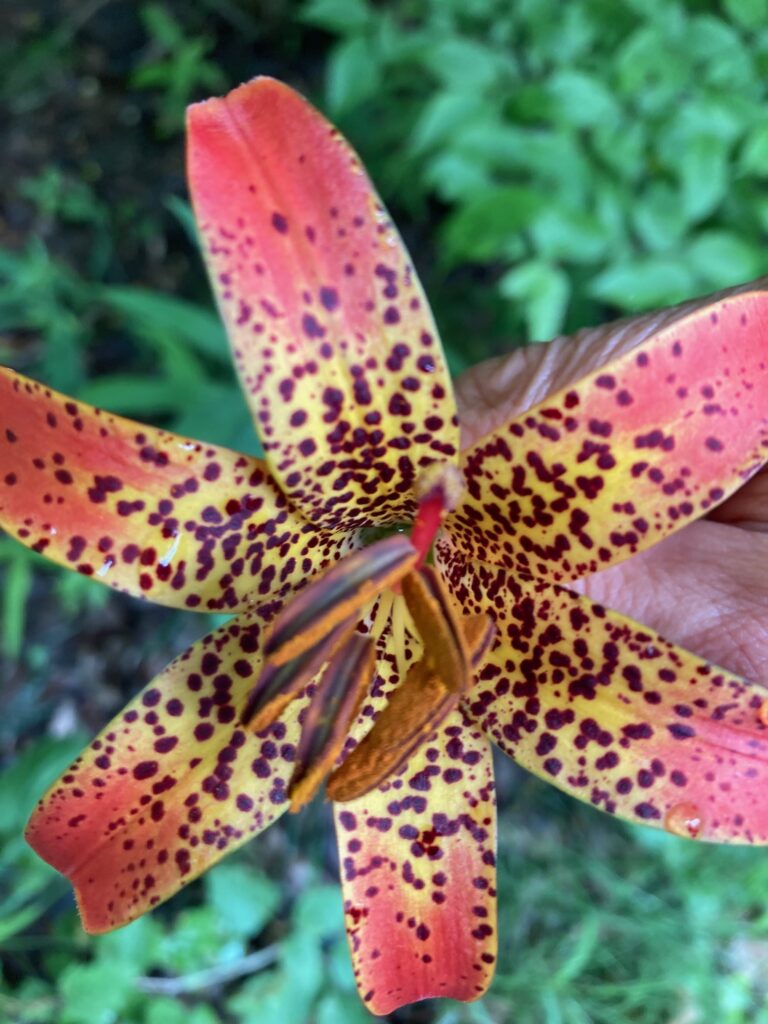
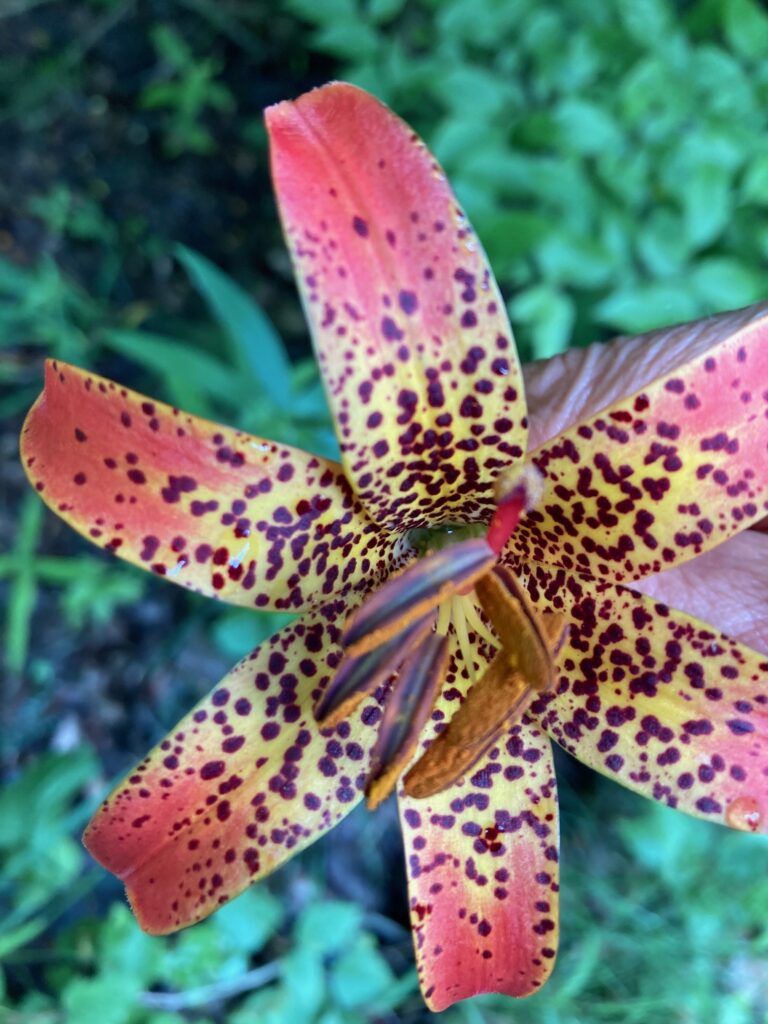
      What type of lily is this? My phone app offered up a match to the Canada Lily. Is this correct? Is this considered a native wildflower? I saw it last week on the main trail - Pioneer Trail - at The West Woods. Thank you.

      Naturalist's Response

      This is a Canada lily, Lilium canadense. They are native and can occur in both meadows and swamps. Their color can vary from yellow to orange to red.

      They are very similar to another native lily, the American tiger lily, Lilium superbum. The most notable difference between the two species is that the petals of the American tiger lily curl back all the way to nearly touch, while the Canada lily is more bell shaped.

      Both are beautiful wildflowers, aren’t they?

      -Naturalist Denise Wolfe

    • What’s on these ferns?

      Question

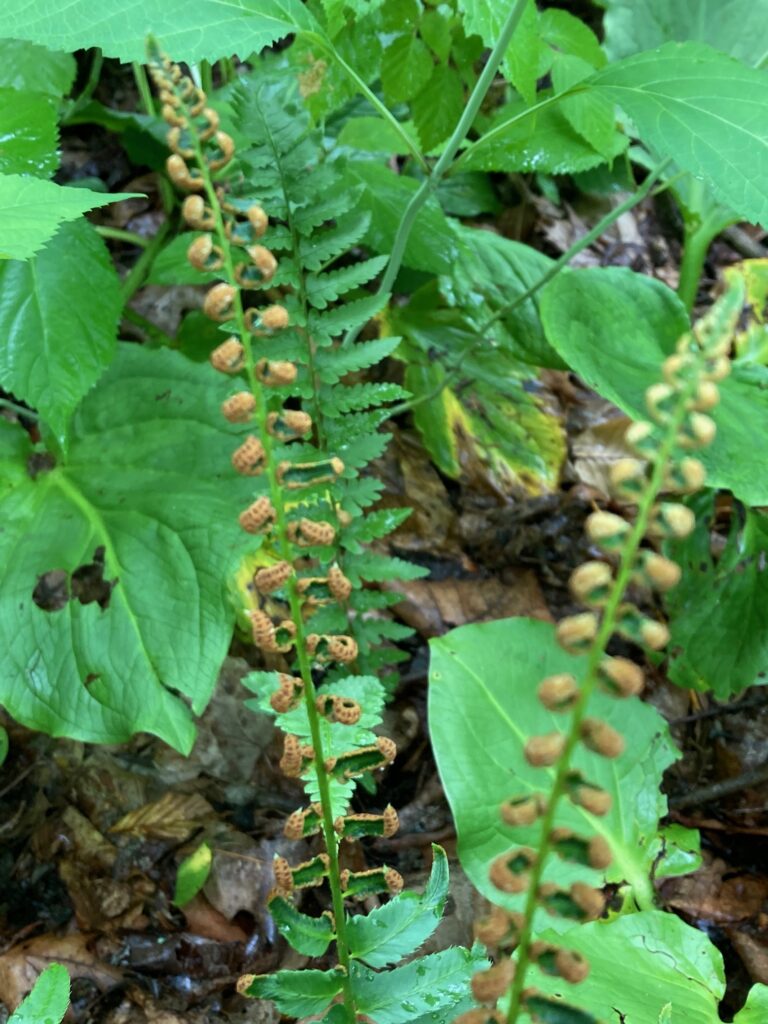
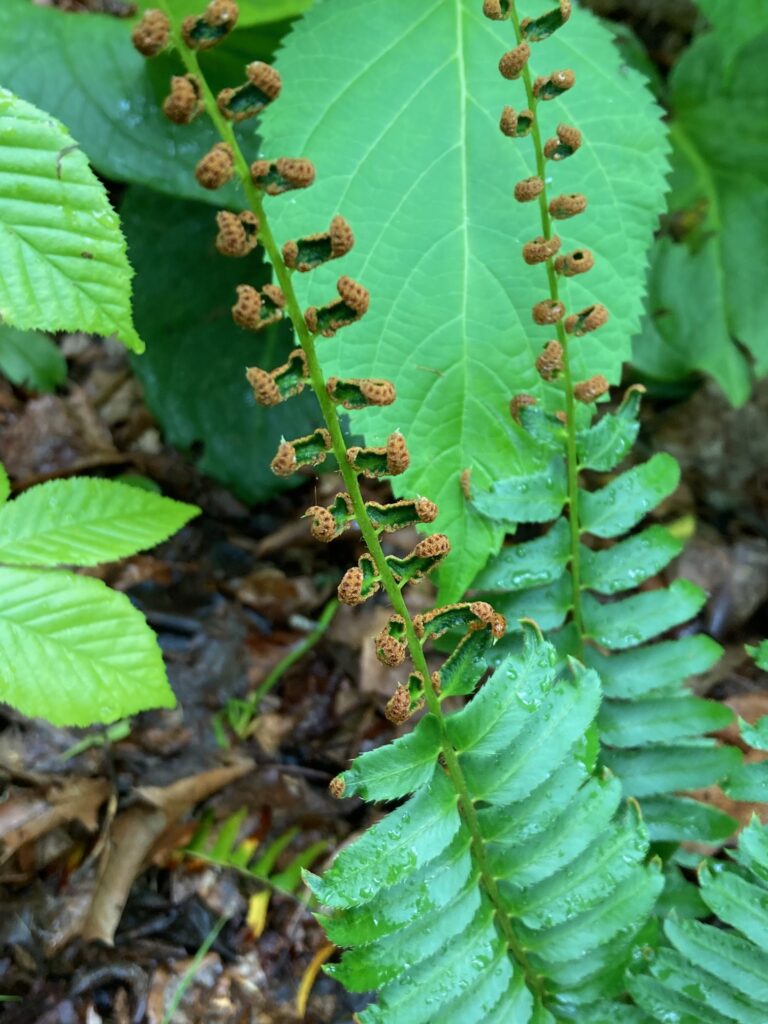
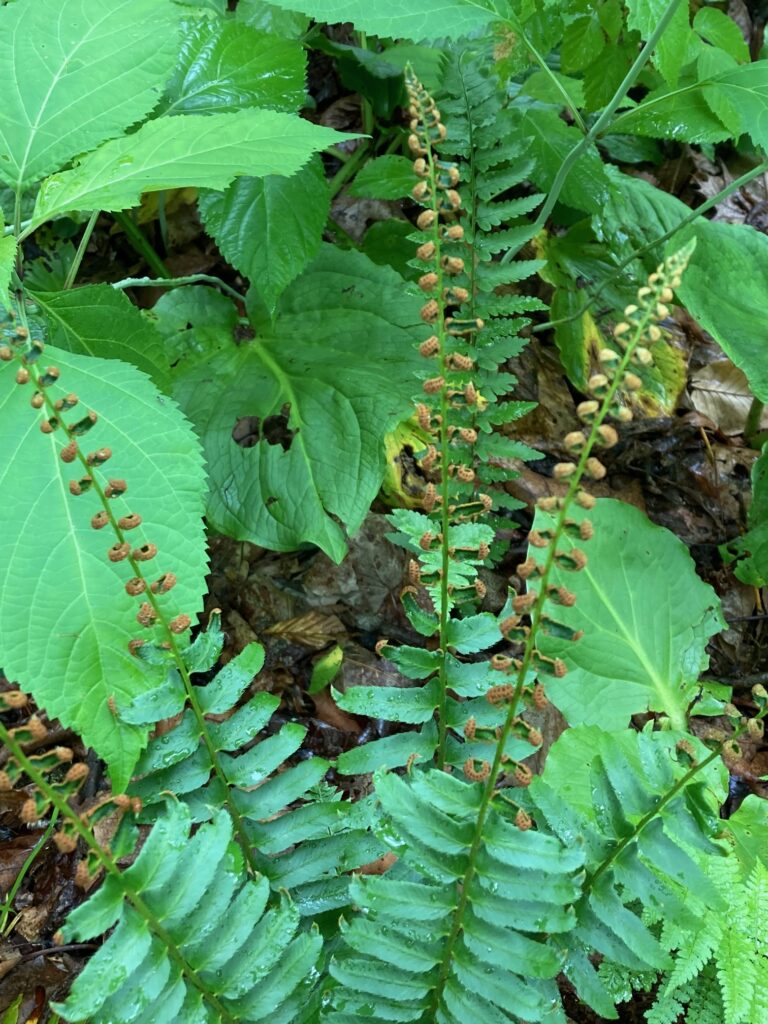
      These ferns have brown beaded tips on their leaves. I had not seen these formations on a fern before. What do they represent: the beginning of growth, end of growth, some sort of bacteria? They were observed at the Upper Chagrin preserve during a guided hike. Thank you.

      Naturalist's Response

      These are called sori; they contain spores, which are the reproductive part of the fern, instead of seeds. Thanks for asking!

      -Naturalist Denise Wolfe

    • Bird ID?

      Question

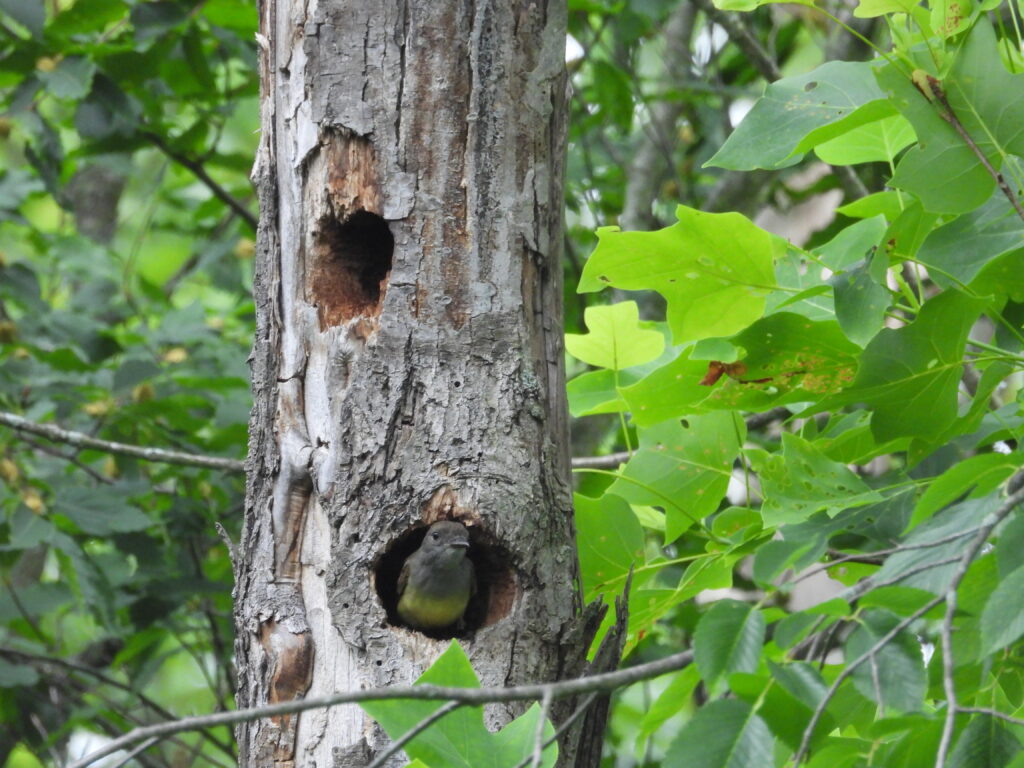
      I stopped by The West Woods Saturday and spoke with the gal behind the desk. I asked her if she knew what this bird was. She couldn’t be sure and said you would know. I am thinking it is an Eastern Wood Pewee, but I’m not sure because the neck is dark, the underneath is an olive color, and the wings are dark with white stripes. I took this behind my house in Chesterland. Thank you.

      Naturalist's Response

      I appreciate the confidence from the receptionist about my birding identification skills, but I will tell you honestly that I had to defer to Naturalist Linda Gilbert for identification of the bird in your fantastic photo. The bird is a Great-crested Flycatcher Great Crested Flycatcher Life History, All About Birds, Cornell Lab of Ornithology. I often hear these birds but rarely see them. How did you get some fortunate to find one peaking out of its nesting cavity?

      Click here for Cornell’s website with more information and photos. Thanks for sharing your photo!

      -Naturalist Dottie Drockton

    • Unusual raccoon?

      Question

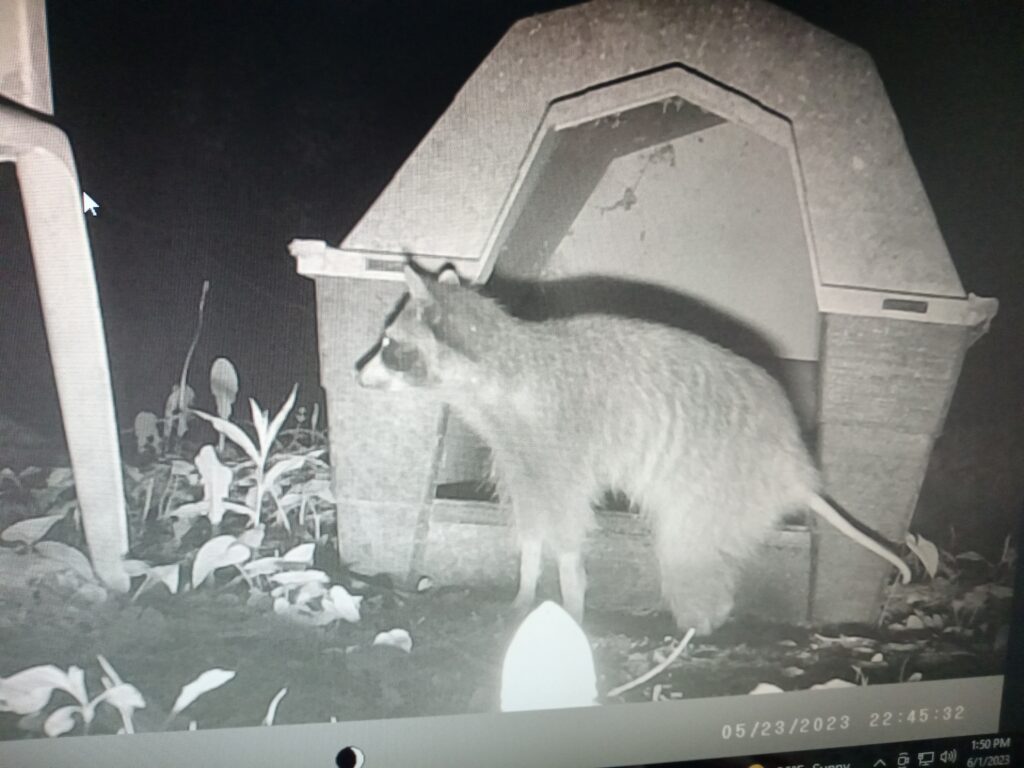
      What is happening with this raccoon? It looks like a possum!

      Racoon photo

      Naturalist's Response

      This raccoon looks a bit unusual because it’s missing some fur, most visibly from its tail and front legs.

      (Raccoons owe so much of their signature appearance to their distinctive, fluffy fur that they can be almost unrecognizable without it!)

      Though raccoons typically experience some fur loss during the spring molt (when they shed their thicker, winter coats), that usually looks like small bald patches all over the animal’s body.

      The raccoon in your photo shows TOTAL fur loss on its front legs and tail. This kind of large-area fur loss is typically caused by some kind of an infection, such as fungal infections or skin-burrowing mites (like mange/scabies). Here’s a terrific guide to mange infections from the veterinarians at the Cornell Wildlife Health Lab.

      This raccoon seems to have lost all of the fur from the easily gnawed parts of the body. That could be a sign that it’s suffering from an itchy infection. Thanks for sharing your raccoon sighting!

      -Naturalist Chris Mentrek

    • Can I watch the Perseid meteor shower at Observatory Park?

      Question

      I am interested in seeing the Perseids meteor shower in August. How late is Observatory Park open on the 12th for the movie? If it's closed at a certain time, is there another safe place nearby to see the shower around 3-4 in the morning? I live in Columbus so not familiar with the area. Thanks.

      Naturalist's Response

      Thanks for your question about observing the Perseid meteor shower at Observatory Park!

      You’re in luck, as we actually host an overnight at Observatory Park every year just for this purpose! Registration for our Moths & Meteors Overnight Event on Friday, August 11, through Saturday, August 12, opens June 10 at 10 a.m. for Geauga County residents and June 17 at 10 a.m. for out-of-county folks like yourself. Click Programs & Events above on your given date/time and you will find the link to register.

      Camping is not required to attend, but it is welcome. Guidelines are as follows: set up your site Friday anytime after 4 p.m., and all items must be removed the next morning by 9 AM. Tents only; no campers, trailers, generators, alcoholic beverages, grills or open fires, and pets must be leashed at all times.

      If the overnight event date doesn’t work for you, however, Observatory Park is always open between Memorial Day and Labor Day from 6 a.m. to 1 a.m. (including the night of “Singin’ in the Rain,” as you mentioned, on August 12), but you’re welcome to request a special use permit at this link to stay longer. Just scroll down to Special Uses for the online request form.

      Hope you can make it out.

      -Sandy Ward, Marketing Coordinator


      Moths & Meteors Overnight Event

      Friday, August 11, 9 PM – Saturday, August 12, 6 AM

      Observatory Park

      Nature’s Not to Be Missed

      Bring a tent and spend the night enjoying the Perseid Meteor Shower and the night-flying moths attracted by our black light and mercury vapor lamps! NOTE: Only those who can show receipt of registration will be permitted entry. Best meteor viewing 1-3 AM. Naturalist on site from sunset to sunrise. Camping guidelines: Tents only. Set up Friday after 4 PM; must remove Saturday by 9 AM. No campers, trailers, generators, alcoholic beverages, grills or open fires. Pets must be leashed at all times. Cancelled in case of inclement weather. Registration required.