
 (440) 286-9516
You’ve got a bat roosting on the outside of your house? How cool! Our advice is to enjoy your bat neighbor.
We had the same thing happen here at The West Woods Nature Center: one spring, a Big Brown Bat took up residence in a little gap in our roof. Here’s a rotten photo.
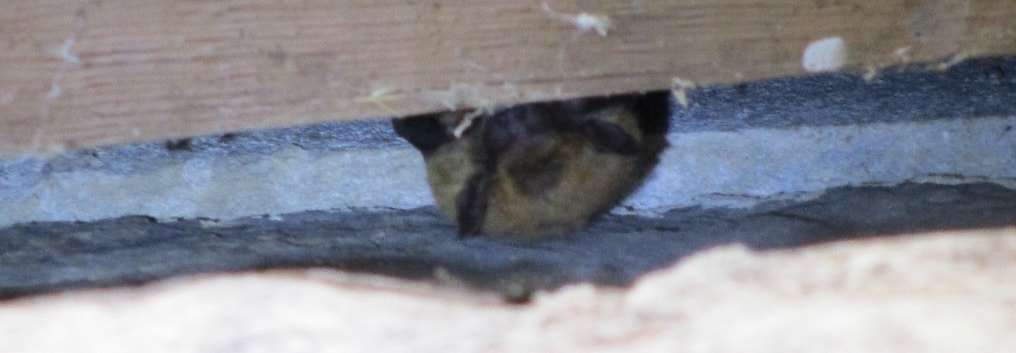
And here’s the same bat after it came outside.
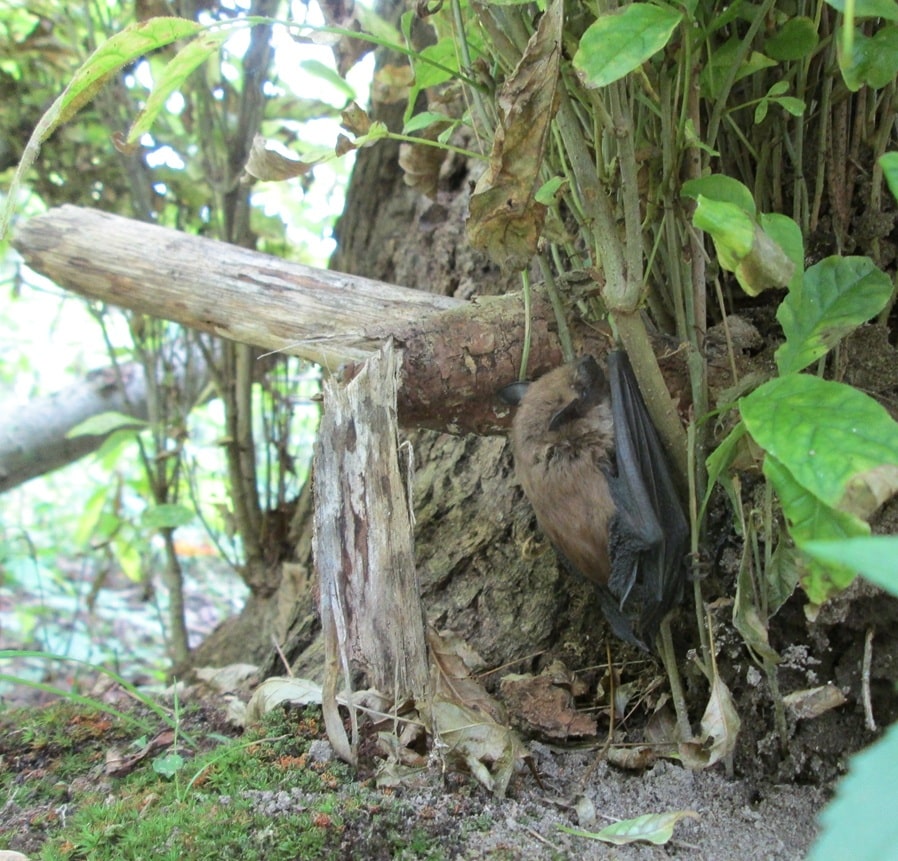
While bats that come indoors can be a nuisance (and we have some great advice on dealing with indoor bats), a single bat taking up residence on the exterior of your house isn’t really a problem. In fact, plenty of us have bats roosting on the outside of our houses and garages that go completely unnoticed!
Big Brown Bats in particular make a habit of roosting alone on human-built structures; they seem to tolerate the presence of humans well. They’ll find any dry, sheltered cranny on the outside of a building and then scooch themselves in. It gives them a snug, sheltered spot to wait out the daylight hours. Then they’ll emerge at night and spend the evening flapping around your garden and eating insects. They’re a treat to watch!
If your bat has taken up residence in an inconvenient spot (as our bat at the nature center did), you can try to encourage it to find another spot. One way to try this is to hang up a bat house nearby. These offer cozy roosting spots that bats see as prime real estate. With any luck, your bat might choose to move on to the bat house.
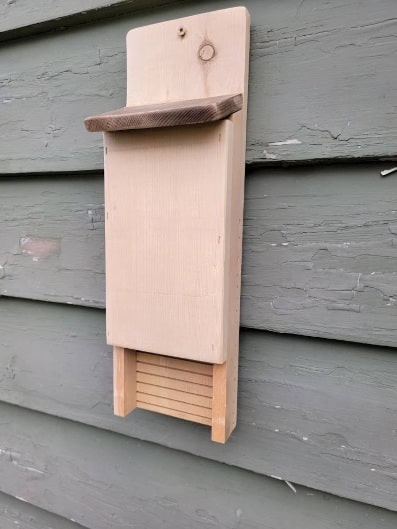
Your other option is to take the patient route (which is what we did with our bat at the nature center). Wait until the bat has left, then fill in or block its former roosting spot. (We used expanding-foam insulation to fill up the roofing gap after our bat had moved on.) I had luck with this technique at my house: we encouraged a bat to move from a gap in the house’s siding and into a bat house. The bat (which we named “Squeaks”) spent the summer wheeling around our neighborhood, feasting on insects.
Good luck!
-Naturalists Linda Gilbert & Chris Mentrek
