Please ensure Javascript is enabled for purposes of website accessibility

Ask a Naturalist

Understand the world around you We've got answers

Ever wondered who left that footprint? What kind of berries are those? Or why is that White-tailed Deer white all over? Look no further than your local naturalists, the people at your Geauga Park District whose job it is to help you understand the natural world around you.


Use the form below to submit your question – ideally with a photo (if available), description of sighting (including size) and location of sighting (somewhere in Northeast Ohio) – and you’ll receive an email when a naturalist responds.

Please note that while this form does collect your name and contact information, those items will not be posted with your question, only used in case we need to contact you for additional details.

What have other people been asking lately? Scroll below the form and enjoy some other naturalist Q&As on us!
Ask a Naturalist

Step 1 of 2 - Sighting Details

  • Drop files here or
    Accepted file types: jpg, png, gif, Max. file size: 2 MB, Max. files: 5.
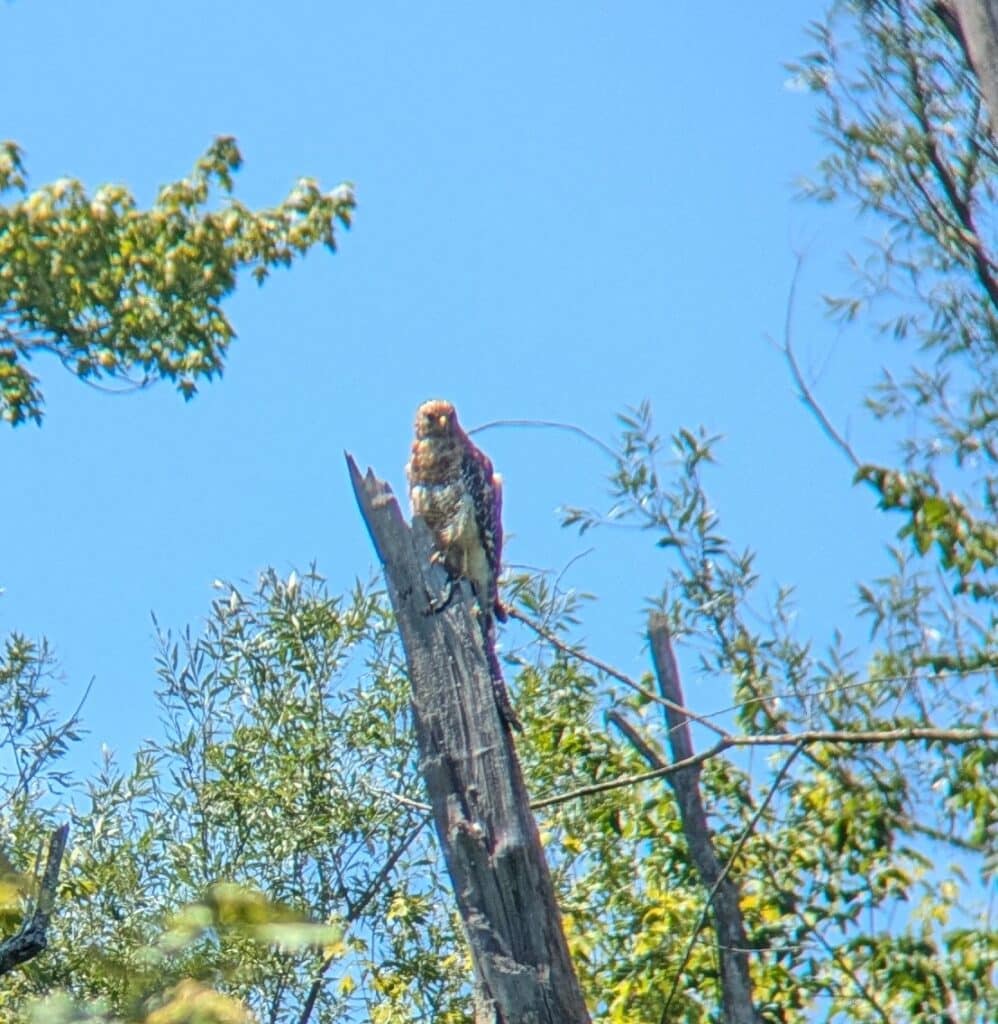
    • Red-shouldered Hawk?

      Question

      Hello! I kayaked at Eldon Russell today and really enjoyed seeing the prothonotary warblers! Thanks for managing those. I ran into Dottie and she told me about the birding events, so I am going to try to sign up in September! My question for today, is this a red-shouldered hawk or a different kind of hawk? It was hard to tell. Thanks!

      Naturalist's Response

      Yes, good job, you saw a Red-shouldered Hawk. As an adult, they have a reddish barring across the chest and dark wings with white speckling, making them relatively distinct from our other hawk species. They are mostly a woodland species, whereas the more common Red-tailed Hawk is a bird of more open habitat with some woods, but both species do overlap and can be found together. As a bird of prey, they mostly eat small mammals, along with birds, snakes, amphibians, and even earthworms.

      -Naturalist Andy Avram

    • Mysterious sound at night

      Question

      Almost every night for the last month, we have been hearing a consistent sharp barking/shriek/call in the woods behind our house. It's always the same sound (no real variation except sometimes in pitch) and repeats for 30+ minutes at a time. We were fairly certain it is a fox based on some internet searches of fox sounds. We are wondering if we have a den somewhere as we hear the sound for multiple hours a night and it comes from relatively the same area. We have also seen foxes in the non wooded portion of our backyard before, so we know they are around.

      On discussing this with a neighbor, she thought it was a bird when she heard it, and we ran a sound file of the bark/call/shriek through the Merlin bird app and it's strongly suggesting a Great Horned Owl. We googled those sounds and some of the calls do sound similar.

      So now we're scratching our heads!

      It doesn't seem that I can attach the sound file here, but if there is another way to get it to you, I would be very interested in your opinion if we have a fox or an owl living in our woods. Thanks!

      Naturalist's Response

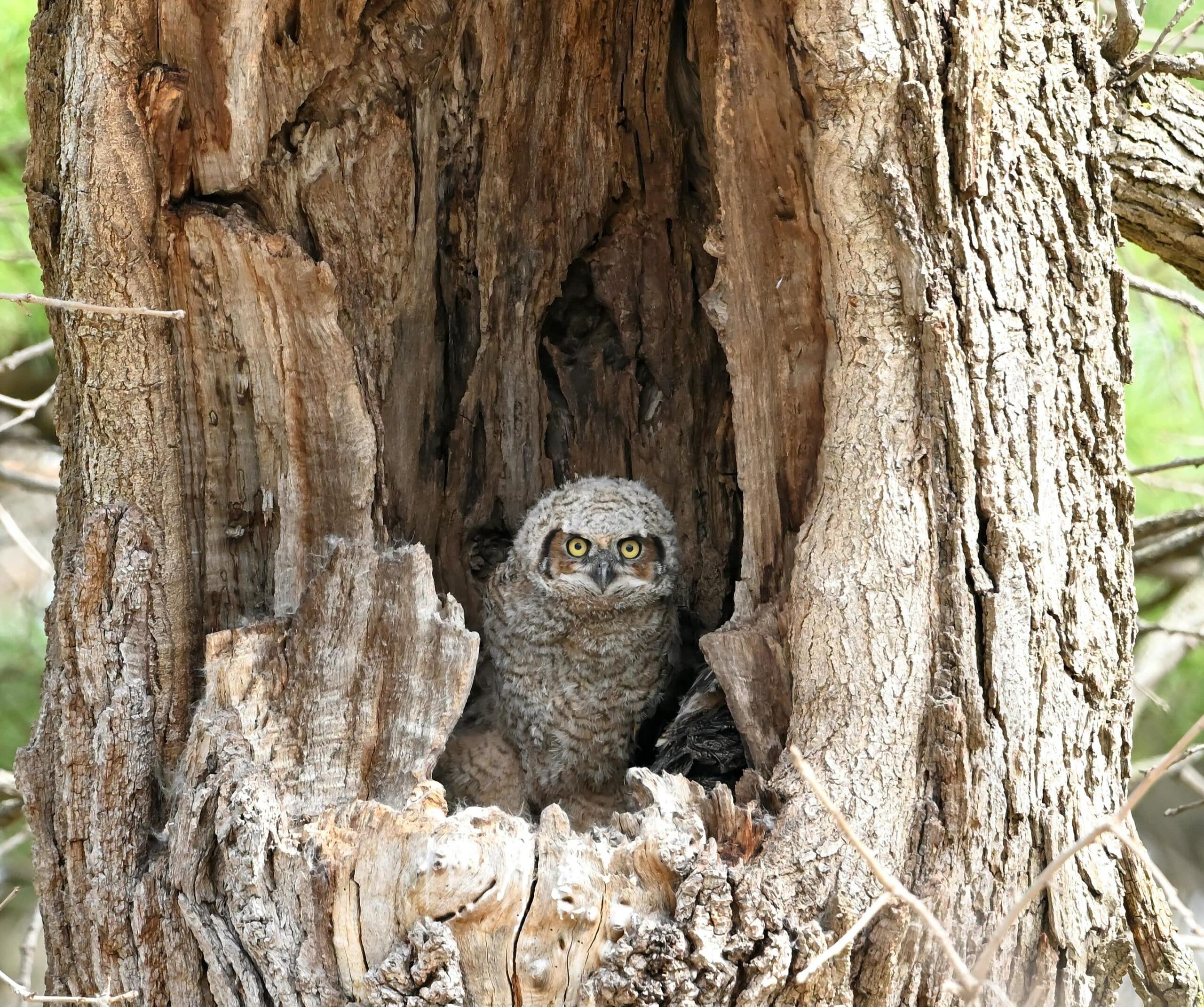
      Thanks for sending us the sound file (also shared here on YouTube). As I mentioned in our phone call, the calls that you are hearing in your woods are juvenile Great Horned Owl begging calls.

      They likely left the nest in mid to late spring, and they’ll stick with their parents throughout the summer learning necessary hunting and survival skills.

      In the fall, the adults will chase them out of their territory, leaving the young to find a territory of their own

      Enjoy the sounds!

      -Chief Naturalist John Kolar

    • Deceased Scarlet Tanager with a band on its leg

      Question

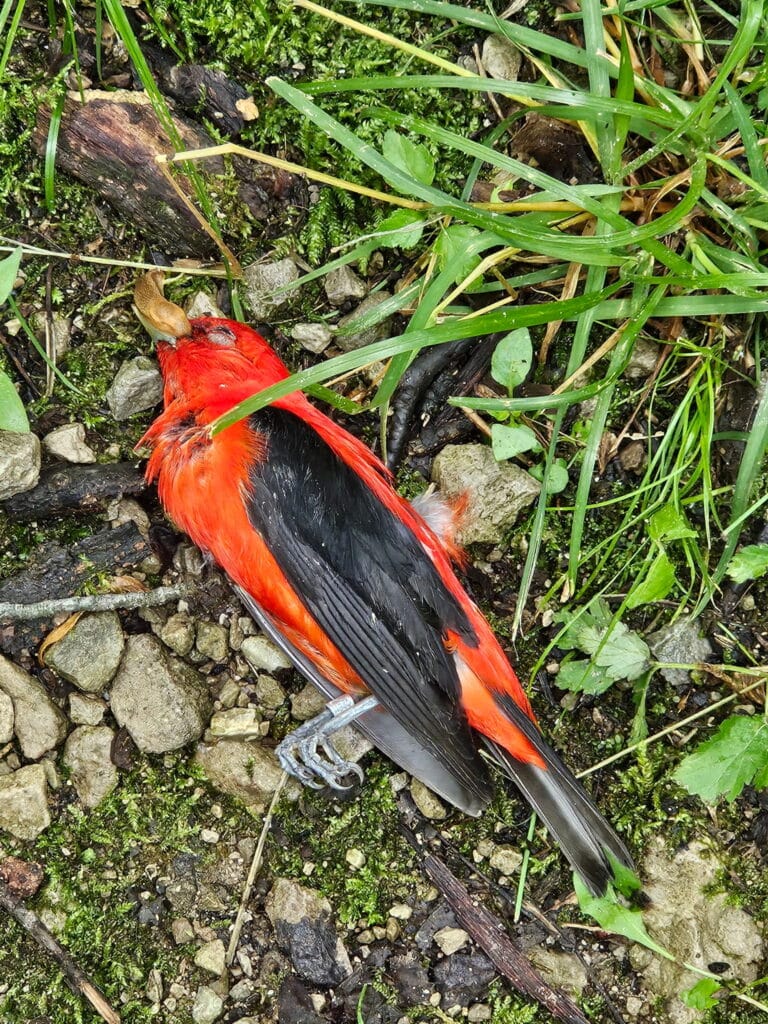
      I was walking earlier at Frohling Meadows on the offshot path that leads to Washington St, and I found a dead banded scarlet tanager. Was just wondering if there is someone that I can contact. Unfortunately I didnt think to record the band info.

      Naturalist's Response

      Thank you for sending a picture and contacting us about the Scarlet Tanager with a band on its leg.

      Yes, you should report it. After enlarging your picture, the number on the band looks like 11380. Visit www.reportband.gov to report it online by completing the form to the best of your ability. Federal bands have a prefix and suffix letters and numbers, but since only one side of your bird’s band is visible, just put the numbers in the suffix box on the form. If that doesn’t get you anywhere, then click the “not sure/band too worn” link on the page…and please let us know the results at info@geaugaparkdistrict.org!

      -Naturalist Linda Gilbert

    • Chicks have fallen from a nest

      Question

      We have two birds nests that have fallen out of a small tree at our home. It appears one of the newborn birds is not able to fly yet. I was able to turn the nest over and put the bird back in, but it doesn’t appear to be in the safest spot on the ground. There are adult birds around that do seem to be overly protective when we are in the area. I’m just not sure how well the baby bird is doing. Can you please advise what we should do?

      There is also a second nest that has fallen and a more feathered bird near the nest.

      Naturalist's Response

      Are you able to put the nests back in the tree they fell out of? Even if it’s not exactly where is was originally, it is better than on the ground, as predators will be able to get them if they are on the ground.
      -Naturalist Denise Wolfe
    • Can I deter bats from my home?

      Question

      Is there any way to deter/repel bats from your home?

      Naturalist's Response

      Thank you for inquiring about bats. Bats play an important part in maintaining a healthy environment by being natural “bug zappers” and consuming thousands of insects a night. I don’t know what your particular situation is regarding bats, but this page on the Bat Conservation International website is devoted to what to do if bats are using a home or a building for a roost. Note that many bat species have been decimated by white-nose fungal disease, and many are now federally protected. Removing a bat or a colony of bats should be done by professional, licensed people. Please do not use any ultrasonic repellants or chemicals to deter bats, and otherwise check with the Ohio Division of Wildlife for advice.

      -Naturalist Linda Gilbert

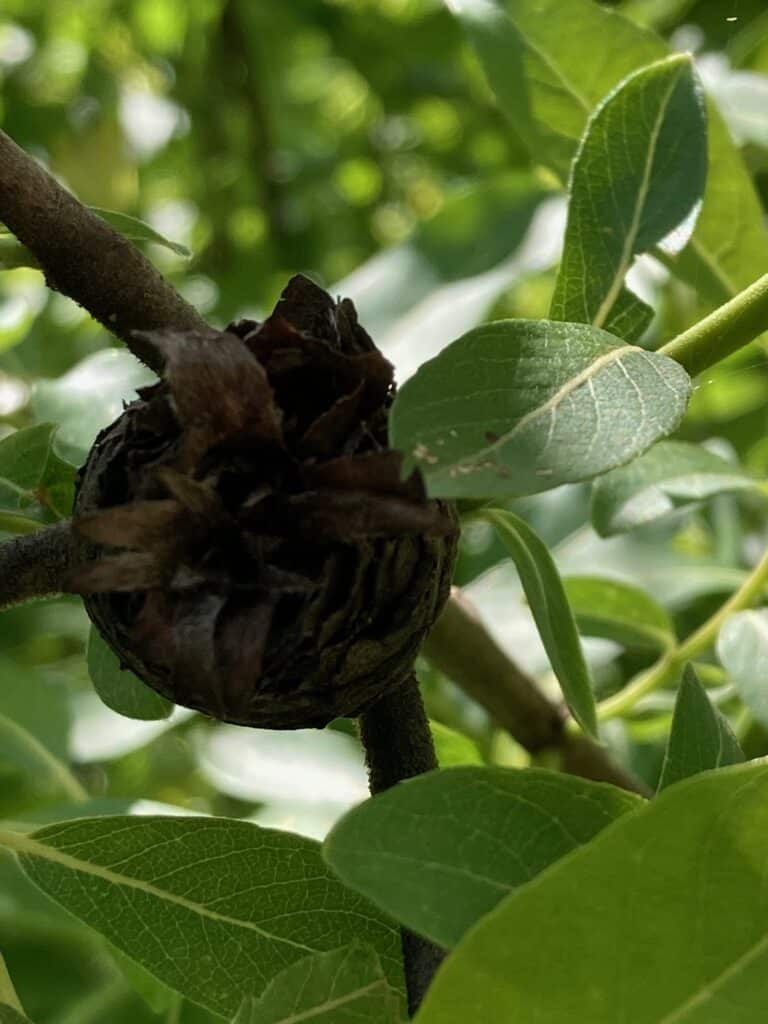
    • A gall or a nut?

      Question

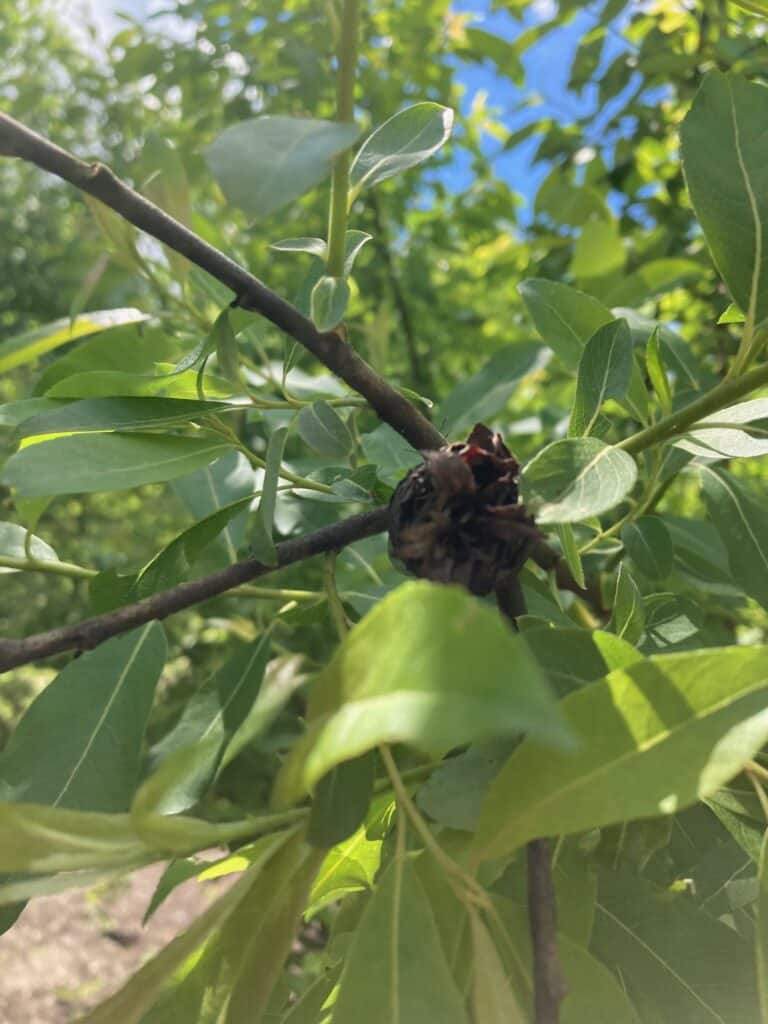
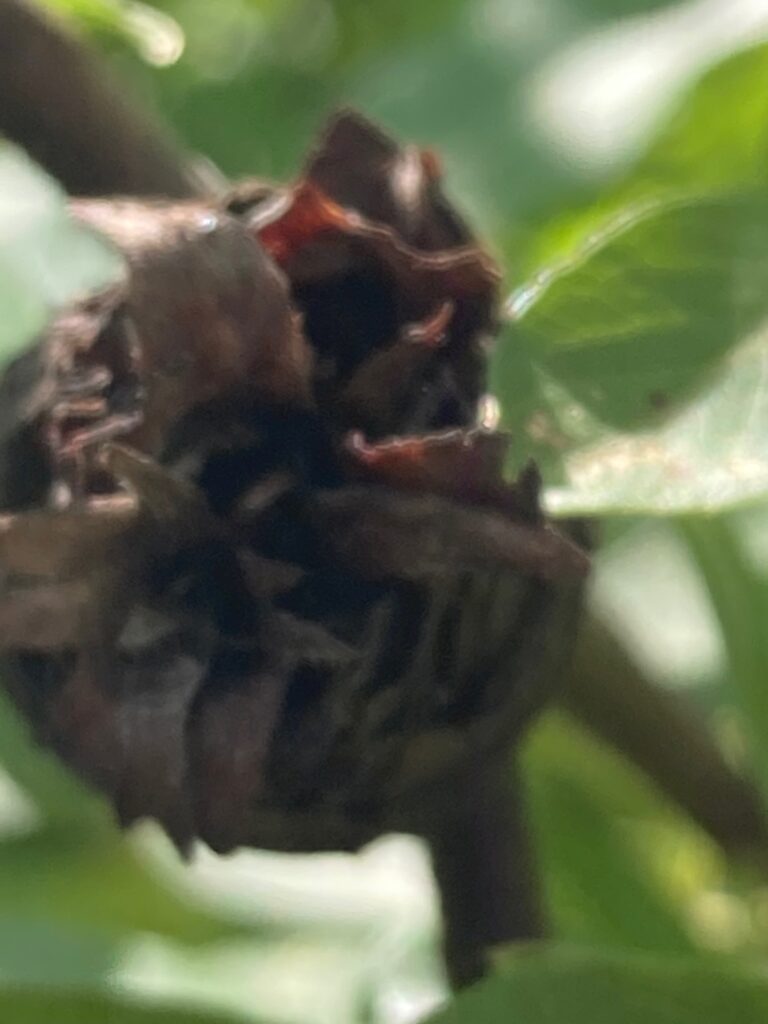
      Is this a gall or a nut? It was spotted on the tree that borders the entrance walk to the West Woods Nature Center. Thank you. Photos taken: May 25, 2025

      Naturalist's Response

      What you found is a willow pinecone gall. It is created by the Willow Pinecone Gall Midge, a small fly that lays a single egg on a leaf bud at the end of a branch in the spring. The leaves then curl around it to protect the developing egg.

      When the egg hatches, it forms a maggot that will overwinter, pupate and emerge as an adult in spring.

      Click here for a link to a fascinating article from The Ohio State University.

      The midge does not harm the willow. It is also an important food source for birds and other animals.

      Thanks for your question!

      -Naturalist Denise Wolfe


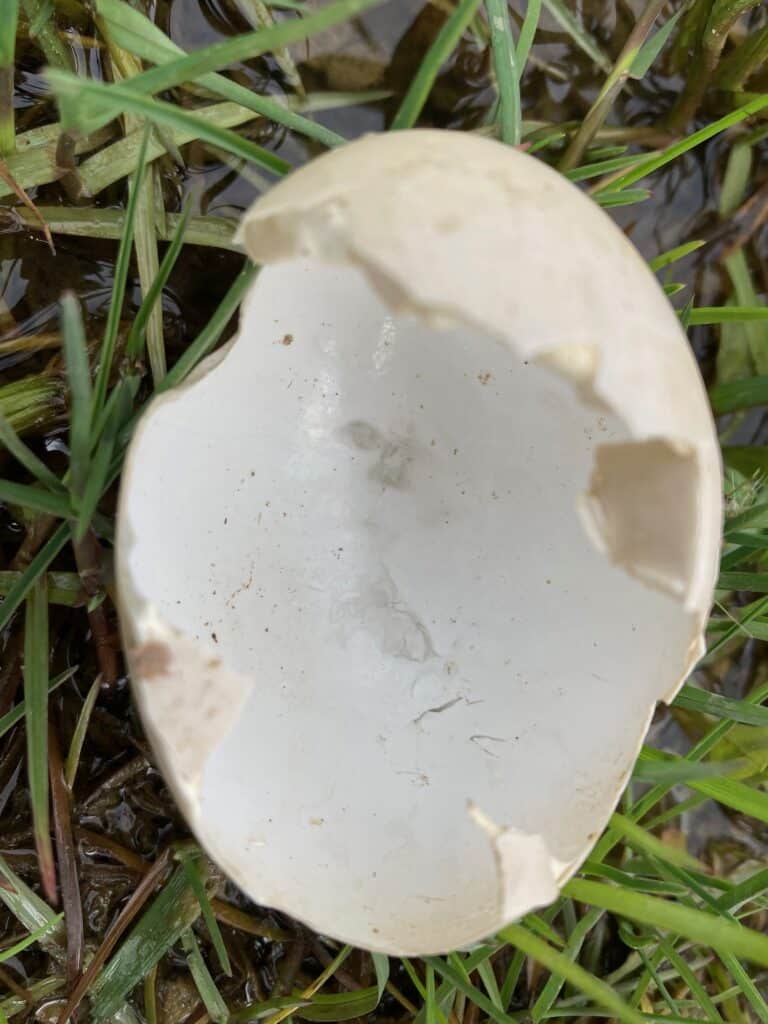
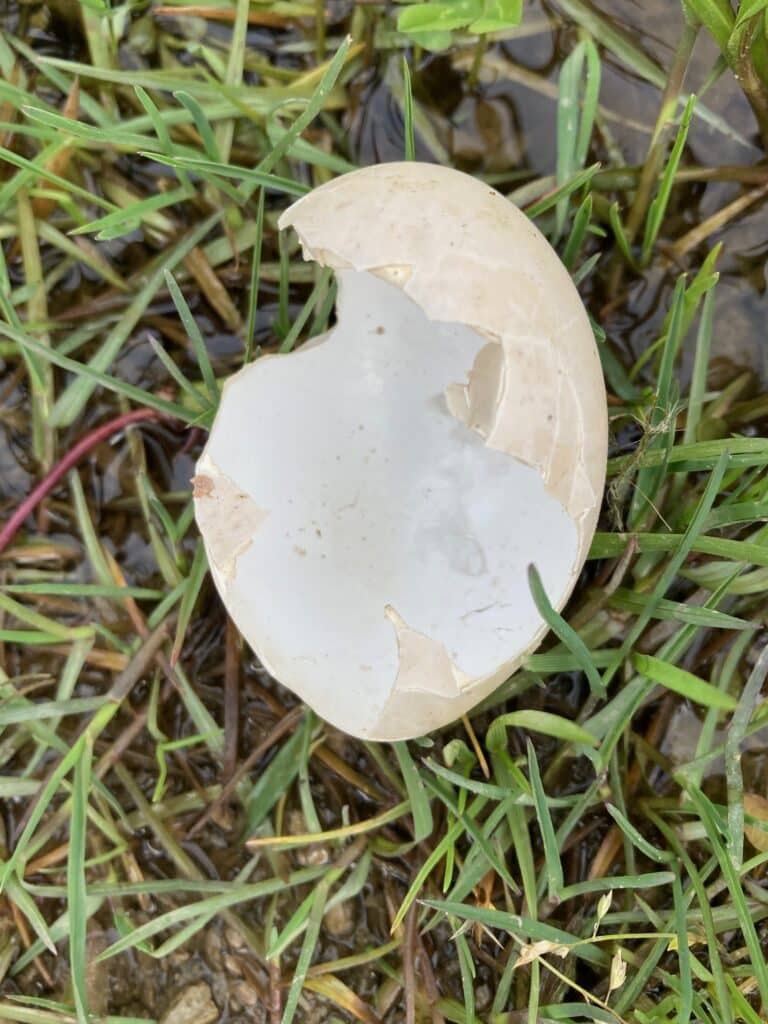
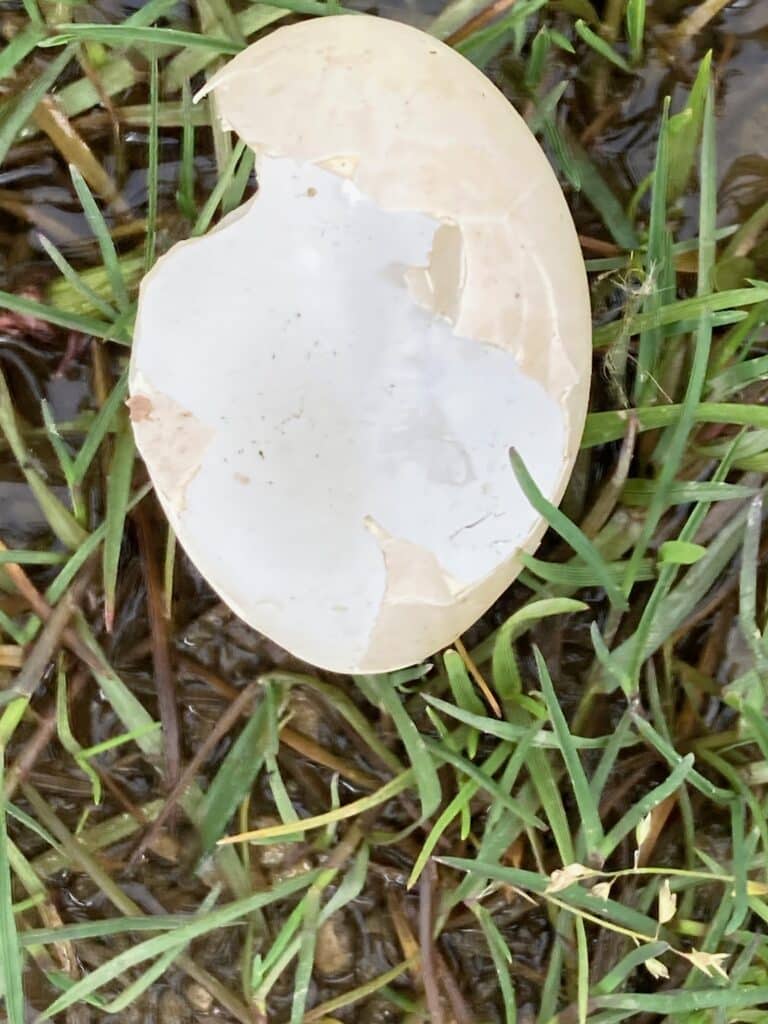
    • Eggshell at Frohring Meadows?

      Question

      These eggshells were observed right along the main trail at Frohring Meadows on Friday, May 9th, 2025. They were on the eastern side of the park, just across from Savage Road. What sort of bird/fowl laid these eggs? A goose? Would this be the right time of year for the eggs to hatch? Or could a predator have opened them? Thank you.

      Naturalist's Response

      Thanks for your questions. May is the time when many birds lay their eggs, and it’s hard to determine what the egg is because I don’t have a size comparison.
      If you thought it could as large as a goose egg, that could be possible. If it is on the trail, though, I would be more suspicious that a predator got the eggs. This happens frequently.
      That’s really all the information I can offer you from your pictures and description, but let us know if you have any other questions.
      -Naturalist Denise Wolfe
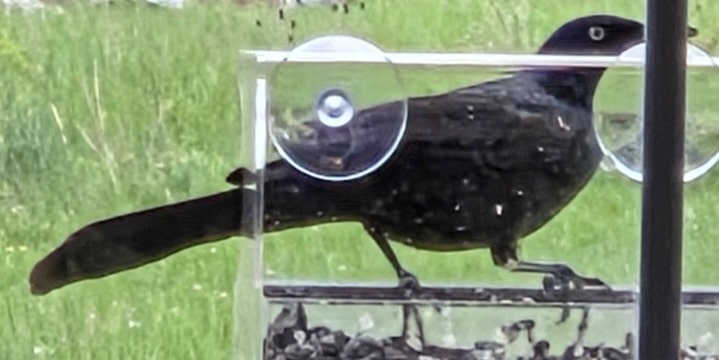
    • Feeder bird ID?

      Question

      What is this? Please and thank you.

      Naturalist's Response

      This is a Common Grackle. It is a type of blackbird, and this one appears to be female because it lacks the iridescent coloring of the male.
      Grackles are often seen at feeders and in lawns. They also notably form large flocks that you can see traveling together in the fall and winter.
      For more information, I always recommend the All About Birds website for bird facts and identification.
      -Naturalist Denise Wolfe
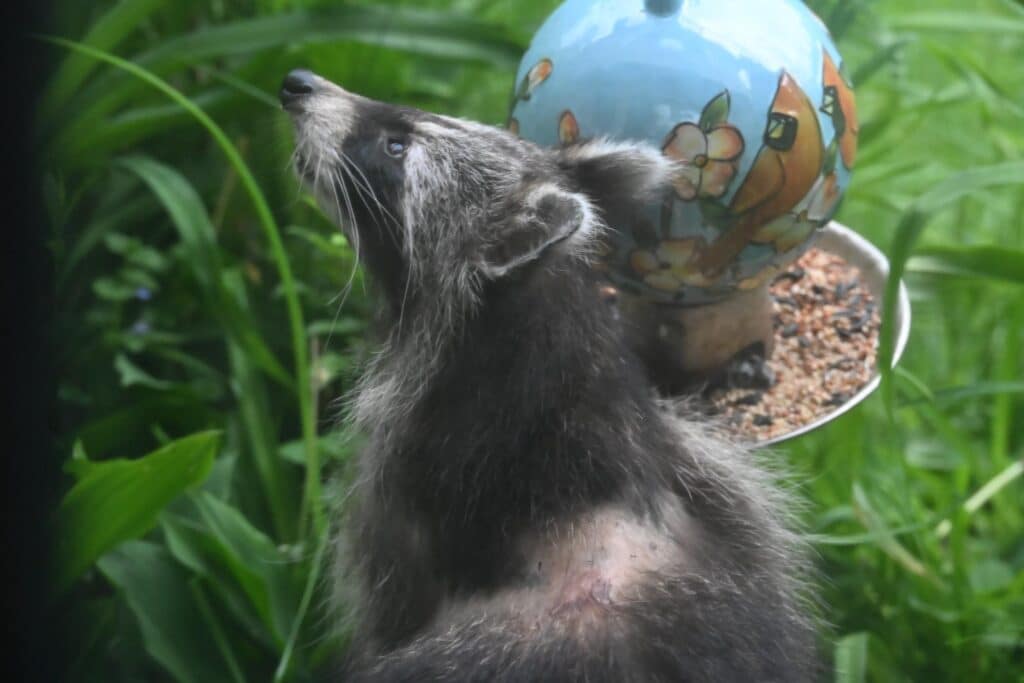
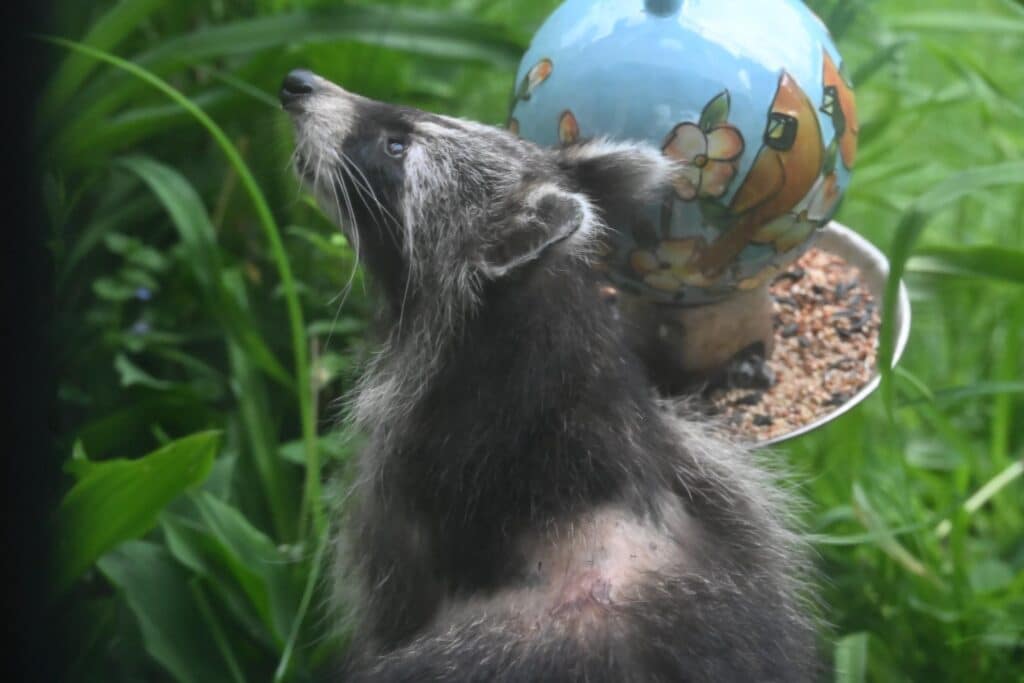
    • How to help a raccoon?

      Question

      What could/should we do about a raccoon that has a large patch of missing fur around the base of its neck in the back? There also appears to be a small area with redness and raised bumps.

      Naturalist's Response

      Thank you for your question about the raccoon with the missing fur and red patch.
      Geauga Park District does not treat injured wildlife. The best thing to do for the raccoon is to leave it alone. There aren’t places that take in and treat raccoons due to state regulations.
      For more information about wildlife, call 1-800-945-3543. This is the number for the Ohio Division of Wildlife. They can give you a lot of information about wildlife and what to do if you see an injured animal. These are also the people we contact when we have questions.
      -Naturalist Denise Wolfe
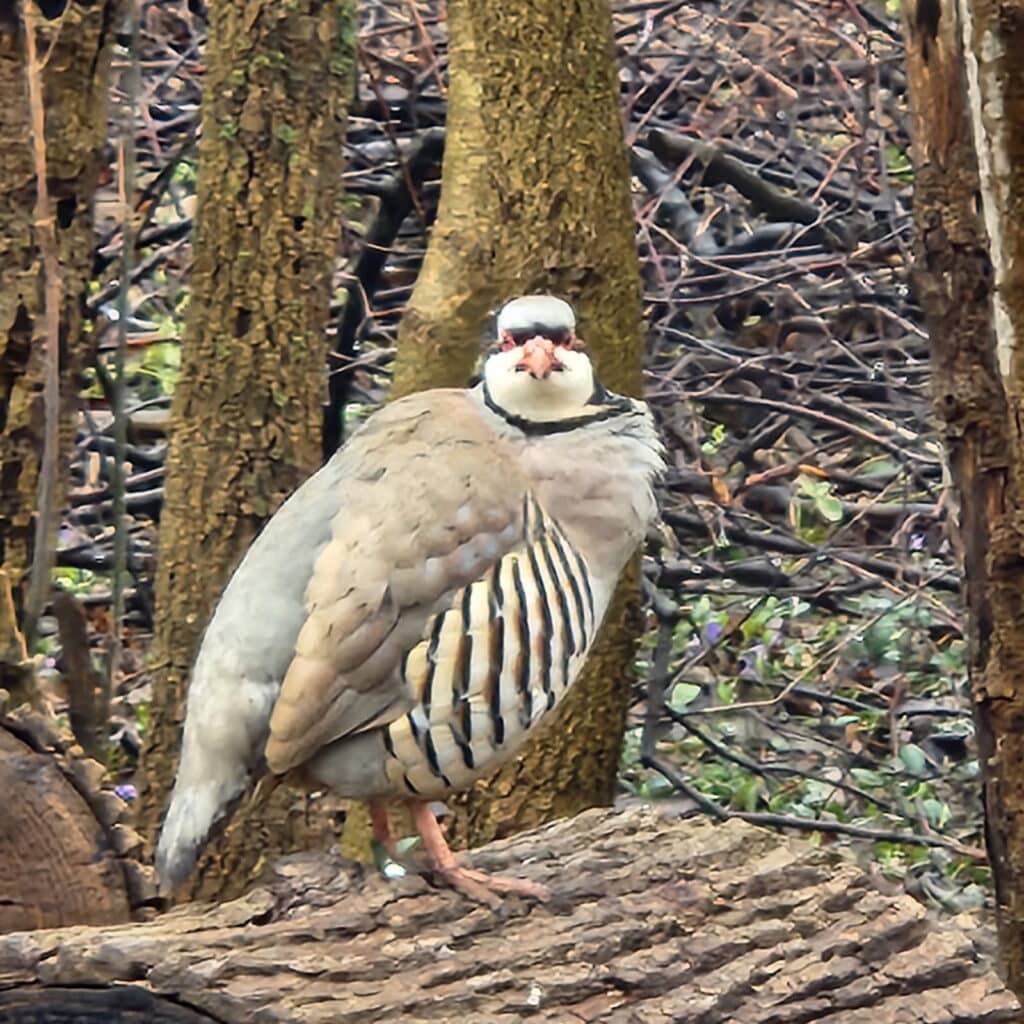
    • A Chukar in Geauga?

      Question

      I reported this sighting. I am fairly certain this is not an inhabitant of North America a Chukar? Do you think it is possible blow in from storms or someone's "pet" would it be legal to import such a beautiful bird? This sighting was on rt 6 in my friends back yard.

      Naturalist's Response

      This is a Chukar, which is native to the Middle East, and yes, it is almost certainly an escapee from someone local. Thanks for your report!

      -Chief Naturalist John Kolar